Question

Minimum deviation is observed with a prism having angle of prism A, angle of deviation δ, angle of incidence i and angle of emergence e. We then have generally

(a) i > e   

(b) i < e

(c) i = e   

(d) i = e = δ

Answer

(c) i = e   

Need a full question paper?

Generate a complete, print-ready paper with questions like this in minutes — across 16+ boards, with answer keys.

Start Generating Free

Similar questions

Assertion  :   Light is produced in gases in the process of electric discharge through them at high pressure.

Reason     :  At high pressure electrons of gaseous atoms collide and reach and excited state.

(a) If both assertion and reason are true and the reason is the correct explanation of the assertion.

(b) If both assertion and reason are true but reason is not the correct explanation of the assertion.

(c) If assertion is true but reason is false.

(d) If the assertion and reason both are false.

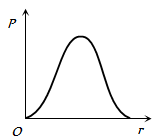
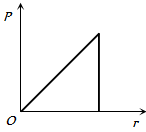
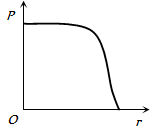
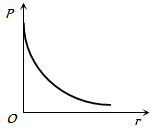
The charge density in a nucleus varies with distance from the centre of the nucleus according to the curve in Fig.

(a)

(b)

(c)

(d)

A bar magnet when placed at an angle of 30o to the direction of magnetic field induction of 5 × 10⁻² T, experiences a moment of couple 25 × 10–6 N-m. If the length of the magnet is 5 cm its pole strength is

(a) 2 × 10⁻² A-m

(b) 5 × 10⁻² A-m

(c) 2 A-m

(d) 5 A-m

A circular loop carrying a current is replaced by an equivalent magnetic dipole. A point on the loop is in:
A square coil of area $10^{-2} m^2$ is kept perpendicular in a magnetic field of intensity $10^3 Wb / m ^2$. The magnitude of magnetic flux passing through the square is :

The working of dynamo is based on principle of

(a) Electromagnetic induction

(b) Conversion of energy into electricity

(c) Magnetic effects of current

(d) Heating effects of current

The reactance of a circuit is zero. It is possible that the circuit contains:
  1. An inductor and a capacitor.
  2. An inductor but no capacitor.
  3. A capacitor but no inductor.
  4. Neither an inductor nor a capacitor.
Which conservation law is obeyed in Einstein's photoelectric equation?

As the temperature of hot junction of a thermo‑couple is increased (while cold junction is at constant temperature), the thermo e.m.f.

(a) Increases uniformly at constant rate

(b) Increases slowly in the beginning and more rapidly at higher temperatures

(c) Increases more rapidly in the beginning but less rapidly at higher temperatures

(d) In minimum at neutral temperature

When is the real image formed?