Question
Obtain a relation for the distance travelled by an object moving with a uniform acceleration in the interval between 4th and 5th second.

Answer

Using the equation of motion $\text{s}=\text{ut}+\frac{1}{2}\text{at}^{2}$

Distance travelled in 5 seconds, $\text{s}=\text{u}\times5+\frac{1}{2}\text{a}\times5^{2}$

or $\text{s}=5\text{u}+\frac{25}{2}\text{a}$

Similary, distance travelled in 4seconds, $\text{s}=4\text{u}+\frac{16}{2}\text{a}$

Distance travelled in the interval between 4th and 5th seconds

$=(\text{s-s'})=(\text{u}+\frac{9}{2}\text{a})\text{m}$

Need a full question paper?

Generate a complete, print-ready paper with questions like this in minutes — across 16+ boards, with answer keys.
Start Generating Free

Similar questions


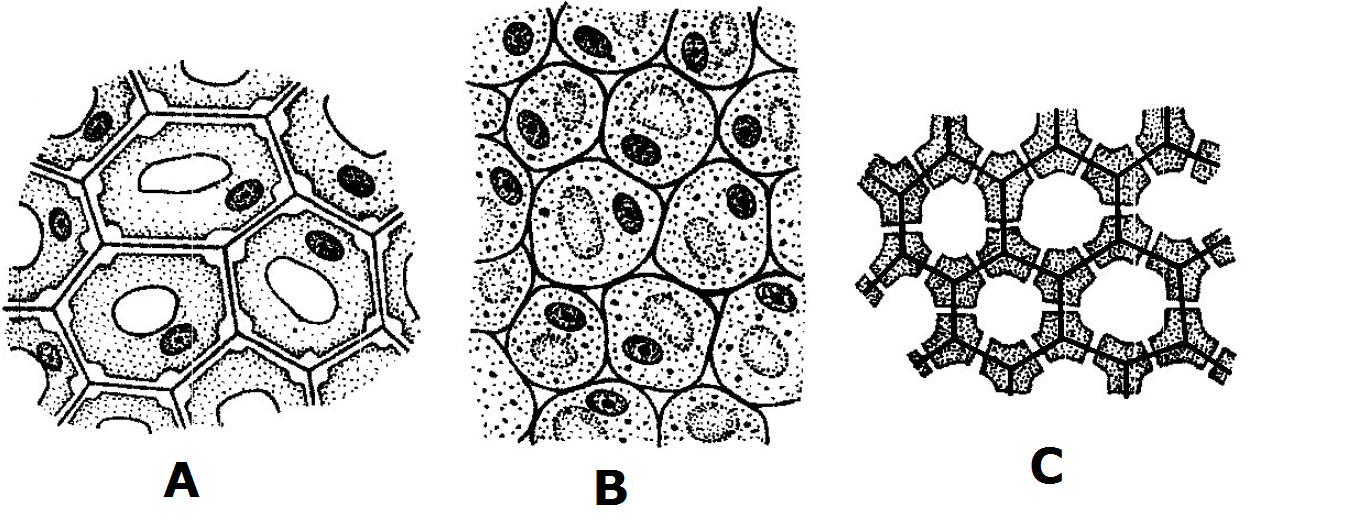
  1. Identify Figure A, B and C.
  2. Which one of them has heavy deposition of lignin?
  3. Which one of them provides both mechanical strength as well as flexibility?
  4. Which one of them can be modified to form air cavities in awuatic plants?
  5. Which one of them is commercially exploited to obtain Hemp and Jute?
What is osmosis?
Define animal husbandry. Write about its scope.
What are different types of tissues in plants? Describe simple tissues.
Define the process of differentiation.
A liquid compound X of molecular mass 18u can be obtained from a number of natural sources. All the animals and plants need liquid X for their survival. When an electric current is passed through 200 grams of pure liquid X under suitable conditions, then 178 grams of gas Y and 22 grams of gas Z are produced. Gas Y is produced at the positive electrode whereas gas Z is obtained at the negative electrode. Moreover, gas Y supports combustion whereas gas Z burns itself causing explosions.
  1. Name (i) liquid X (ii) gas Y, and (iii) gas Z
  2. What is the ratio to the mass of element Z to the mass of element Y in the liquid X?
  3. Which law of chemical combination is illustrated by this example?
  4. Name two sources of liquid X.
  5. Gate an important use of Y in our life.
Write the formulae of the following compounds. Also name the elements present in them.
  1. Water.
  2. Ammonia.
  3. Methane.
  4. Sulphur dioxide.
  5. Ethanol.
Describe the Rutherford’s model of an atom. State one drawback of Rutherford’s model of the atom.
Write a short note on prevention of animal diseases.
What is pasturage and how it is related of honey production?