Question
Obtain equations of motion for constant acceleration using method of calculus.

Answer

By definition
$
\begin{array}{l}
a=\frac{ d v}{ d t} \\
d v=a d t
\end{array}
$

Integrating both sides
$
\begin{aligned}
\int_{t_0}^v d v & =\int_0^t a d t \\
& =a \int_0^t d t \quad \text{(a is constant)}
\end{aligned}
$

$
\begin{aligned}
v-v_0 & =a t \\
v & =v_0+a t
\end{aligned}
$

Further,
$
\begin{aligned}
v & =\frac{ d x}{ d t} \\
d x & =v d t
\end{aligned}
$

Integrating both sides
$
\int_{x_0}^x d x=\int_0^t v d t
$

$
\begin{aligned}
& =\int_0^t\left(v_0+a t\right) d t \\
x-x_0 & =v_0 t+\frac{1}{2} a t^2 \\
x & =x_0+v_0 t+\frac{1}{2} a t^2
\end{aligned}
$

We can write
$
a=\frac{ d v}{ d t}=\frac{ d v}{ d x} \frac{ d x}{ d t}=v \frac{ d v}{ d x}
$
or, $v d v=a d x$
Integrating both sides,
$
\begin{array}{l}
\int_{ L _0}^v v d v=\int_{x_0}^x a d x \\
\frac{v^2-v_0^2}{2}=a\left(x-x_0\right) \\
v^2=v_0^2+2 a\left(x-x_0\right)
\end{array}
$

Need a full question paper?

Generate a complete, print-ready paper with questions like this in minutes — across 16+ boards, with answer keys.
Start Generating Free

Similar questions

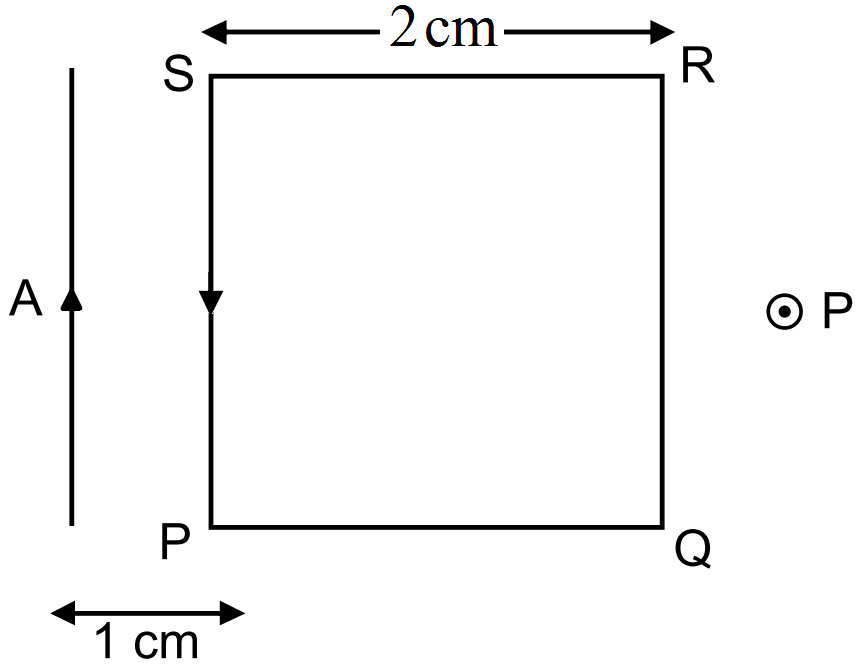
A square loop PQRS carrying a current of 6.0A is placed near a long wire carrying 10A as shown in figure.

  1. Show that the magnetic force acting on the part PQ is equal and opposite to that on the part RS. 
  2. Find the magnetic force on the square loop.

A small block of mass m and a concave mirror of radius R fitted with a stand lie on a smooth horizontal table with a separation d between them. The mirror together with its stand has a mass m. The block is pushed at t = 0 towards the mirror so that it starts moving towards the mirror at a constant speed V and collides with it. The collision is perfectly elastic. Find the velocity of the image:
  1. At a time $\text{t}<\frac{\text{d}}{\text{V}}$
  2. At a time $\text{t}>\frac{\text{d}}{\text{V}}.$
The potential energy of a spring when stretched through a distance x is 25J. What is the amount of work done on the same spring so as to stretch it by an additional distance 5x ?
A spherical tungsten piece of radius 1.0cm is suspended in an evacuated chamber maintained at 300K. The piece is maintained at 1000K by heating it electrically. Find the rate at which the electrical energy must be supplied. The emissivity of tungsten is 0.30 and the Stefan constant $\sigma$ is 6.0 × 10-8Wm-2K-4.
Calculate the Q-values of the following fusion reactions:

  1. $\text{ }^2_1\text{H}+\text{ }^2_1\text{H}\rightarrow\text{ }^3_1\text{H}+\text{ }^1_1\text{H}$

  2. $\text{ }^2_1\text{H}+\text{ }^2_1\text{H}\rightarrow\text{ }^3_2\text{H}+\text{n}$

  3. $\text{ }^2_1\text{H}+\text{ }^3_1\text{H}\rightarrow\text{ }^4_1\text{H}+\text{n}$

Atomic masses are

$\text{m}\big(\text{ }^2_1\text{H}\big)=2.014102\text{u}$

$\text{m}\big(\text{ }^3_1\text{H}\big)=3·016049\text{u}$

$\text{m}\big(\text{ }^3_2\text{H}\big)=3.016029\text{u}$

$\text{m}\big(\text{ }^4_2\text{He}\big)=4·002603\text{u}$
Two masses 8kg and 12kg are connected at the two ends of a light inextensible string that goes over a frictionless pulley. Find the acceleration of the masses and the tension in the string when the masses are released.
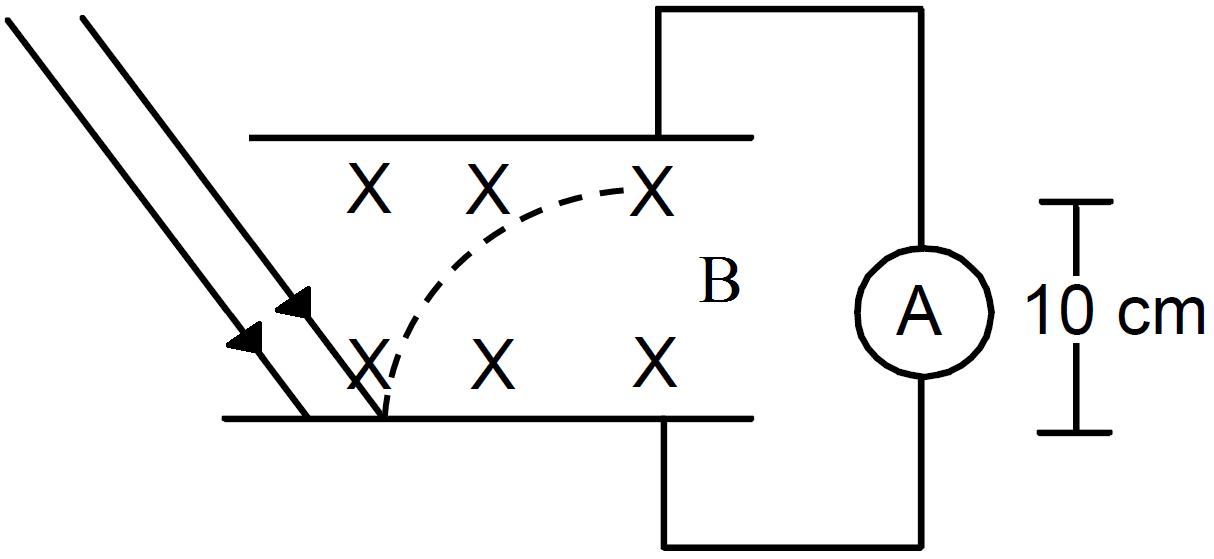
In an experiment on photoelectric effect, the emitter and the collector plates are placed et a separation of 10cm and are connected through en ammeter without any cell A magnetic field B exists parallel to the plates. The work function of the emitter is 2.39eV and the light incident on it has wavelengths between 400nm and 600nm. Find the minimum value of B for which the current registered by the ammeter is zero. Neglect any effect of space charge.

A slightly tapering wire of length I and end radii a and b on both sides is subjected to the stretching forces F on both sides as shown in figure. If Y is the Young's modulus of the wire, calculate the extension produced in the wire.
What is meant by beats? Discuss graphical method of formation of beats.
An artificial satellite of mass 1000kg revolves around the earth in circular orbit of radius 6500km. Calculate,
  1. Orbital velocity.
  2. Orbital kinetic energy.
  3. Gravitational potential energy.
  4. Total energy in the orbit. [Mass of the earth = 6 × 1024kg, G = 6.67 × 10⁻¹¹ Nm2/ kg]