MCQ
Oils are converted into fats by
  • A
    Hydration
  • B
    Decarboxylation
  • Hydrogentation
  • D
    Dehydrogenation(e)Hydrogenolysis

Answer

Correct option: C.
Hydrogentation
c
(c) Oil are unsaturated esters which are converted into fats by saturating it by catalytic hydrogenation.

Need a full question paper?

Generate a complete, print-ready paper with questions like this in minutes — across 16+ boards, with answer keys.
Start Generating Free

Similar questions

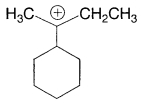
The total number of contributing structures showing hyperconjugation (involving $C - H$ bonds) for the following carbocation is
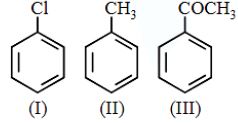
The increasing order of the reactivity of the following compounds towards electrophilic aromatic substitution reaction is
Compound '$A$' (molecular formula ${C_3}{H_8}O)$ is treated with acidified potassium dichromate to form a product '$B$' (molecular formula ${C_3}{H_6}O).$ '$B$' forms a shining silver mirror on warming with ammoniacal silver nitrate. '$B$' when treated with an aqueous solution of ${H_2}NCONHN{H_2}.HCl$ and sodium acetate gives a product '$C$'. Identify the structure of '$C$'
The $P-P-P$ bond angle in white phosphorus is
Bromine water reacts with $S{O_2}$ to form
In ground state of $H{e^ \oplus }$ ion how much energy is supplied to electron so that second line of Balmer series is obtained in its spectrum ................. $\mathrm{eV}$
The electronic configuration of four elements are given in brackets$L\,\left( {1{s^2},\,\,2{s^2}2{p^1}} \right);\,\,M\,\left( {1{s^2},\,\,2{s^2}\,2{p^5}} \right)$

$Q\,\left( {1{s^2},\,\,2{s^2}\,2{p^6},\,\,3{s^1}} \right);\,\,R\,\left( {1{s^2},\,\,2{s^2}\,2{p^2}} \right)$The element that would most readily form a diatomic molecule is

For the reaction : 

$N{H_3}(g) \rightleftharpoons \frac{1}{2}{N_2}\left( g \right) + \frac{3}{2}{H_2}(g);{K_p}$

The degree of dissociation $(\alpha )$ of $NH_3$ is related to total equilibrium pressure $(P^o)$ as 

The geometry around boron in the product ' $B$ ' formed from the following reaction is

$BF _{3}+ NaH \stackrel{450 K }{\longrightarrow} A + NaF$

$A + NMe _{3} \rightarrow B$

The compound(s) which generate(s) $N _2$ gas upon thermal decomposition below $300^{\circ} C$ is (are)

$(A)$ $NH _4 NO _3$  $(B)$ $\left( NH _4\right)_2 Cr _2 O _7$  $(C)$ $Ba \left( N _3\right)_2$ $(D)$ $Mg _3 N _2$