MCQ
One second is equal to
  • A
    $1650763.73 $ time periods of $Kr$ clock
  • B
    $652189.63$ time periods of $Kr$ clock
  • C
    $1650763.73$ time periods of $Cs$ clock
  • $9192631770$ time periods of $Cs$ clock

Answer

Correct option: D.
$9192631770$ time periods of $Cs$ clock
d
(d) It is by standard definition.

Need a full question paper?

Generate a complete, print-ready paper with questions like this in minutes — across 16+ boards, with answer keys.
Start Generating Free

Similar questions

Which of the following has metre kelvin as the unit?
Two particles are oscillating along two close parallel straight lines side by side, with the same frequency and amplitudes. They pass each other, moving in opposite directions when their displacement is half of the amplitude. The mean positions of the two particles lie on a straight line perpendicular to the paths of the two particles. The phase difference is
The pair(s) of physical quantities that have the same dimensions is (are):
Which of the following do not require medium for transmission
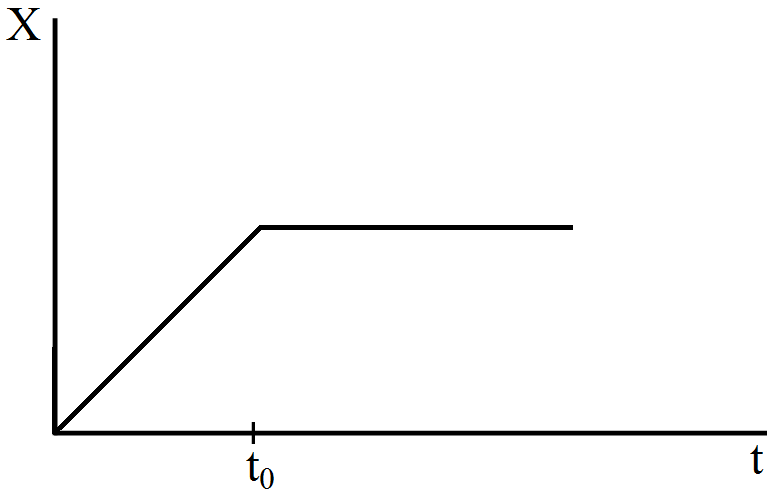
Figure shows the displacement-time graph of a particle moving on the X-axis.

Two open organ pipes of fundamental frequencies $n_{1}$ and $n_{2}$ are joined in series. The fundamental frequecny of the new pipe so obtained will be
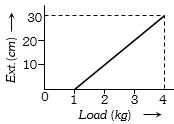
The pointer reading v/s load graph for a spring balance is as given in the figure. The spring constant is ........ $ kg/cm$
When a rolling body enters onto a smooth horizontal surface, it will ............
The angular speed of truck wheel is increased from $900\, rpm$ to $2460\, rpm$ in $26$ seconds. The number of revolutions by the truck engine during this time is

(Assuming the acceleration to be uniform).

A proton and an electron are accelerated by the same potential difference. Let $\lambda_\text{e}$ and $\lambda_\text{p}$ denote the de Broglie wavelengths of the electron and the proton respectively.

  1. $\lambda_\text{e}=\lambda_\text{p}.$

  2. $\lambda_\text{e}<\lambda_\text{p}.$

  3. $\lambda _\text{e}>\lambda_\text{p}.$

  4. The relation between $\lambda_\text{e}$, and $\lambda_\text{p}$ depends on the accelerating potential difference.