Question
Planck constant has the same dimensions as:
  1. Force × time.
  2. Force × distance.
  3. Force × speed.
  4. Force × distance × time.

Answer

  1. Force × distance × time.
Explanation:
Planck's constant
$\text{h}=\frac{\text{E}}{\text{v}}=\frac{\text{Force}\times\text{distanace}}{\text{frequency}}$
$\Rightarrow\text{h}=\text{force}\times\text{distance}\times{\text{times}}.$

Need a full question paper?

Generate a complete, print-ready paper with questions like this in minutes — across 16+ boards, with answer keys.
Start Generating Free

Similar questions

Assertion   :   Inductance coil are made of copper.
Reason       : Induced current is more in wire having less resistance.(a) If both assertion and reason are true and the reason is the correct explanation of the assertion.(b) If both assertion and reason are true but reason is not the correct explanation of the assertion.(c) If assertion is true but reason is false.(d) If the assertion and reason both are false.


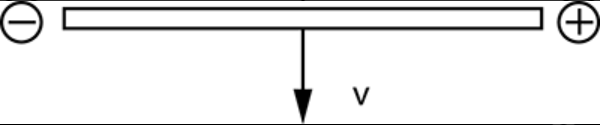
A wire moves with a velocity v through a magnetic field and experiences an induced charge separation as shown in the figure. Then the direction of the magnetic field is
Image
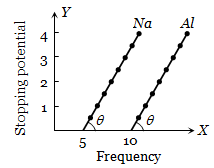
From the figure describing photoelectric effect we may infer correctly that         
Assertion :   A transformer cannot work on dc supply.
Reason     : dc changes neither in magnitude nor in direction.(a) If both assertion and reason are true and the reason is the correct explanation of the assertion.(b) If both assertion and reason are true but reason is not the correct explanation of the assertion.(c) If assertion is true but reason is false.(d) If the assertion and reason both are false.


Choose the correct answer.$\text{F}=\frac{\text{K.}(\text{q}_1\times\text{q}_2)}{\text{r}^2}$
This is given by which law?
When the rms voltages $V_L​, V_C$​ and $V_{R​}$ are measured respectively across the inductor $L,$ the capacitor $C$ and the resistor $R$ in a series $\text{LCR}$ circuit connected to an $AC$ source, it is found that the ratio $V_L ​: V_C ​: V_{R​} = 1 : 2 : 3.$ If the rms voltage of the $AC$ source is $100 V,$ then $V_R$​ is close to:
Which one of the relation is correct between time period and number of orbits while an electron is revolving in a orbit
When an object possess electric charge then the object is said to be:
In an endothermic reaction the binding energies of reactants and products are $e_{1​}, e_2$​ respectively, then:
The total energy of electron in $n^{\text {th }}$ orbit, according to Bohr's theory :