Question
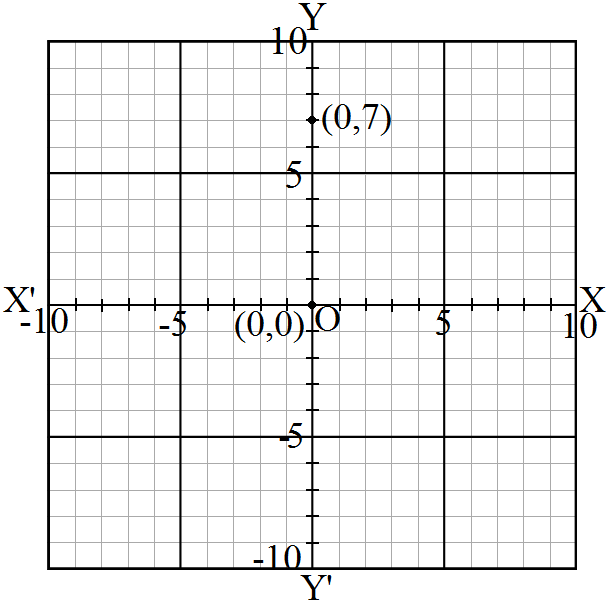
Plot the following points on the graph paper:(0, 7)
Answer

The given points are,
A(2, 5), B(4, -3), C(-5, -7), D(7, -4), E(-3, 2), F(7, 0), G(-4, 0), H(0, -4), J(0, 0),
Let X'OX and Y'OY be the coordinate axes.
Here for the given point the abscissa is 0 units and ordinate is 7 units. The point is on the y-axis. So it will look like as shown in the following figure.

Need a full question paper?

Generate a complete, print-ready paper with questions like this in minutes — across 16+ boards, with answer keys.

Start Generating Free

Similar questions

A chord of a circle is equal to the radius of the circle. Find the angle subtended by the chord at a point on the minor arc and also at a point on the major arc.
Given below are the cumulative frequencies showing the weights of 685 students of a school. Prepare a frequency distribution table.
Weight (in kg)
No. of students
Below 30
0
Below 30
24
Below 35
78
Below 40
183
Below 45
294
Below 50
408
Below 55
543
Below 60
621
Below 65
674
Below 70
685
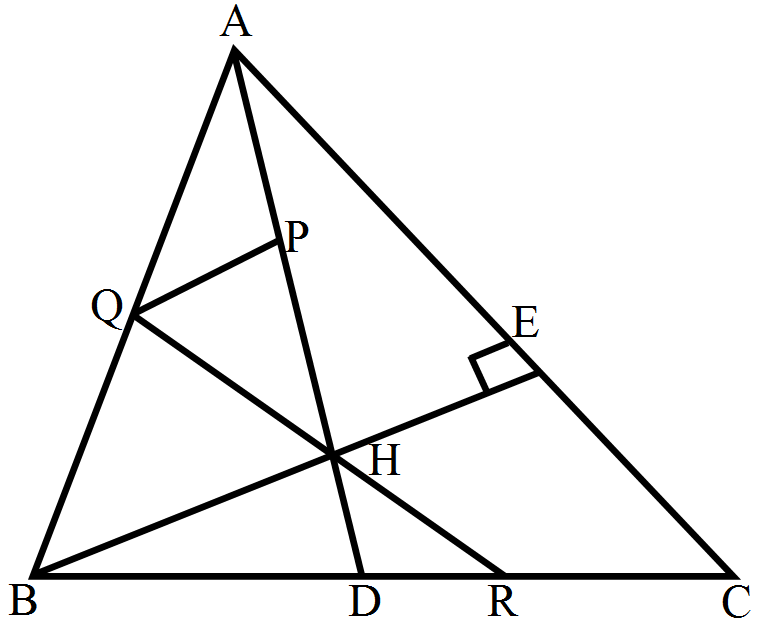
In Fig. $\text{BE}\bot\text{AC}$ AD is any line from A to BC intersecting BE in H. P, Q and R are respectively the mid-points of AH, AB and BC. prove that $\angle\text{PQR}=90^\circ.$
The mean of 5 observations is 50. One of the observations was removed from the data, hence the mean became 45. Find the observation which was removed.
Draw the graph of the following linear equations in two variables:
2y = -x + 1
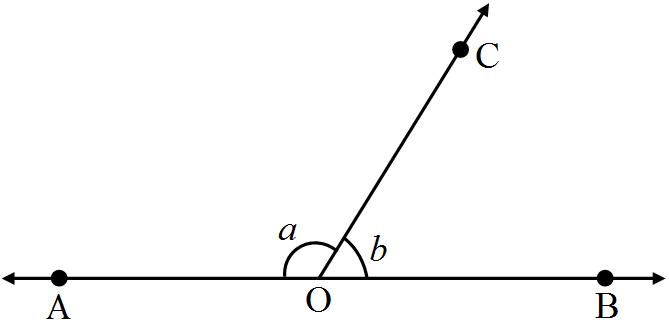
In figure, $\angle\text{AOC}$ and $\angle\text{BOC}$ from a linear pair. If a - 2b = 30°, find a and b.
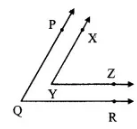
In the given figure, sides of ∠PQR and ∠XYZ are parallel to each other. Prove that, ∠PQR ≅ ∠XYZ.

Image
Given: Ray YZ || ray QRandray YX || ray QP
To prove: ∠PQR ≅ ∠XYZ
Construction: Extend ray YZ in the opposite direction. It intersects ray QP at point S.
ABCD is a kite having AB = AD and BC = CD. Prove that the figure found by joining the mid points of the sides, in order, is a rectangle.
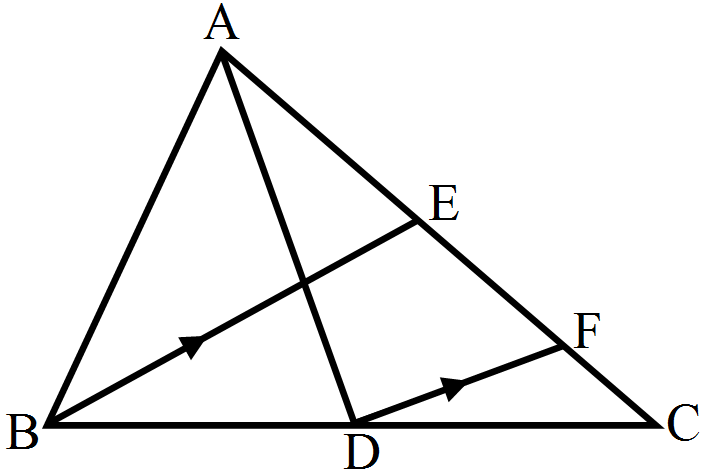
In the adjoining figure, AD and BE are the medians of $\triangle\text{ABC}$ and DF || BE. Show that $\text{CF}=\frac{1}{4}\text{AC}.$
If ABCD is a rhombus with $\angle\text{ABC}=56^\circ,$ find the measure of $\angle\text{ACD}.$