Question
Predict conditions under which Al might be expected to reduce $MgO.$
$($Hint: See Intext question $6.4)$

Answer

The equations for the formation of the two oxides are
$4/3Al(s) + O_2(s) → 2/3Al_2O_3(s)$
$2Mg(s) + O_2(s) → 2MgO(s)$
If we look at the plots for the formation of the two oxides of the Ellingham diagram, we find that they intersect at certain point. The corresponding value of $\Delta\text{G}^{\circ}$ becomes zero for the reduction of $MgO$ by $Al$ metal.
$2\text{MgO}(\text{s})+4/3\text{Al(s)}\rightleftharpoons2\text{Mg}(\text{s})+2/3\text{Al}_2\text{O}_3(\text{s})$
This means that the reduction of $MgO$ by Al metal can occur below this temperature. Aluminium (Al) metal can reduce $MgO$ to $Mg$ above this temperature because $\Delta^{\circ}\text{G}$ for $Al_20_3$ is less as compared to that of $MgO.$
$3\text{MgO}(\text{s})+2\text{Al}(\text{s})\xrightarrow[]{(>1665\text{k})}\text{Al}_2\text{O}_3(\text{s})+3\text{Mg}(\text{s})$

Need a full question paper?

Generate a complete, print-ready paper with questions like this in minutes — across 16+ boards, with answer keys.

Start Generating Free

Similar questions

Calculate standard cell potential for the following cell $Al ( s )\left| Al ^{+3}(1 M )\right|\left| Ag ^{+}(1 M )\right| Ag ( s )$
Arrange the following in the order of property indicated against each set:
  1. $HF,\ HCl,\ HBr,\ HI -$ increasing bond dissociation enthalpy.
  2. $H_2O, H_2S, H_2Se, H_2Te -$ increasing acidic character.
Write a note on nature of $C-X$ Bond. $\#\#\#$ Explain polarity of $C-X$ bond in Haloalkane.
Why can we not determine the order of a reaction by taking into consideration the balanced chemical equation?
Using the standard electrode potentials given in Table $3.1,$ predict if the reaction between the following is feasible:
$Fe^{3+}\ (aq)$ and $I^–\ (aq)$
The standard electrode potential $(E^o)$ for Deniell cell is $+1.1V.$ Calculated the $ʌG^o$ for the reaction
$Zn (s) + Cu^{2+}\ (aq) \rightarrow Zn^2(aq) + Cu\ (s)$
$(1\ F = 96500\ C\ mol^{-1}).$

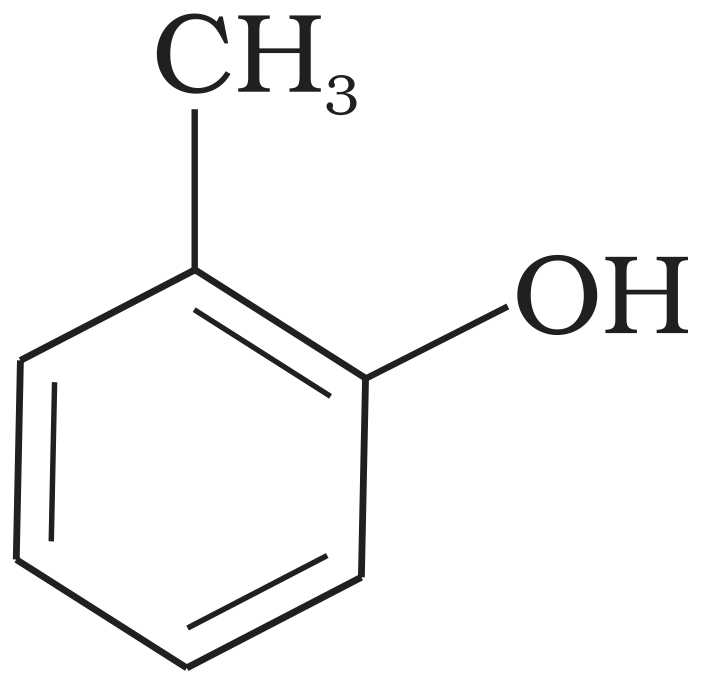
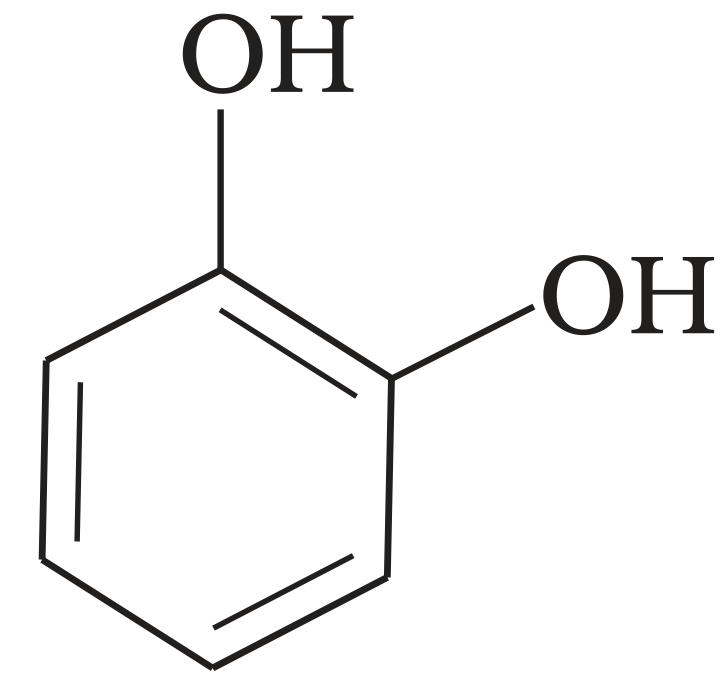
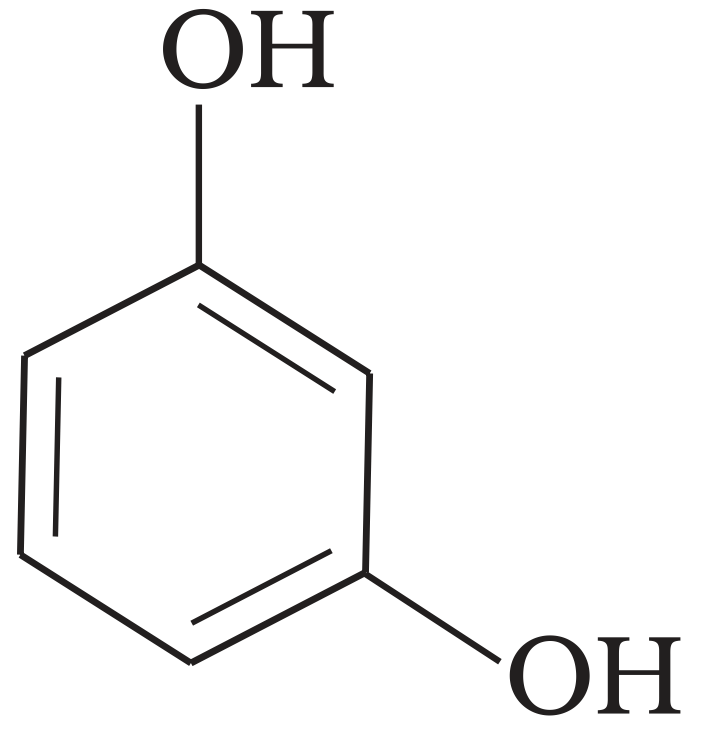
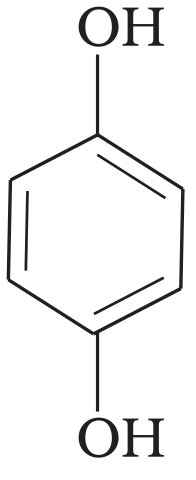
Match the structures of the compounds given in Column I with the name of the compounds given in Column II.
  Column I   Column II
(i) (a) Hydroquinone
(ii) (b) Phenetole
(iii) (c) Catechol
(iv) (d) o-Cresol
(v) (e) Quinone
(vi) (f) Resorcinol
    (g) Anisole.
State Raoult’s law for a solution containing volatile components. Write two characteristics of the solution which obeys Raoult’s law at all concentrations.
Do the following conversions in not more than two steps:
  1. Propene to Acetone.
  2. Propanoic acid to 2-hydroxypropanoic acid.
$a.$ Nitrogen gas is soluble in water. At temperature $293 K,$ the value of $K_HiS 76.48$ kbar. How would the solubility of nitrogen vary $($ increase, decrease or remain the same $)$ at a temperature above $293 K_H$ if the value of $K_1$ rises to $88.8$ kbar.
$b.$ Chloroform $($ b.p. $61.2^\circ C)$ and acetone $($ b.p. $56^\circ C)$ are mixed to form an azeotrope. The mole fraction of acetone in this mixture is $0.339.$ Predict whether the boiling point of the azeotrope formed will be $(i) 60^\circ C \ (ii) 64.5^\circ C$ or $(iii)54 ^\circ C.$ Defend your answer with reason.