Question
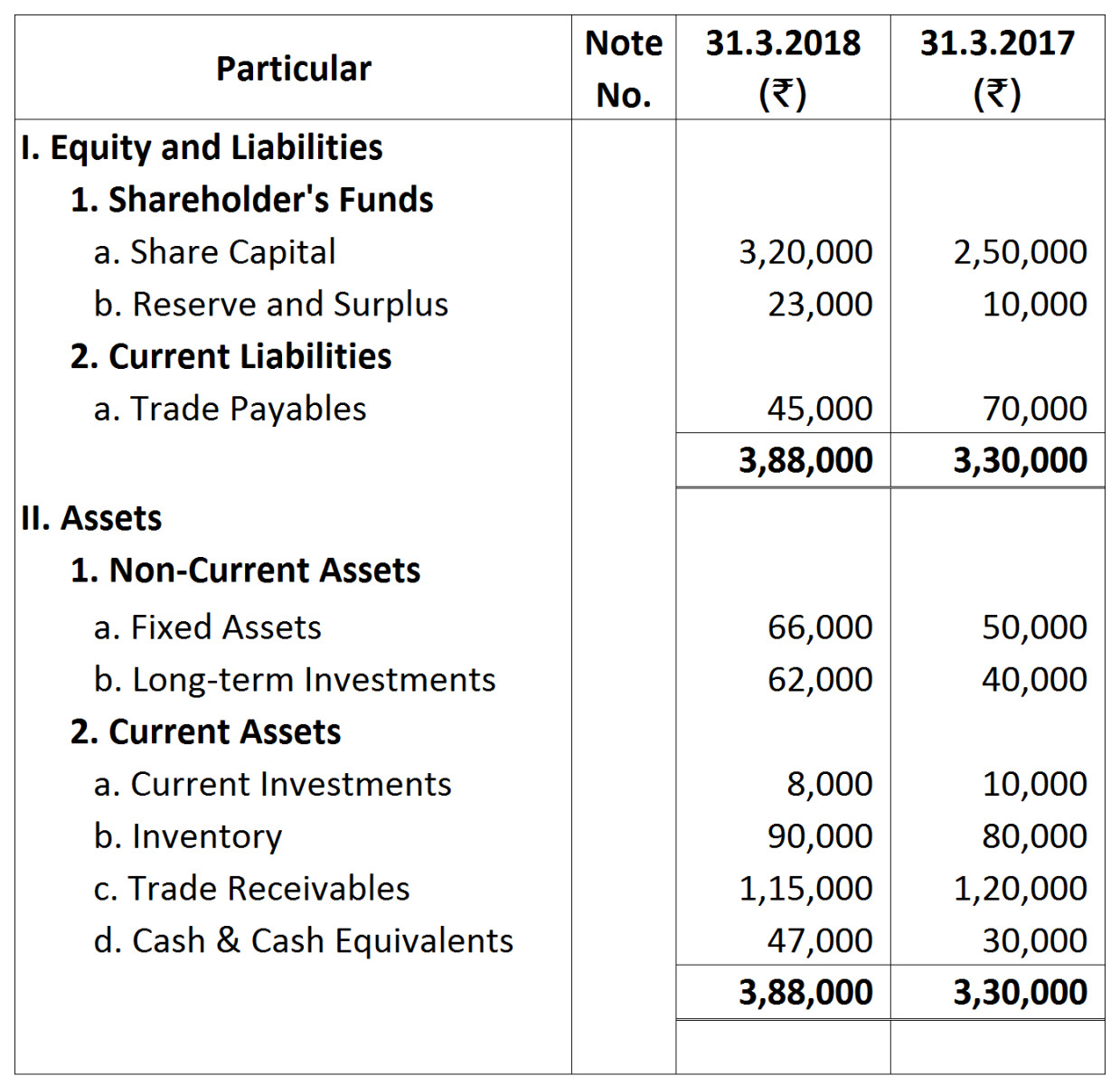
Prepare a Cash-Flow Statement from the Balance Sheets given below:
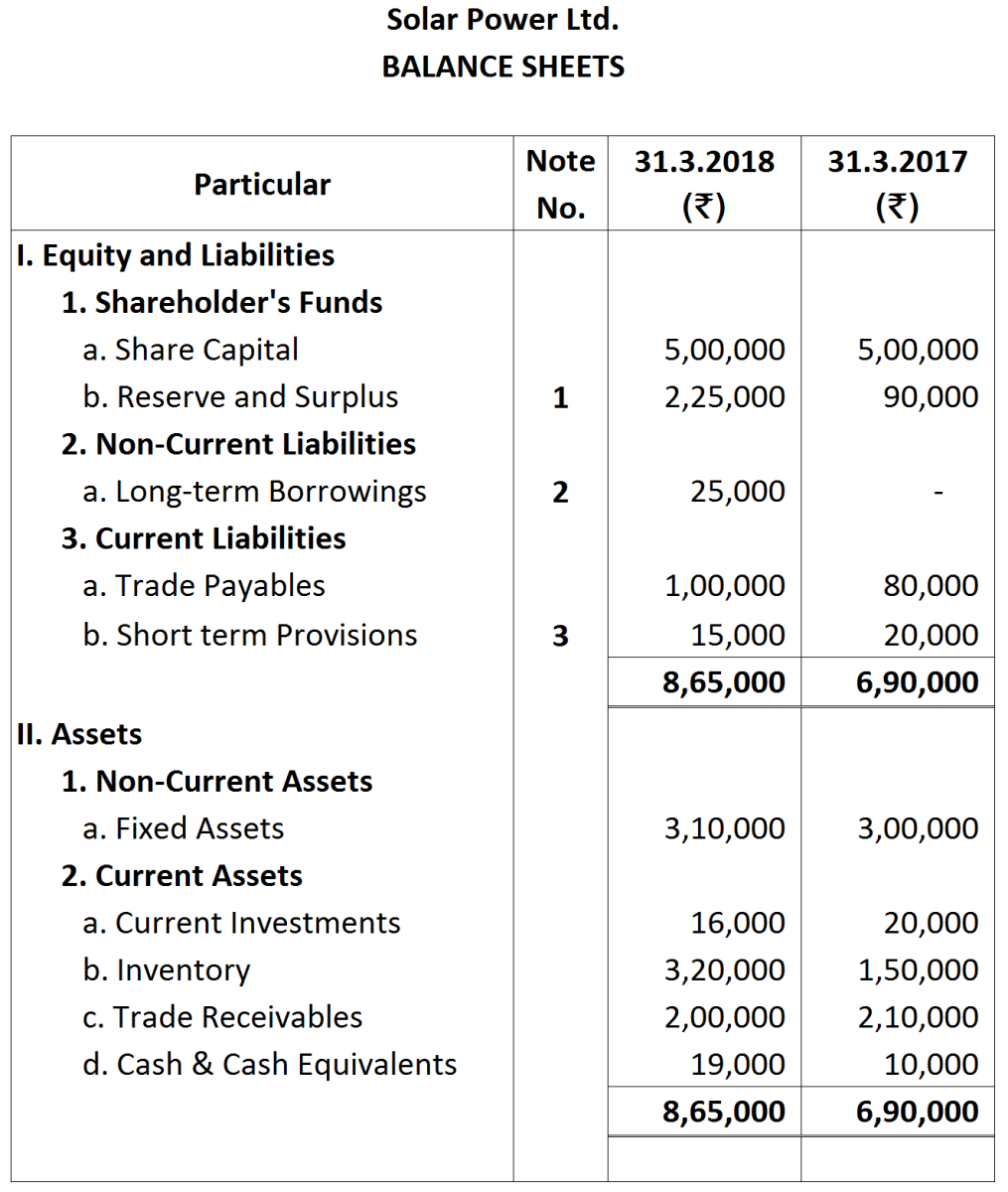
Notes:
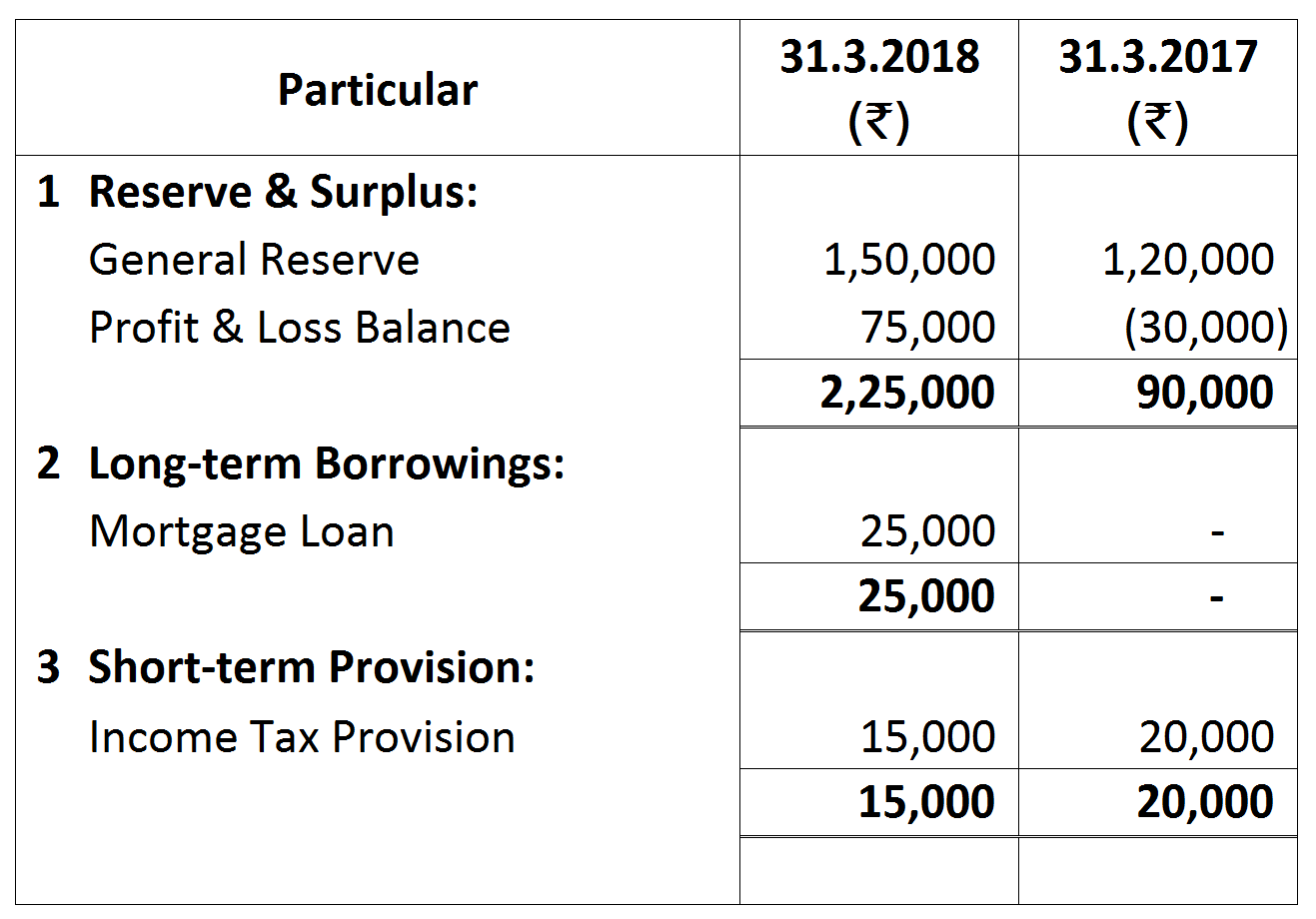
Additional Information:
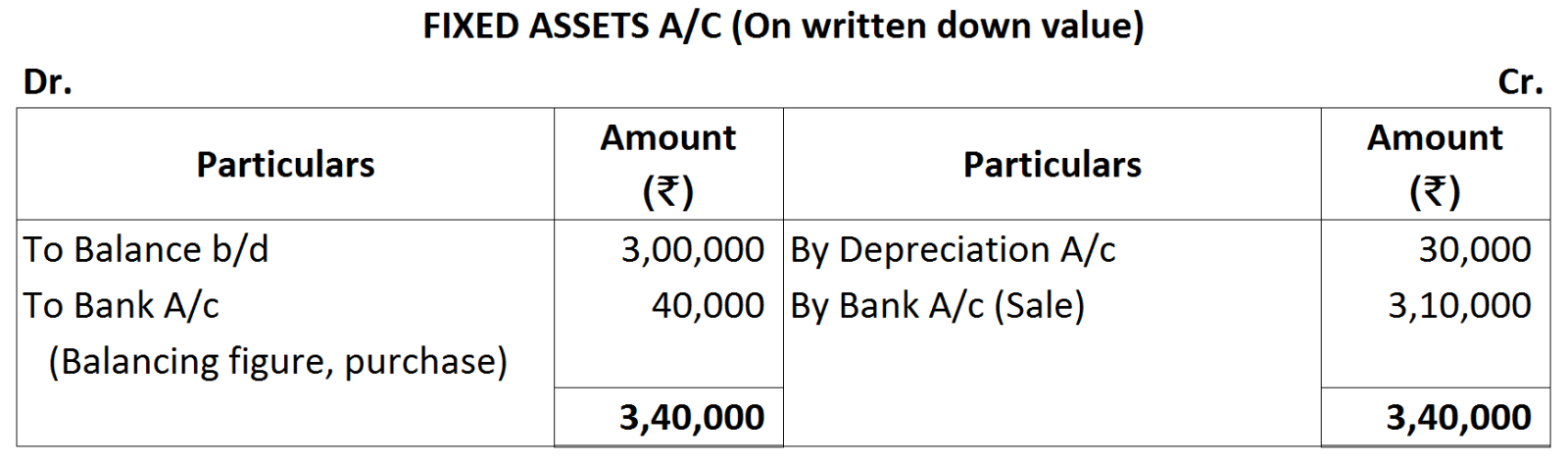
  1. Depreciation written off on fixed assets @ 10% on last year's balance.
  2. Interim Dividend paid during the year @ 10% on Share Capital.
  3. Mortgage Loan was taken on 1st July 2017 @ 10% p.a. Interest has been paid up-to date.
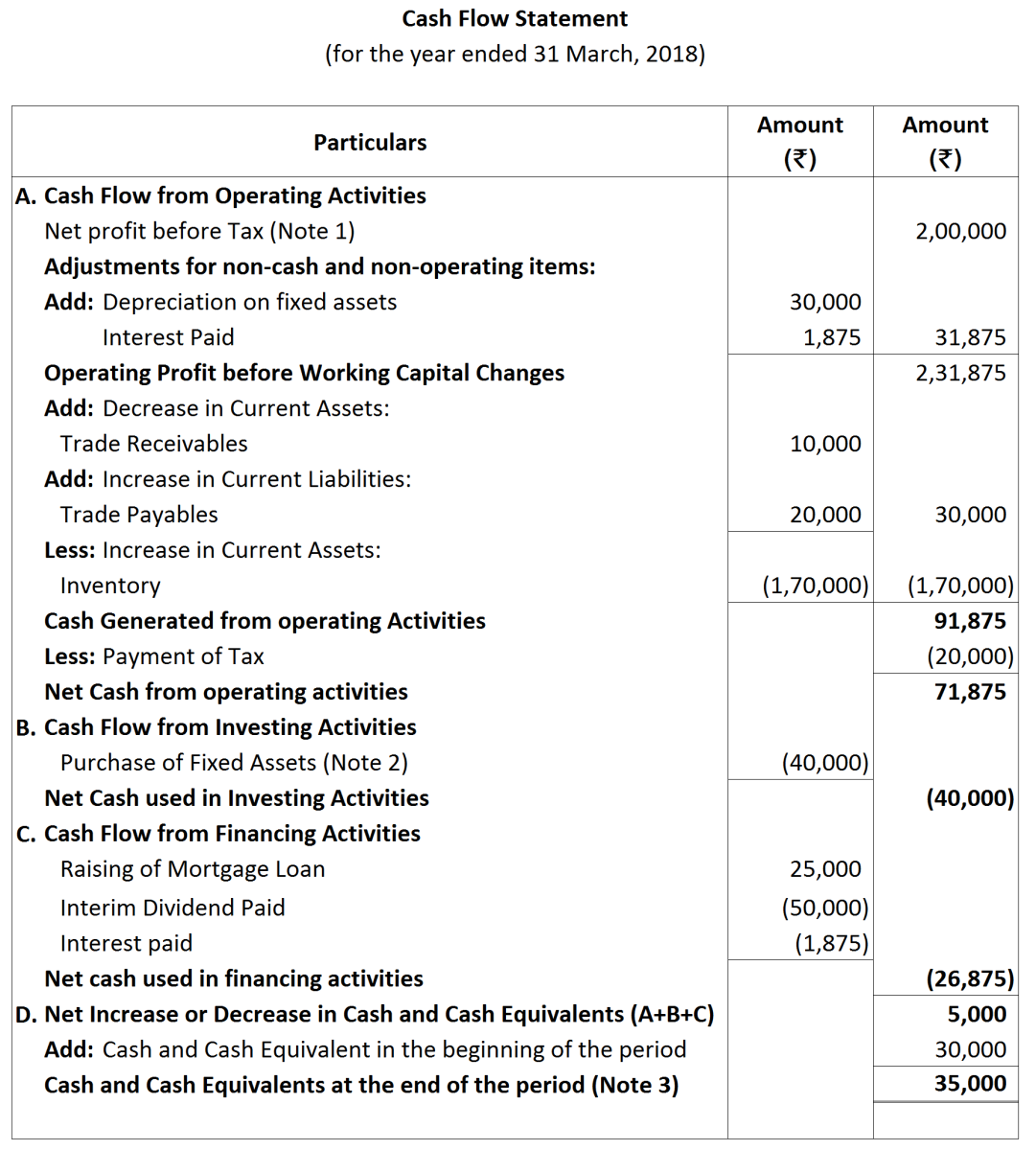
Answer


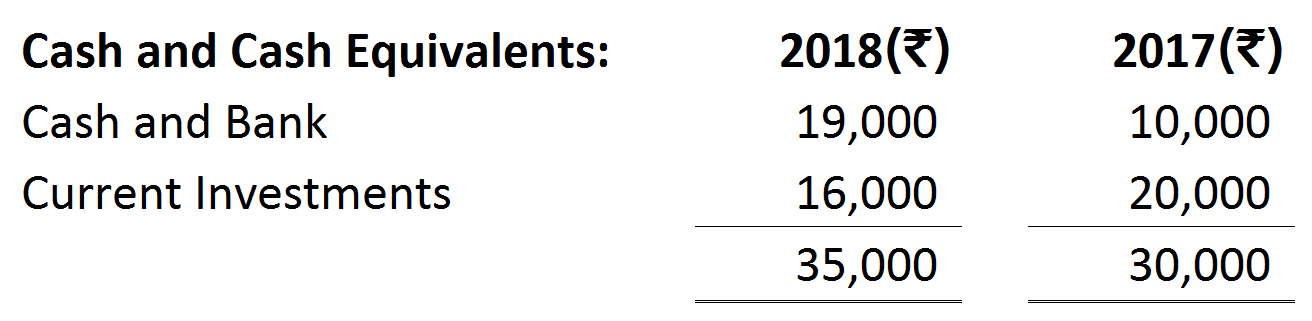
Notes:
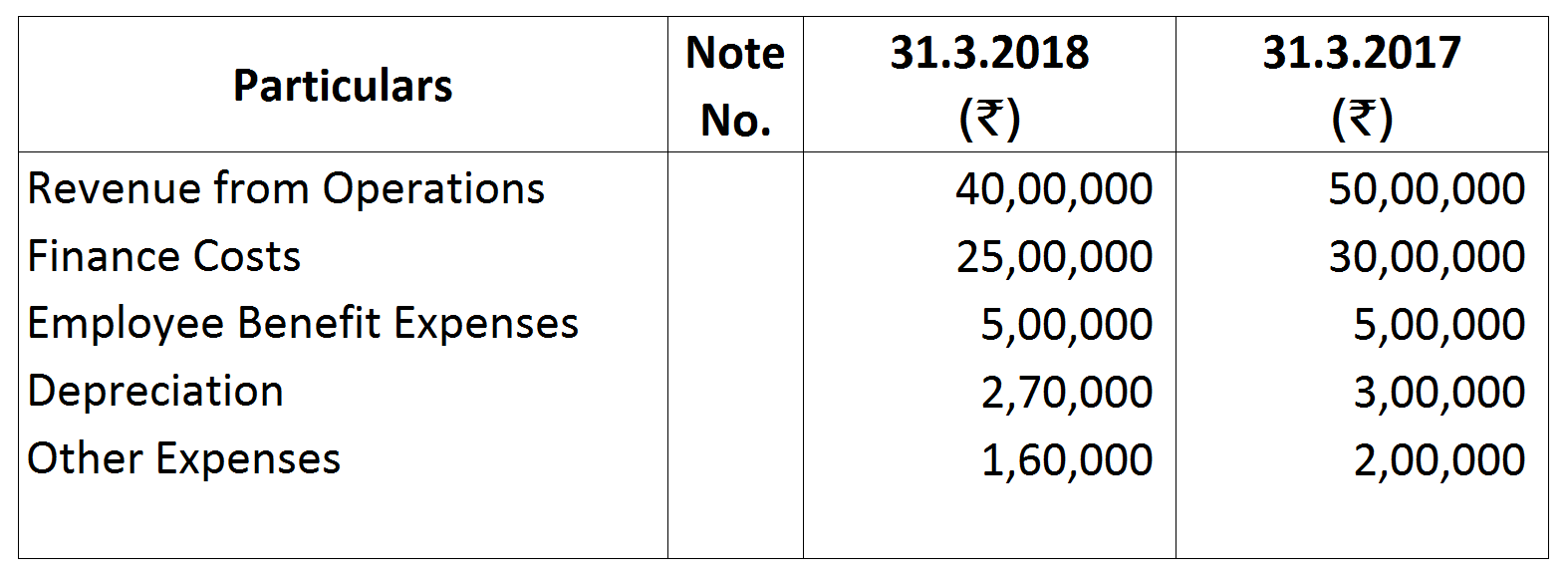
  1. Calculation of Net Profit before Tax:
 
Profit & Loss Balance on 31st March, 2018
75,000
less: Profit & Loss Balance on 31st March, 2017
(30,000)
 
1,05,000
Add: Transfer to General Reserve
30,000
Dividend Paid (10% on ₹ 5,00,000)
50,000
Provision for Tax made during the Current year
15,000
Net Profit before Tax
2,00,000
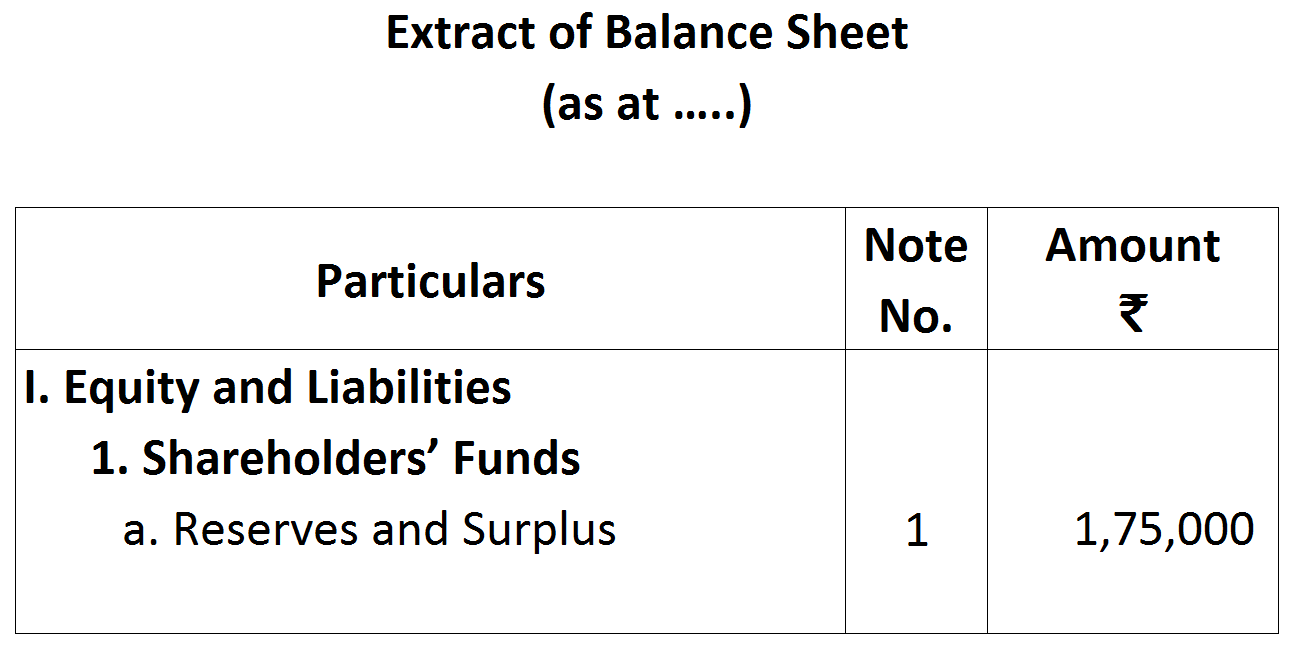
Negative balance of Profit and Loss amounting to ₹ 30,000 appearing in the balance sheet on 31.3.2017 represents an amount of loss. In the current year, after covering this loss of ₹ 30,000, the Profit & Loss shows a profit of ₹ 75,000. It means that net profit during the current year must have been ₹ 75,000 + ₹ 30,000 = ₹1,05,000.
  1.  

  1.  

Need a full question paper?

Generate a complete, print-ready paper with questions like this in minutes — across 16+ boards, with answer keys.

Start Generating Free

Similar questions

From the following information, prepare a Comparative Statement of Profit:
Current Ratio of a Company is 2 : 1. Which of the following suggestions would improve the ratio, which would reduce it and which would not change it?
  1. Purchase of goods on Credit.
  2. Purchase of goods against Cheque.
  3. Sale of goods Costing ₹ 50,000 for ₹ 60,000 on Credit.
  4. To sell a fixed asset at a slight loss.
  5. To borrow money on a promissory note $\Big(\frac{\text{B}}{\text{P}}\Big).$
  6. To give promissory note to a Creditor.
Arushi Computers Ltd issued 10,000 equity shares of ₹ 100 each at 10% discount. The net amount payable as follows:
On application
₹ 20
On allotment
₹ 30 ( ₹ 40 – discount ₹ 10)
On first call
₹ 30
On final call
₹ 10
A shareholder holding 200 shares did not pay final call. His shares Were forfeited. Out of these 150 shares were reissued to Ms.Sonia at ₹ 75 per shares. Give journal entries in the books of the company.
Following particulars are given to you:

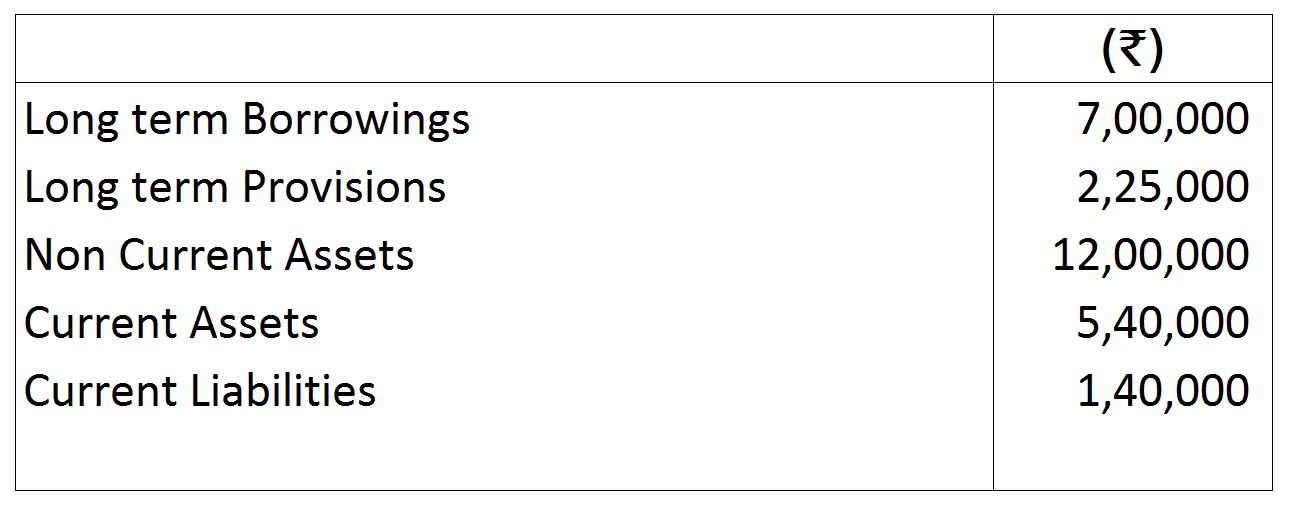
Calculate (i) Debt Equity Ratio, (ii) Total Assets to Debt Ratio and (iii) Proprietary Ratio.
A company has an opening credit balance in Surplus, i.e., Balance in Statement of profit and loss of ₹ 1,00,000. During the year, it earned a profit of ₹ 75,000. It decided to transfer ₹ 15,000 to Debentures Redemption Reserve (DRR) and also proposed to pay dividend of ₹ 25,000. How will be the appropriations shown in the financial statemenrs?Hint:
Note: Proposed Dividend ₹ 25,000 is shown as contigent liability in Notes to Accounts.
Following is the Balance Sheet of Rahul & Co. for two years. Prepare Cash Flow Statement:
From the following information, calculate any two of the following ratios:
  1. Current Ratio.
  2. Debt to Equity Ratio.
  3. Operating Ratio.
Revenue from Operations (Net Sales) ₹ 1,00,000; Cost of Revenue from Operations (Cost of Goods Sold) was 80% of sales; Equity Share Capital ₹ 7,00,000; General Reserve ₹ 3,00,000; Operating Expenses ₹ 10,000; Quick Assets ₹ 6,00,000; 9% Debentures ₹ 5,00,000; Closing Inventory ₹ 50,000; Prepaid. Expenses ₹ 10,000 and Current Liabilities ₹ 4,00,000.
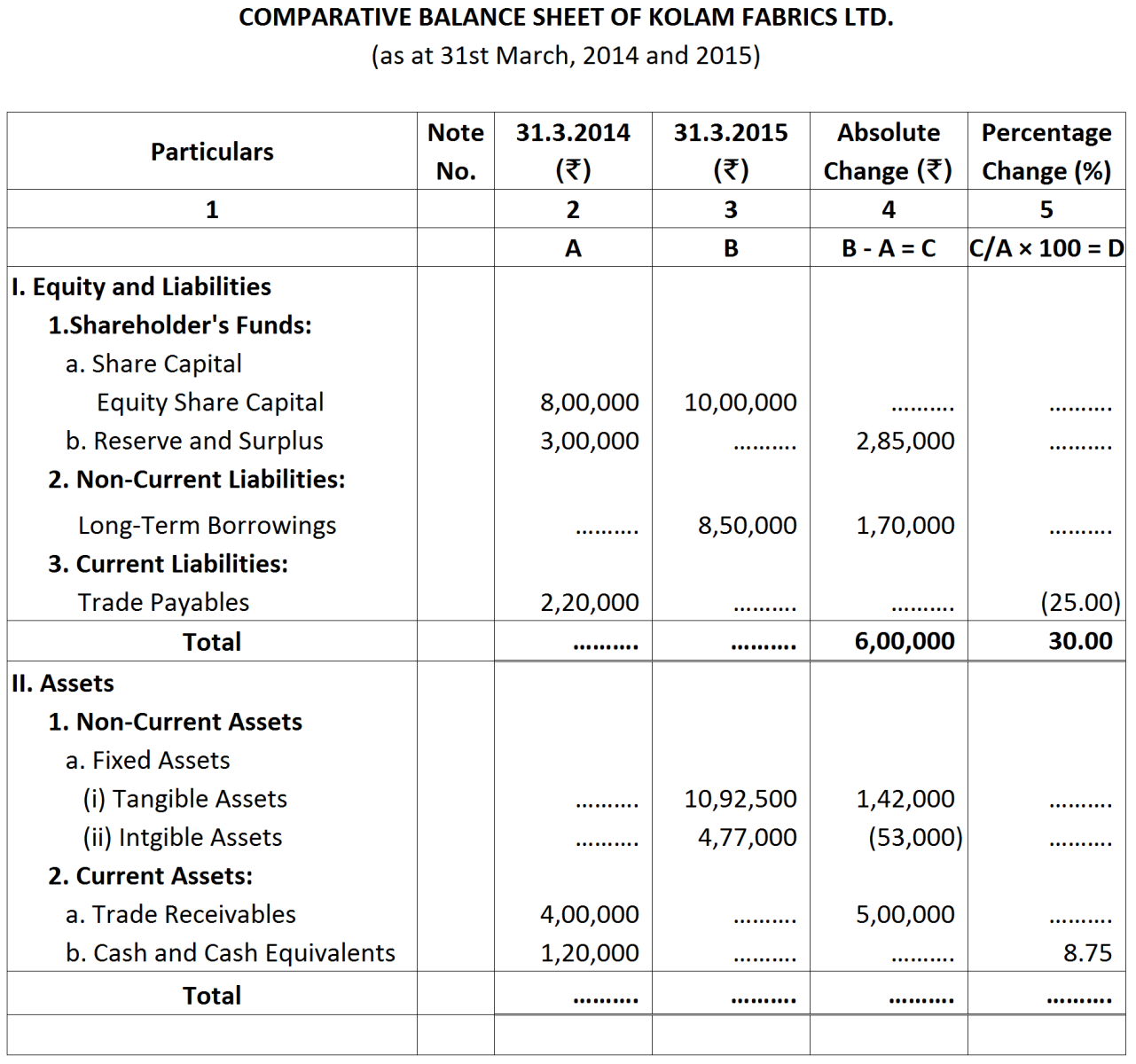
Following is the Comparative Balance Sheet of Nova Ltd. for two consecutive years:
You are required to:
  1. Fill in the missing figures in the Comparative Balance Sheet.
  2. Compute the total assets to debt ratio for both the years.
Following are the Balance Sheets of Pawan Ltd.

Notes:

Additional Information:
  1. Machinery Costing ₹ 60,000 was sold for ₹ 18,000 during the year.
  2. Interim Dividend paid during the year ₹ 25,000.
  3. During the year Company sold 40% of its original non-current investments at a loss of 20%.
You are required to prepare Cash-Flow Statement.
Calculate following ratios on the basis of the given information:
  1. Current Ratio.
  2. Acid Test Ratio.
  3. Operating Ratio.
  4. Gross Profit Ratio.
 
Current Assets.
70,000
Current Liabilities.
35,000
Inventory.
30,000
Revenue from Operations (Sales). 1,20,000
Operating Expenses. 40,000
Cost of Goods Sold or Cost of Revenue from Operations. 60,000