Question
Prepare a flow chart based on the following information.
The system of classification in which the living organisms are classified into two kingdoms is called two kingdom system of classification. It includes Plant kingdom and Animal kingdom. The Plant kingdom is divided into two sub kingdoms i.e. Cryptogamia and Phanerogamia. Cryptogamia is a group of non-flowering and non-seed bearing plants. It is further classified into, three groups as Thallophyta, Bryphyta and Pteridophyta. The plant body of Thallophyta is thallus. The plant body of Bryophyta is thalloid or leafy and that of Pteridophyta is with organ. Algae and Fungi are included in thallophyta.
Phanerogamia is a group of flowering and seed bearing plants. The plants which produce the naked seeds are called Gymnospermae and the plants which produce the seeds enclosed within fruits are called Angiospermae. Angiosperms are further classified into two groups i.e. Dicotyledonae and Monocotyledonae. There are two cotyledons in seed inDicotyledonae and one cotyledon in Monocotyledonae plants.
Answer

SELF

Need a full question paper?

Generate a complete, print-ready paper with questions like this in minutes — across 16+ boards, with answer keys.

Start Generating Free

Similar questions

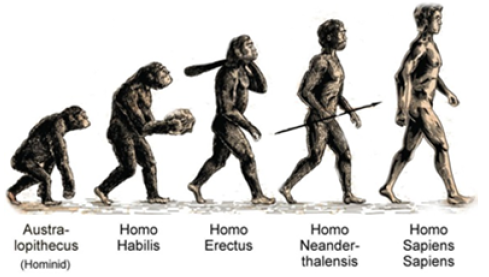
Read the information given in the diagram. Write a paragraph based on human evolution. Give a suitable title to it.
Image
Read the following passage carefully. Represent this by means of a flow chart.
Silver occurs in the ores of several metals. The froth process of extracting silver, accounts for about 75% of all silver recovered. Here the ore is ground to a powder, then placed in large vats containing a water suspension of frothing agents, and thoroughly agitated by jets of air. Depending on the agents used, either the silver bearing ore or the gangue adhering to the bubbles of the froth, is skimmed off and washed. The final refining 
is done using electrolysis
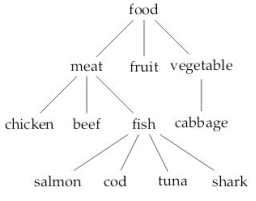
Read the information given in the tree-diagram. Write a paragraph based on it. Give a suitable title to it.
Image
The number of absentees in class VIII was recorded in a particular week. Represent this data on the bar graph.

 DaysMonTuesWedThursFriSat
 Number of Absentees3540506590105

On days on which the following number of students are absent
Read the following data and depict it in a bar graph to understand the number of students and their attendance on different days of the week.

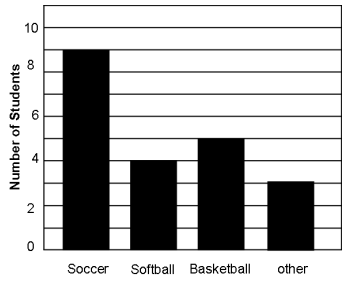
The following information is taken from a randomly selected students from Vidya Mandir school. Students have mentioned about their favourite sports. Read the information given in the diagram. Write a paragraph based on it. Give a suitable title to it.
Image
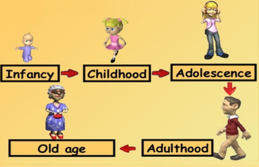
Read the information given in the diagram. Write a paragraph based on it. Give a suitable title to it.
Image
The population of a Rajasthan state in different years is given below. Represent the following data in a bar graph.
 Year200520062007200820092010
 Population in Lakhs3540506590105
Read the information given in the tree-diagram. Write a paragraph based on it. Give a suitable title to it. Image

Convert the following paragraph into a flow chart.
The process of making cement is described in this flow chart. The two raw materials used in the process are limestone and clay. Limestone is crushed, sized, dried and stored in storage silos. In the same way, Clay is washed, crushed, and dried in storage basins. The two materials are mixed in the correct proportion and ground in a tube mill (This mixture is known as slurry) and stirred in a correcting basin. It is then stored in a storage tank. From there, it is fed into the rotary kiln where it is burnt at a high temperature of 1000 to 1700°C. Here clinkers are formed which are sent to a cooler, to be cooled. At this stage, Gypsum is added to the clinker and this mixture is powdered. The powdered mixture is the finished product, cement, and it is sent to the storage silos ready for distribution.

Read the following extract and complete the table below:
What is soil? The original materials from which it has been formed through long ages are the earth's There are three kinds of rocks, made in three different ways. Igneous rocks were made when the material of which the earth consisted long ago become cooler and solidified; granite, a very hard rock, of these. Another kind of rock is sedimentary rock, formed when rivers brought down small pieces of  material with them as they flowed into the sea. The matter which they brought down with them fell to the bottoms sea, and this sediment was slowly pressed and cemented together by other substances into rock. Th crust of the earth moved; the bottoms of the seas were raised, and when they reached a sufficient become dry land. Sedimentary rocks found in all kinds of places, even on high mountains. Shale, lime and chalk are sedimentary rocks.
The third kind of rock is metaphoric, a rock which has been made by change due to heat. This was form instance, when the lava thrown out by volcanoes affected the material over which it flowed. The heat ch the surface underneath and produced different kinds of rocks, of which slate and marble are two.
 Types of RocksHow are they formedExamples
 i   
 ii.   
 iii.