MCQ
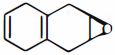
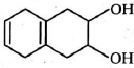
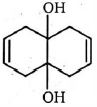
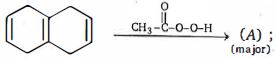
Product $(A)$ is
  • A


  • C

  • D

Answer

Correct option: B.

b
$\begin{matrix}
   O\,\,\,\,\,\,\,\,\,\,\,\,\,\,\,  \\
   ||\,\,\,\,\,\,\,\,\,\,\,\,\,\,\,\,  \\
   C{{H}_{3}}-C-O-O-H  \\
\end{matrix}$ will act as electrophile.
$\therefore$ alkene having more $\alpha $ -hydrogen is better nucleophile it will undergo reaction.

Need a full question paper?

Generate a complete, print-ready paper with questions like this in minutes — across 16+ boards, with answer keys.

Start Generating Free

Similar questions

The energy of a hydrogen atom in the ground state is $\ce{13.6 eV}$. The energy of $\ce{He} +$ ion in the first excited state will be :
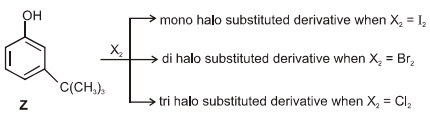
The reactivity of compound $Z$ with different halogens under appropriate conditions is given below :

$Image$

The observed pattern of electrophilic substitution can be explained by

$(A)$ the steric effect of the halogen

$(B)$ the steric effect of the tert-butyl group

$(C)$ the electronic effect of the phenolic group

$(D)$ the electronic effect of the tert-butyl group
Dihydrogen is prepared by the reaction of $Zn$ with $\ce{(aq) NaOH}$. Which of the following compounds is produced with dihydrogen during the course of reaction?
Fear or excitement generally causes one to breathe rapidly and it results in the decrease of concentration of $\ce{CO_2}$​ in blood. In what way, it will change the $\ce{pH}$ of blood?
${H_{2(g)}}$+ ${I_{2(g)}}$ $\rightleftharpoons$ $2H{I_{(g)}}$ In this reaction when pressure increases, the reaction direction
For the reaction

$\mathrm{A}(l) \rightarrow 2 \mathrm{B}(\mathrm{g})$

$\Delta \mathrm{U}=2.1\; \mathrm{kcal}, \Delta \mathrm{S}=20\; \mathrm{cal} \mathrm{K}^{-1}$ at $300\; \mathrm{K}$

Hence $\Delta \mathrm{G}$ in $\mathrm{kcal}$ is

Boron has two stable isotopes, ${^{10}B}$ $(19\%)$ and $^{11}B$ $(81\%)$. The atomic mass that should appear for boron in the periodic table is
The pair of species that has the same bond order in the following is
Which one of the following organic compounds decolourizes an alkaline $KMn{O_4}$ solution
For a concentrated solution of a weak electrolyte ( $K _{ eq }=$ equilibrium constant) $A _2 B _3$ of concentration ' $c$ ', the degree of dissociation " $\alpha$ ' is