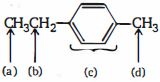
MCQ
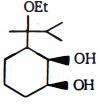
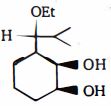
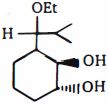
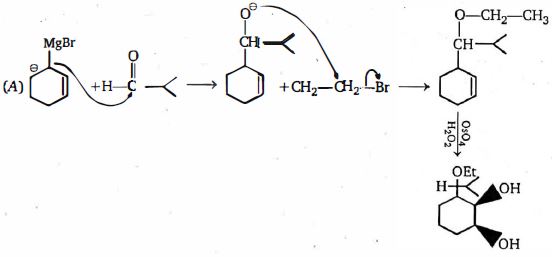
Product $(C)$ is

  • A


  • C

  • D
    Both $(a)$ and $(b)$

Answer

Correct option: B.

b

Need a full question paper?

Generate a complete, print-ready paper with questions like this in minutes — across 16+ boards, with answer keys.
Start Generating Free

Similar questions

During the qualitative analysis of salt with cation $y ^{2+}$, addition of a reagent $( X )$ to alkaline solution of the salt gives a bright red precipitate. The reagent $( X )$ and the cation $\left( y ^{2+}\right)$ present respectively are .... .
Calculate the minimum concentration of sulphate ion required to precipitate $BaSO_4$ in solution containing $10^{-4}\,mol/L$ of $Ba^{+2}$ . $(K_{sp} \,BaSO_4 = 4 \times 10^{-10})$
For $Li^{+2}$ ion, $r_2 : r_5$ will be
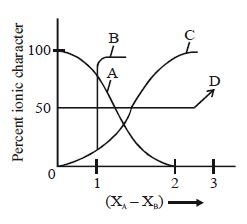
For $AB$ bond if percent ionic character is plotted against electronegativity difference $(X_A -X_B),$ the shape of the curve would look like The correct curve is 
Arrange the following compound in order of their acidic strength :-
$(i)\, CF_3SO_3H\,\,\,\,\,\,\,\,\,\, (ii)\, C_6H_5COOH \,\,\,\,\,\,\,\,(iii) \,C_6H_5OH$
$\xrightarrow[\Delta ]{{alc.\,KOH}}$ product
Air containing $79\%$ of nitrogen and $21\%$ of oxygen by volume is heated at $2200\, K$ and $1$ atm until equilibrium is established according to the reaction
$N_2(g) + O_2(g)  \rightleftharpoons  2NO(g)$
If the $K_p$ of the reaction is $1.1\times10^{-3}$, calculate the amount of nitric oxide produced in terms of volume percent.
Which of the following hydrogens is most easily abstracted on reaction with bromine free radicals,$ Br^{\cdot }$ ?
Given below are two statements:

Statement $(I)$ : $\mathrm{SiO}_2$ and $\mathrm{GeO}_2$ are acidic while $\mathrm{SnO}$ and $\mathrm{PbO}$ are amphoteric in nature.

Statement $(II)$ : Allotropic forms of carbon are due to property of catenation and $\mathrm{p} \pi-\mathrm{d} \pi$ bond formation.

In the light of the above statements, choose the most appropriate answer from the options given below:

The ratio of amounts of ${H_2}S$ needed to precipitate all the metal ions from $100\, ml$ of $1\, M$ $AgN{O_3}$ and $100\, ml$ of $1 \,M$ $CuS{O_4}$ will be