MCQ
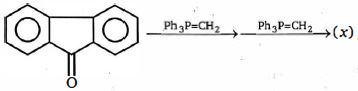
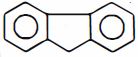
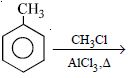
Product $(x)$ is
- A
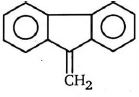
- ✓
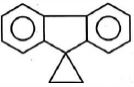
- C
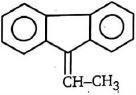
- D
Generate a complete, print-ready paper with questions like this in minutes — across 16+ boards, with answer keys.
$2Na(s) + 2HCl(g)\,\, \to \,\,2NaCl(s) + {H_2}(g),$$\Delta H = - 152\,kcal$ For the reaction $Na(s) + \frac{1}{2}C{l_2}(g)\,\, \to \,\,NaCl(s),\,\Delta H = $ .....$kcal$
$(ii) $ An acid is an electron pair acceptorThe above statements $(i) $ and $(ii)$
$(a)$ Octahedral $Co(III)$ complexes with strong field ligands have very high magnetic moments
$(b)$ When $\Delta_{0}< P$, the $d-$electron configuration of $Co(III)$ in an octahedral complex is $t_{\text {eg }}^{4} e_{g}^{2}$
$(c)$ Wavelength of light absorbed by $\left[\mathrm{Co}(\mathrm{en})_{3}\right]^{3+}$ is lower than that of $\left[\mathrm{CoF}_{6}\right]^{3-}$
$(d)$ If the $\Delta_{0}$ for an octahedral complex of $\mathrm{Co}(\mathrm{III})$ is $18,000 \;\mathrm{cm}^{-1},$ the $\Delta_{\mathrm{t}}$ for its tetrahedral complex with the same ligand will be $16,000\;\mathrm{cm}^{-1}$