Question
.......... Property develops in comb due to friction.

Answer

  1. Attractive
Explanation:
An attractive property is develop in the comb due to friction. The comb on rubbing over dry hairs is aid to be charged.

Need a full question paper?

Generate a complete, print-ready paper with questions like this in minutes — across 16+ boards, with answer keys.
Start Generating Free

Similar questions

A capacitor with no dielectric is connected to a battery at t = 0. Consider a point A in the connecting wires and a point B in between the plates.
For a given plate-voltage, the plate current in a triode is maximum when the potential of(a) The grid is positive and plate is negative(b) The grid is positive and plate is positive(c) The grid is zero and plate is positive(d) The grid is negative and plate is positive
   
   
Same current is flowing through two parallel conducting wires at a distance $d$ in opposite directions. The intensity of magnetic field at the midpoint between the wires is :
Lenz's law is a consequence of the law of conservation of:
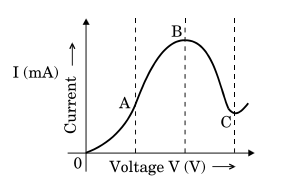
Identify the type of conductor represented by the V-I characteristic curve given below.
Image
A thin rod of length $\frac{f}{3}$ lies along the axis of a concave mirror of focal length $f.$ One end of its magnified image touches an end of the rod. The length of the image is
The measurement of an unknown resistance R is to be carried out using Wheatstones bridge $($see Fig. of $).$ Two students perform an experiment in two ways. The first students takes $R_2 = 10\Omega$ and $R_1 = 5\Omega$ . The other student takes $R_2 = 1000\Omega$ and $R_1 = 500\Omega$ . In the standard arm, both take $R_3 = 5\Omega .$
Both find $\text{R}=\frac{\text{R}_2}{\text{R}_1}\text{R}_3=10\Omega$ within errors.
A charged particle is suspended in equilibrium in a uniform vertical electric field of intensity $20000\ V / m$. If mass of the particle is $9.6 \times 10^{-16} kg,$ the charge on it and excess number of electrons on the particle are respectively $(g =10 m / s ^2)$
In Thomson's method of determining e/m of electrons(a) Electric and magnetic fields are parallel to electrons beam(b) Electric and magnetic fields are perpendicular to each other and perpendicular to electrons beam(c) Magnetic field is parallel to the electrons beam(d) Electric field is parallel to the electrons beam
   
   
Biot-Savart law indicates that the moving electrons (velocity v) produce a magnetic field B such that: