Question
Prove that the work done in a frictional surface is non zero in a closed path.

Answer

Let $\mathrm{F}_f$ be the force of friction in a surface. The work done to carry a mass $m$ from a point $A$ to another point $B$ is, $-F_f$ $A B$. In the return path $B$ to $A$ also, the work done is $-F_f A B$, since the $F_f$ acts against the motion. The net work done is therefore, $-2 \mathrm{~F}_f(\mathrm{AB})$. Since friction is dependent on the nature of the surface it is dependent on path.

Need a full question paper?

Generate a complete, print-ready paper with questions like this in minutes — across 16+ boards, with answer keys.
Start Generating Free

Similar questions

Explain why: The earth without its atmosphere would be inhospitably cold.
Draw a graph of the absolute temperature T of a gas and the mean square velocity $\left( C _{ rms }^2\right)$ of the gas.
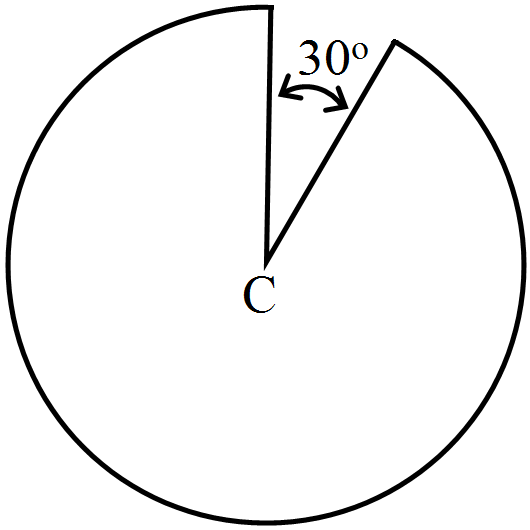
From a complete ring of mass M and radius R, a 30° sector is removed. What is the moment of inertia of the incomplete ring about an axis passing through the centre of the ring and perpendicular to the plane of the ring?
Find the minimum and maximum wavelengths of sound in water that is in the audible range (20-20000Hz) for an average human ear. Speed of sound in water = 1450m/s.
Find the area bounded under the curve $y = 3x^2 + 6x + 7$ and the X-axis with the ordinates at x = 5 and x = 10.
A railroad car of mass M is at rest on frictionless rails when a man of mass m starts moving on the car towards the engine. If the car recoils with a speed v backward on the rails, with what velocity is the man approaching the engine?
You have learnt that a travelling wave in one dimension is represented by a function $y=f(x, t)$ where $x$ and $t$ must appear in the combination $x-v t$ or $x+v t$, i.e. $y=f(x \pm v t)$. Is the converse true? Examine if the following functions for $y$ can possibly represent a travelling wave:
a. $(x-v t)^2$
b. $\log \left[(x+v t) / x_0\right]$
c. $1 /(x+v t)$
Is stress a vector quantity?
A body of mass 10 g is 6cm performs simple harmonic motion on a long line, its maximum speed is $12 ~\text {cm / second}$. Find the period and maximum potential energy.
Why do we need quantum theory?