Question
Prove the following identities:
$1+\frac{\cot^2\theta}{(1+\text{cosec }\theta)}=\text{sec}\theta$

Answer

$\text{L.H.S.}=1+\frac{\cot^2\theta}{(1+\text{cosec }\theta)}$
$=1+\frac{\text{cosec}^2\theta-1}{(1+\text{cosec}\theta)}$
$=\frac{1+\text{cosec}+\text{cosec}^2\theta-1^2}{1+\text{cosec}\theta}$
$=\frac{(1+\text{cosec}\theta)+(\text{cosec}\theta+1)(\text{cosec}\theta-1)}{(1+\text{cosec}\theta)}$
$=\frac{(1+\text{cosec}\theta)\big[1+\text{cosec}\theta-1)\big]}{(1+\text{cosec}\theta)}$
$=1+\text{cosec}\theta-1$
$=\text{cosec}\theta$
$=\text{R.H.S.}$
Hence, LHS = RHS.

Need a full question paper?

Generate a complete, print-ready paper with questions like this in minutes — across 16+ boards, with answer keys.
Start Generating Free

Similar questions

A solid cuboid of iron with dimensions 53cm × 40cm × 15cm is melted and recast into a cylindrical pipe. The outer and inner diameters of pipe are 8cm and 7cm respectively. Find the length of pipe.
Show that the following numbers are irrational.
$6+\sqrt{2}$
If the points A(-1, -4), B(b, c) and C(5, -1) are collinear and 2b + c = 4, find the values of b and c.
Solve : x² + x + 5 = 0
Find:
Is $68$ a term of the A.P. $7, 10, 13, ...?$
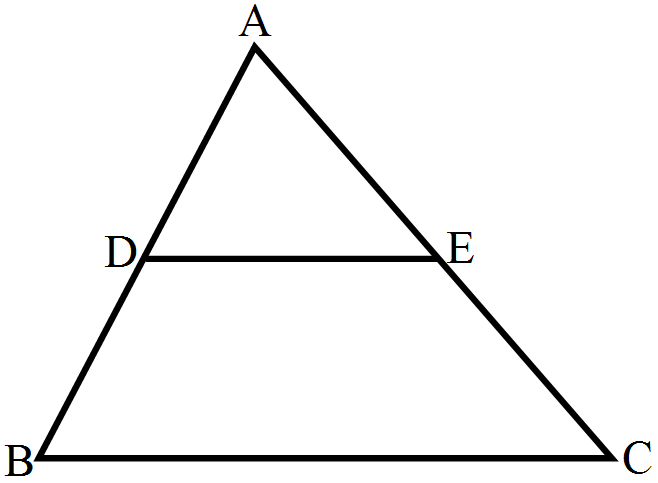
In the given figure, DE || BC such that AD = x cm, DB = (3x + 4)cm, AE = (x + 3)cm and EC = (3x + 19)cm. Find the value of x.
how many two-digit numbers are divisible by 5?
Activity :- Two-digit numbers divisible by 5 are, 10,15,20........95.
Here, d=5, therefore this sequence is an A.P.
Here a=10, d=5, Tn=95, n=?
$t _{ n }$= a+(n-1____)
____= 10+(n-1)×5
____= (n-1)×5
____= (n-1)
therefore n=____
there are ____two-digit numbers divisible by 5.
The annual profits earned by 30 shops of a shopping complex in a locality give rise to the following distribution:
Profit (in lakhs in ₹)
No. of shops (frequency)
More than or equal to 5
30
More than or equal to 10
28
More than or equal to 15
16
More than or equal to 20
14
More than or equal to 25
10
More than or equal to 30
7
More than or equal to 35
3
Draw both ogives for the above data and hence obtain the median.
Write the coordinates of a point on x-axis which is equidistant from the points $(-3, 4)$ and $(2, 5)$.