MCQ
Radioactive substance emits:
- A$\alpha - \text{rays} $
- B$\beta - \text{rays}$
- C$\gamma - \text{rays}$
- DAll of the above.
Generate a complete, print-ready paper with questions like this in minutes — across 16+ boards, with answer keys.
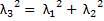
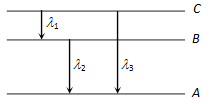
Energy levels A, B, C of a certain atom corresponding to increasing values of energy i.e. . If
. If  are the wavelengths of radiations corresponding to the transitions C to B, B to A and C to A respectively, which of the following statements is correct
|
(a) |
(b) |
(c) |
(d) |
The size of an atom is of the order of
|
(a) |
(b) |
(c) |
(d) |
A body has – 80 micro coulomb of charge. Number of additional electrons in it will be
|
(a) 8 |
(b) 80 |
(c) 5 |
(d) 1.28 |
A particle of mass M and charge Q moving with velocity  describes a circular path of radius R when subjected to a uniform transverse magnetic field of induction B. The work done by the field when the particle completes one full circle is
|
(a) BQv2πR |
(b) |
(c) Zero |
(d) BQ |
The attenuation in optical fibre is mainly due to
|
(a) Absorption |
(b) Scattering |
|
(c) Neither absorption nor scattering |
(d) Both (a) and (b) |
If a current is passed in a spring, it
|
(a) Gets compressed |
(b) Gets expanded |
(c) Oscillates |
(d) Remains unchanged |
A conductor in the form of a right angle ABC with AB = 3 cm and BC = 4 cm carries a current of 10 A. There is a uniform magnetic field of 5 T perpendicular to the plane of the conductor. The force on the conductor will be
|
(a) 1.5 N |
(b) 2.0 N |
(c) 2.5 N |
(d) 3.5 N |
In Millikan oil drop experiment, a charged drop of mass 1.8  is stationary between its plates. The distance between its plates is 0.90 cm and potential difference is 2.0 kilo volts. The number of electrons on the drop is
|
(a) 500 |
(b) 50 |
(c) 5 |
(d) 0 |
Two plates are 2 cm apart, a potential difference of 10 volt is applied between them, the electric field between the plates is
|
(a) 20 N/C |
(b) 500 N/C |
(c) 5 N/C |
(d) 250 N/C |