Question
Read the passage below and answer the questions that follow:
Power is shared among different organs of government, such as the legislature, executive and judiciary. Let us call this horizontal distribution of power because it allows different organs of government placed at the same level to exercise different powers. Such a separation ensures that none of the organs can exercise unlimited power. Each organ checks the others. This results in a balance of power among various institutions. Last year we studied that in a democracy, even though ministers and government officials exercise power, they are responsible to the Parliament or State Assemblies. Similarly, although judges are appointed by the executive, they can check the functioning of executive or laws made by the legislatures. This arrangement is called a system of checks and balances.
  1. Power sharing between different organs of the government is being referred as:
  1. Horizontal distribution of power.
  2. Vertical division of power.
  3. Union Government.
  4. Community Government.
  1. Power Sharing is between:
  1. Legislature, executive and parliament.
  2. Legislature, executive and judiciary.
  3. Legislature, high court and judiciary.
  4. None of the above.
  1. It allows different organs of government placed at the same level to exercise different powers is known as:
  1. Circular distribution of power.
  2. Vertical distribution of power.
  3. Horizontal distribution of power.
  4. All of the above.
  1. Judges are appointed by the executive, they can check the functioning of executive or laws made by the legislature known as:
  1. Horizontal distribution of power.
  2. Vertical distribution of power.
  3. Checks and balances.
  4. All of the above.

Answer

  1. (b) Vertical division of power.
  1. (c) Legislature, high court and judiciary.
  1. (b) Vertical distribution of power.
  1. (d) All of the above.

Need a full question paper?

Generate a complete, print-ready paper with questions like this in minutes — across 16+ boards, with answer keys.

Start Generating Free

Similar questions

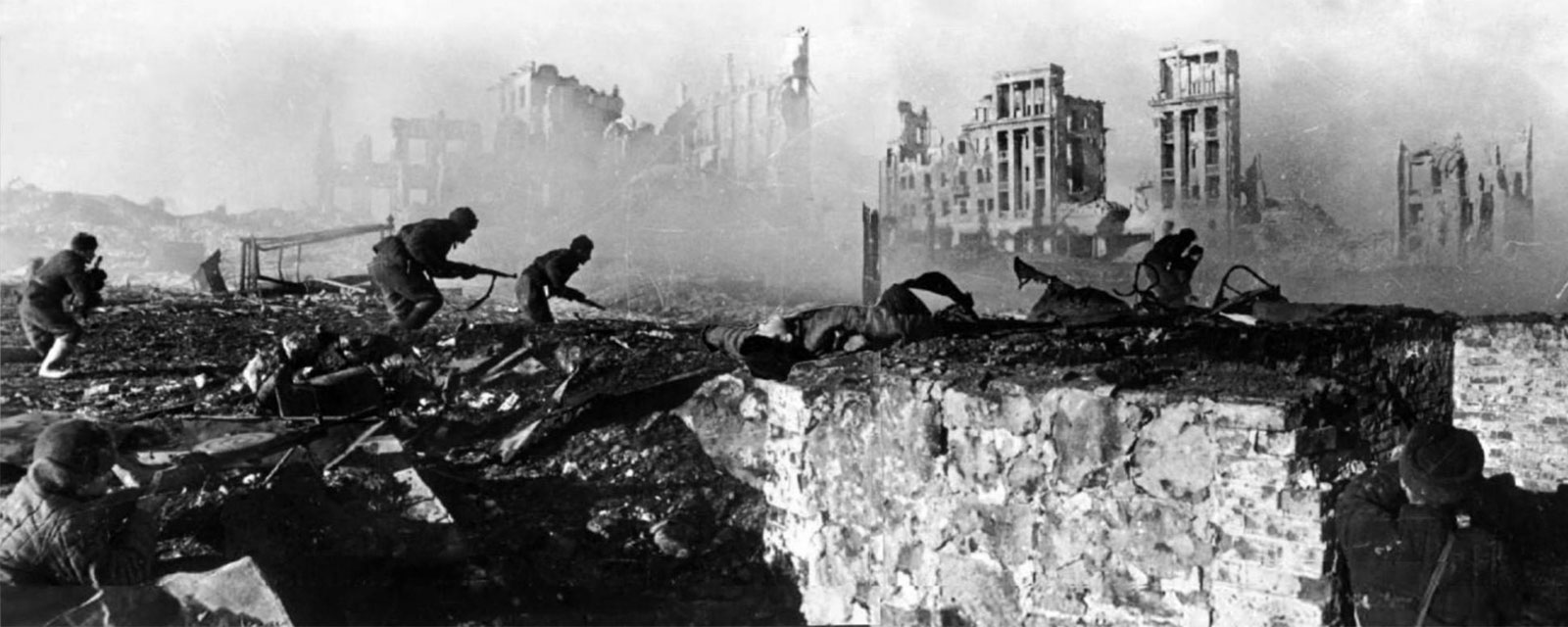
Observe the picture below and answer the questions that follow:
  1. Name the building in Soviet Russia which was devastated in the Second World War.
  2. When did this war break out? Between which two powers was this war fought?
Given the abundance and renewability of water, it is difficult to imagine that we may suffer from water scarcity. The moment we speak of water shortages; we immediately associate it with regions having low rainfall or those that are drought prone. We instantaneously visualise the deserts of Rajasthan and women balancing many 'matkas' (earthen pots) used for collecting and storing water and travelling long distances to get water. True, the availability of water resources varies over space and time, mainly due to the variations in seasonal and annual precipitation, but water scarcity in most cases is caused by over-exploitation, excessive use and unequal access to water among different social groups.
1. Give any one reason that could contribute to water scarcity in the future?
2.Why a resident of Rajasthan would choose to install a submersible water pump?
3. Why is water conservation crucial? Discuss any one key for effective water management and conservation.
Read the passage given below and answer the following questions:

A House Loan
Megha has taken a loan of 5 lakhs from the bank to purchase a house. The annual interest rate on the loan is 12 per cent and the loan is to be repaid in 10 years in monthly installments. Megha had to submit to the bank, documents showing her employment records and salary before the bank agreed to give her the loan.
The bank retained as collateral the papers of the new house, which will be returned to Megha only when she repays the entire loan with interest.
Q.1. From which source of credit Megha has taken loan?
Q.2. Explain the terms of credit given in the source.

Read the source given below and answer the questions that follow:
Ernst Renan, ‘What is a Nation?’
In a lecture delivered at the University of Sorbonne in 1882, the French philosopher Ernst Renan (1823-92) outlined his understanding of what makes a nation. The lecture was subsequently published as a famous essay entitled ‘Qu’est-ce qu’une nation?’ (‘What is a Nation?’). In this essay Renan criticises the notion suggested by others that a nation is formed by a common language, race, religion, or territory:
‘A nation is the culmination of a long past of endeavours, sacrifice and devotion. A heroic past, great men, glory, that is the social capital upon which one bases a national idea. To have common glories in the past, to have a common will in the present, to have performed great deeds together, to wish to perform still more, these are the essential conditions of being a people. A nation is therefore a large-scale solidarity ... Its existence is a daily plebiscite ... A province is its inhabitants; if anyone has the right to be consulted, it is the inhabitant. A nation never has any real interest in annexing or holding on to a country against its will. The existence of nations is a good thing, a necessity even. Their existence is a guarantee of liberty, which would be lost if the world had only one law and only one master.’
Answer the following MCQs by choosing the most appropriate options:
  1. A nation is the culmination of a long past of:
  1. Sacrifice.
  2. Endeavors.
  3. Devotion.
  4. All of these.
  1. What does a nation guarantee to its citizens?
  1. Happiness.
  2. Liberty.
  3. Wealth.
  4. Health.
  1. Ernst Renan was a ......... philosopher.
  1. British.
  2. American.
  3. Japanese.
  4. French.
  1. What is/ are the essential condition/ s of being a people?
  1. To have common glories in the past.
  2. To have performed great deeds together.
  3. To have a common will in the present.
  4. All of these.
Read the extract given below and answer the questions that follow:
Total income is not such a useful measure. Since, countries have different populations, comparing total income will not tell us what an average person is likely to earn. Are people in one country better off than others in a different country? Hence, we compare the average income which is the total income of the country divided by its total population. The average income is also called per capita income. In World Development Reports, brought out by the World Bank, this criterion is used in classifying countries. Countries with per capitain come of US$ 12,056 per annum and above in 2017, are called rich countries and those with per capita income ofUS$ 955 or less are called low-income countries. India comes in the category of low middle income countries because its per capita income in 2017was just US$ 1820 per annum. The rich countries, excluding countries of Middle East and certain other small countries, are generally called developed countries.
  1. Countries with per capita income of US$ 12,056 per annum and above are called ________ .
  1. Low income countries.
  2. Rich countries.
  3. Small countries.
  4. None of these.
  1. We compare the average income by ________.
  1. Total income of the country divided by the total population.
  2. Total population multiplied by total income.
  3. Both A and B.
  4. None of these.
  1. The rich countries exclude the countries of ________.
  1. Middle East.
  2. Certain other small countries.
  3. Srilanka.
  4. All of these.
  1. The average income is:
  1. Income per person.
  2. Income per family.
  3. Income per month.
  4. Income per earning person.
Read the passage given below and answer the following questions:
Agriculture has been the backbone of the Indian economy though its share in the Gross Domestic Product (GDP) has registered a declining trend from 1951 onwards; According to Census of India 2011 about 54.6 per cent of the total work force was employed by the farm sector which makes more than half of the Indian Population dependent on agriculture for sustenance. The declining share of agriculture in the GDP is a matter of serious concern because any decline and stagnation in agriculture will lead to a decline in other spheres of the economy having wider implications for society. Considering the importance of agriculture in India, the Government of India made concerted efforts to modernise agriculture. Establishment of Indian Council of Agricultural Research (ICAR), agricultural universities, veterinary services and animal breeding centres, horticulture development, research and development in the field of meteorology and weather forecast, etc. were given priority for improving Indian agriculture.
Q.1. What steps are taken by the government to modernise agriculture?
Q.2. What is the purpose of establishment of ICAR?
Q.3. Why is the declining share of agriculture a matter of concern?
Read the following text carefully and answer the questions that follow:
Most of the objections to the projects arose due to their failure to achieve the purposes for which they were built. Ironically, the dams that were constructed to control floods have triggered floods due to sedimentation in the reservoir.Moreover, the big dams have mostly been unsuccessful in controlling floods at the time of excessive rainfall. You may have seen or read how the release of water from dams during heavy rains aggravated the flood situation in Maharashtra and Gujarat in 2006. The floods have not only devastated life and property but also caused extensive soil erosion. Sedimentation also meant that the flood plains were deprived of silt, a natural fertiliser, further adding on to the problem of land degradation. It was also observed that the multi-purpose projects induced earthquakes, caused water-borne diseases and pests and pollution resulting from excessive use of water.
i. What is one of the impacts of sedimentation in reservoirs?
ii. What impact did the release of water from dams during heavy rains have on the flood situation in Maharashtra and Gujarat in 2006?
iii. Explain the negative environmental impacts associated with multi-purpose projects.
Shanghai became the hub of the new print culture, catering to the Western-style schools. From hand printing, there was now a gradual shift to mechanical printing.
Buddhist missionaries from China introduced hand-printing technology into Japan around AD 768-770. The oldest Japanese book, printed in AD 868, is the Buddhist Diamond Sutra.
In the late eighteenth century, in the flourishing urban circles at Edo, illustrated collections of paintings depicted an elegant urban culture, involving artists, courtesans, and teahouse gatherings. Libraries and bookstores were packed with hand-printed material of various types-books on women, musical instruments, calculations, tea ceremony, flower arrangements, proper etiquette, cooking and famous places.
i. Give ancient name of Tokyo.
ii. Name the centre of the new print culture in China and describe it.
iii. What is the name of the oldest printed book of Japan? Mention its feature.
Read the source given below and answer the questions that follows:
Manufacturing industries not only help in modernising agriculture, which forms the backbone of our economy, they also reduce the heavy dependence of people on agricultural income by providing them jobs in secondary and tertiary sectors. Industrial development is a precondition for eradication of unemployment and poverty from our country. This was the main philosophy behind public sector industries and joint sector ventures in India. It was also aimed at bringing down regional disparities by establishing industries
in tribal and backward areas. Export of manufactured goods expands trade and commerce, and brings in much needed foreign exchange. Countries that transform their raw materials into a wide variety of finished goods of higher value are prosperous. India's prosperity lies in increasing and diversifying its manufacturing industries as quickly as possible. Agriculture and industry are not exclusive of each other. They move hand in hand. For instance, the agro-industries in India have given a major boost to agriculture by raising its productivity.
Q.1. How India can become a prosperous country?
Q.2. What values do you learn from the above extract?
Q.3. What was the motto of establishing public sector and joint sector ventures in India?
Read the extract given below and answer the questions that follow:

Source - Swaraj in the Plantations

Workers too had their own understanding of Mahatma Gandhi and the notion of Swaraj. For plantation workers in Assam, freedom meant the right to move freely in and out of the confined space in which they were enclosed, and it meant retaining a link with the village from which they had come. Under the Inland Emigration Act of 1859, plantation workers were not permitted to leave the tea gardens without permission, and in fact they were rarely given such permission. When they heard of the Non-Cooperation Movement, thousands of workers defied the authorities, left the plantations and headed home. They believed that Gandhi Raj was coming and everyone would be given land in their own villages. They, however, never reached their destination. Stranded on the way by a railway and steamer strike, they were caught by the police and brutally beaten up.
Q.1. Explain the understanding of 'Swaraj' for plantation workers in Assam.
Q.2. Explain the Inland Emigration Act of 1859 as a barrier to freedom of plantation workers.