Question
Read the passage given below and answer the following questions
Few colligative properties are:
The following questions are multiple choice questions. Choose the most appropriate answer:
Few colligative properties are:
- Relative lowering of vapour pressure: depends only on molar concentration of solute (mole fraction) and independent of its nature.
- Depression in freezing point: it is proportional to the molal concentration of solution.
- Elevation of boiling point: it is proportional to the molal concentration of solute.
- Osmotic pressure: it is proportional to the molar concentration of solute
The following questions are multiple choice questions. Choose the most appropriate answer:
- Molality of the given solution is.
- 0.0052m
- 0.0036m
- 0.0006m
- 1.29m
- Boiling point for the solution will be.
- 373.05K
- 373.15K
- 373.02K
- 373.02K
- The depression in freezing point of solution will be.
- 0.0187K
- 0.035K
- 0.082K
- 0.067K
- Mole fraction of glucose in the given solution is.
- 6.28 × 10⁻⁵
- 6.28 × 10⁻⁴
- 0.00625
- 0.00028
- If same amount of sucrose (C12 H22 O11) is taken instead of glucose, then.
- Elevation in boiling point will be higher.
- Depression in freezing point will be higher.
- Depression in freezing point will be lower.
- Both (a) and (b).
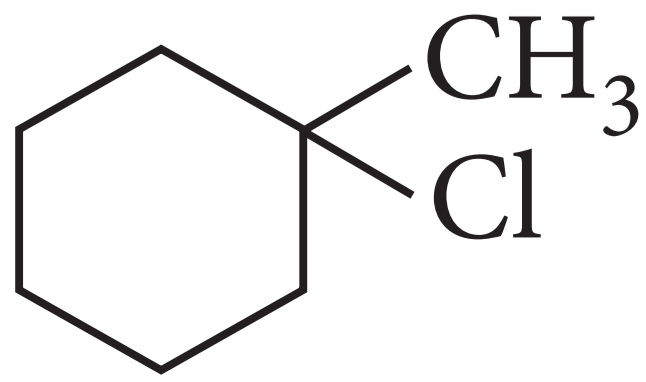 is more reactive than
 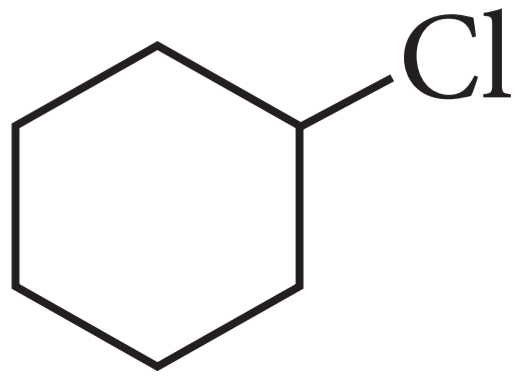 towards nucleophilic substitution reactions.
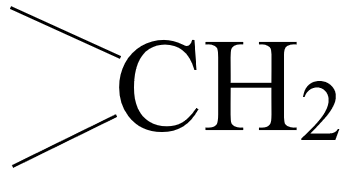 group on treatment with Zn-Hg and cone. HCl (Clemmensen reduction) or with hydrazine followed by NaOH or KOH in highly boiling solvent such as ethylene glycol (Wolff-Kishner reduction).Aldehydes differ from ketones in their oxidation reactions. Aldehydes are easily oxidised to carboxylic acids on treatment with HNO3, KMnO4, K2Cr2O7 etc. Even mild oxidising agents mainlyTollens' reagent and Fehling's solution also oxidise aldehydes. Ketones are generally oxidised under vigorous conditions i.e., strong oxidising agents and at elevated temperatures, to give mixture of carboxylic acids having lesser number of C-atoms than the parent ketone.
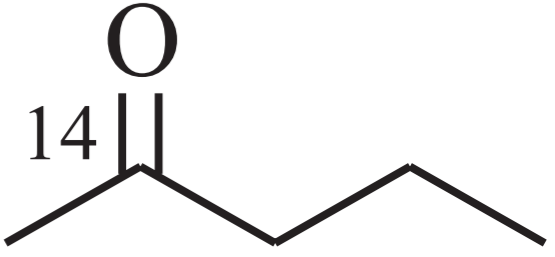 by acidified K2Cr2O7, the products are: