Question
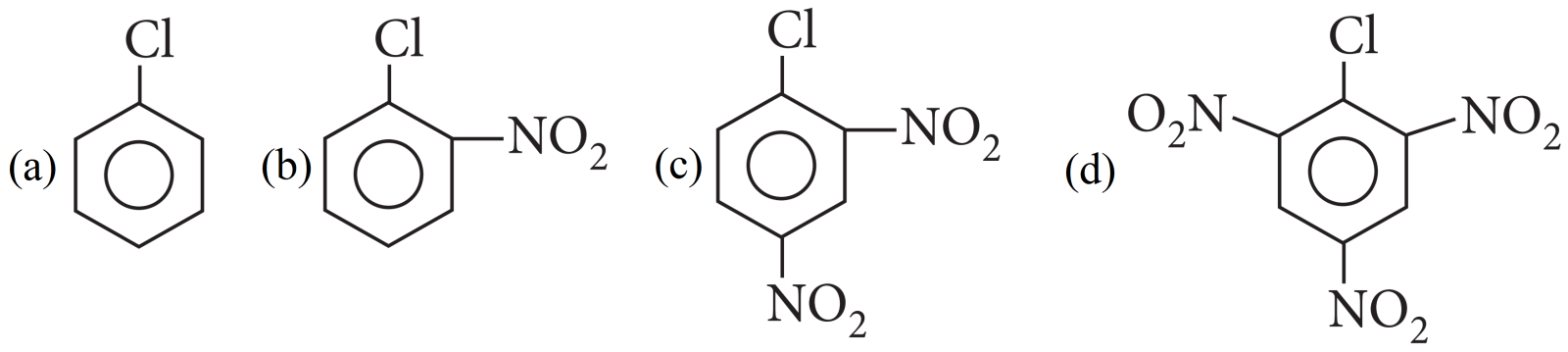
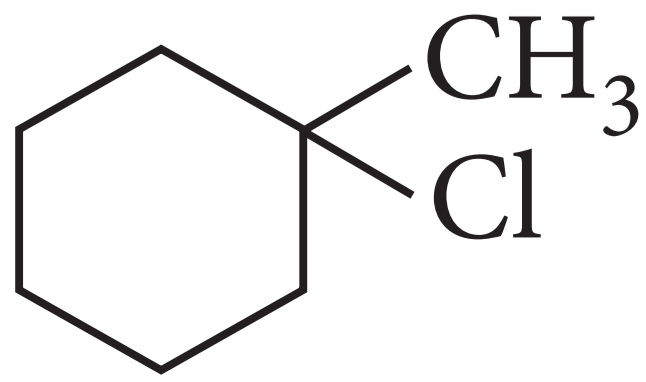 is more reactive than
 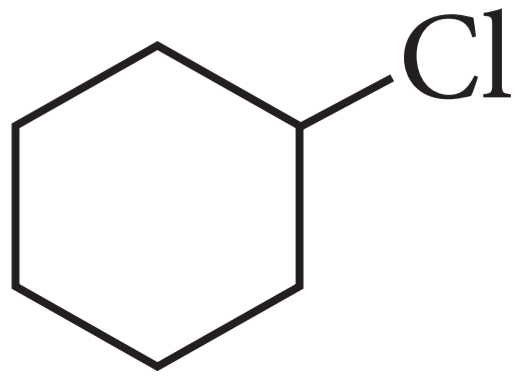 towards nucleophilic substitution reactions.
✓
Answer
- (b) Assertion and reason both are correct statements but reason is not correct explanation for assertion.
Explanation:
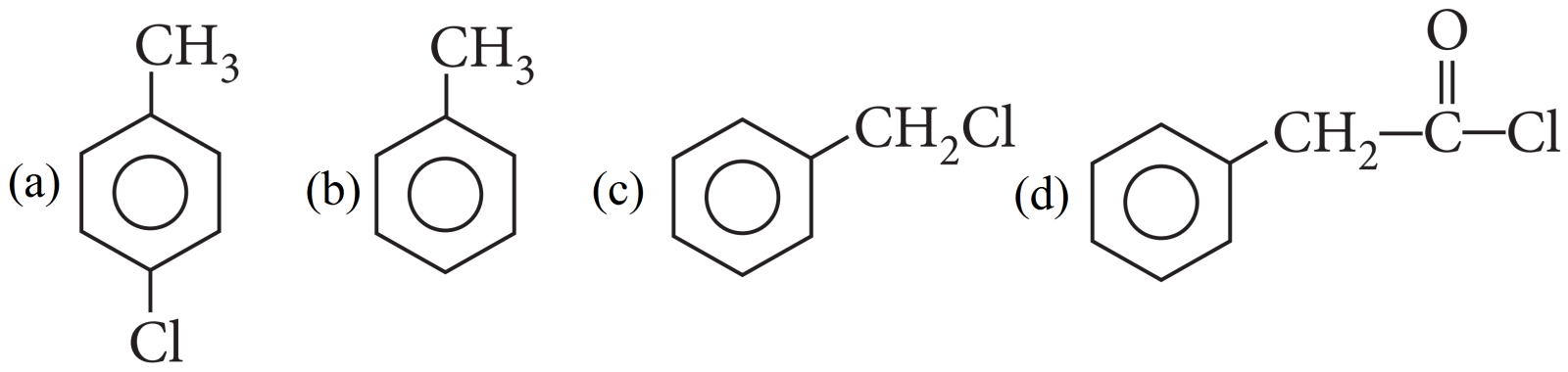
Primary benzylic halides show higher reactivity in SN1 reactions than primary alkyl halides. This is due to the greater stabilisation of the benzylic carbocation intermediates by resonance.
- (a) Assertion and reason both are correct statements and reason is correct explanation for assertion.
- (a) Assertion and reason both are correct statements and reason is correct explanation for assertion.
Explanation:
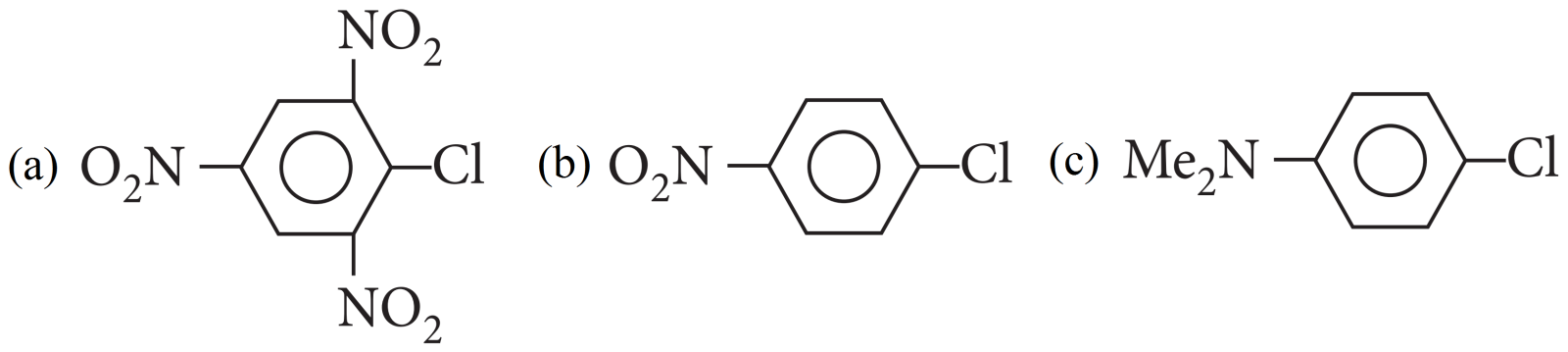
On comparing the relative stabilities of carbanion of chlorobenzene and p-chloroanisole,
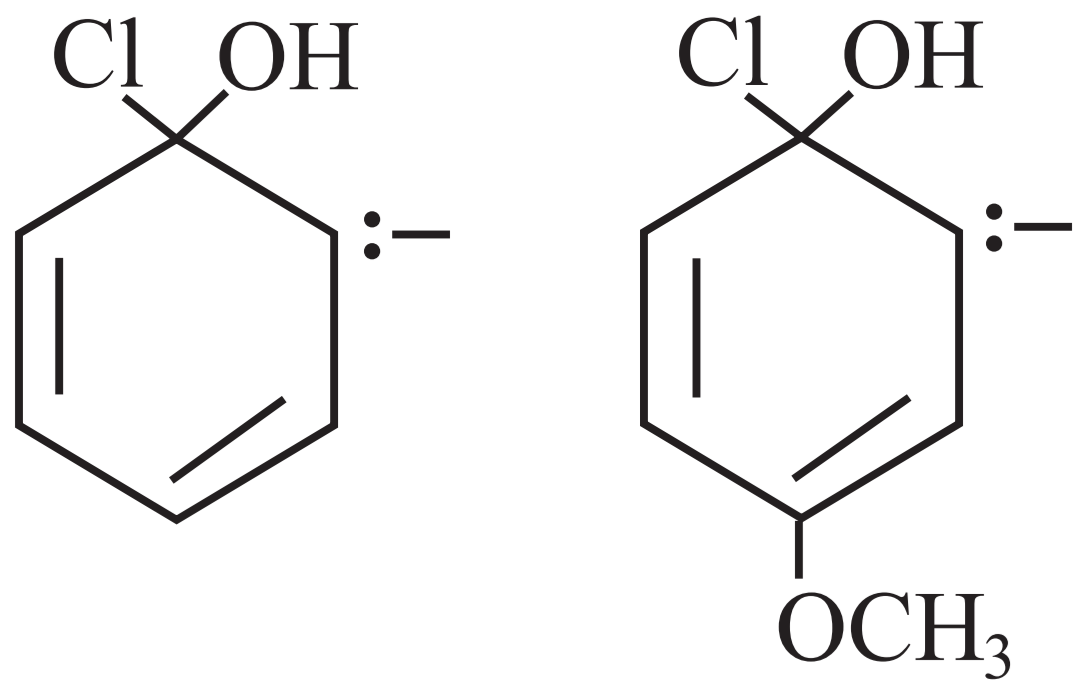
The electron donating group (OCH3) in anisole tends to intensify the negative charge relative to carbanion in chlorobenzene. Thus, p-chloroanisole is less reactive than chlorobenzene.
- (b) Assertion and reason both are correct statements but reason is not correct explanation for assertion.
Explanation:
As compared to chlorobenzene, the intermediate carbanion resulting from 4-nitrochlorobenzene is stabilized by-R-effect of the N02 group.
- (c) Assertion is correct statement but reason is wrong statement.
Explanation:
Chlorobenzene is less reactive than benzene towards the electrophilic substitution reactions due to -I effect.
Need a full question paper?
Generate a complete, print-ready paper with questions like this in minutes — across 16+ boards, with answer keys.
Explore more
Similar questions
Two types of conductors are generally used, metallic and electrolytic. Free electrons are the current carrier in metallic and in electrolytic conductors, free ions. Specific conductance or conductivity of an electrolytic solution is given by $\text{K}=\text{C}\times\frac{\text{l}}{\text{A}}$ where, $\text{C}\times\frac{1}{\text{R}}$ and $\frac{\text{l}}{\text{A}}=\text{G}^\star$ (cell constant) Molar conductance $(\wedge_\text{m})$ and equivalent conductance $(\wedge_\text{e})$ of an electrolyte solution are calculated as $\wedge_\text{m}=\frac{\text{K}\times1000}{\text{M}}$ or $\wedge_\text{e}=\frac{\text{K}\times1000}{\text{N}}$ where, M = molarity of solution and N is normality of solution. Molar conductance of strong electrolyte depends on the concentration. $\wedge_\text{m}=\wedge^\circ_{\text{m}^-}\text{b}\sqrt{\text{C}}$ $\wedge^\circ_\text{m}=$ molar conductance at infinite dilution, b = constant, C = cone.of solution In these questions (Q. No. i-iv), a statement of assertion followed by a statement of reason is given. Choose the correct answer out of the following choices.
→- Assertion and reason both are correct statements and reason is correct explanation for assertion.
- Assertion and reason both are correct statements but reason is not correct explanation for assertion.
- Assertion is correct statement but reason is wrong statement.
- Assertion is wrong statement but reason is correct statement.
- Assertion: The molar conductivity of strong electrolyte decreases with increase in concentration.
Reason: At high concentration, migration ofions is slow.
- Assertion: The molar conductance of weak electrolyte at infinite dilution is equal to the sum of molar conductance of cations and anions.
Reason: Kohlrausch's law is applicable for strong electrolytes.
- Assertion: Equivalent conductance of all electrolytes increases with increasing concentration.
Reason: More number ofions are available per gram equivalent at higher concentration.
- Assertion: Specific conductance decreases with dilution whereas equivalent conductance increases.
Reason: On dilution, number of ions per millilitre decreases but total number ofions increases considerably.
- Assertion: The ratio of specific conductivity to the observed conductance does not depend upon the concentration of the solution taken in the conductivity cell.
Reason: Specific conductivity decreases with dilution whereas observed conductance increases with dilution.
Read the passage given below and answer the following questions:
To explain bonding in coordination compounds various theories were proposed. One of the important theory was valence bond theory. According to that, the central metal ion in the complex makes available a number of empty orbitals for the formation of coordination bonds with suitable ligands. The appropriate atomic orbitals of the metal hybridise to give a set of equivalent orbitals of definite geometry.
The d-orbitals involved in the hybridisation may be either inner d-orbitals i.e., (n - 1)d or outer d-orbitals i.e., nd. For example, Co3+ forms both inner orbital and outer orbital complexes, with ammonia it forms [Co(NH3)6]3+ and with fluorine it forms [CoF6]3- complex ion.
The following questions are multiple choice questions. Choose the most appropriate answer:
→To explain bonding in coordination compounds various theories were proposed. One of the important theory was valence bond theory. According to that, the central metal ion in the complex makes available a number of empty orbitals for the formation of coordination bonds with suitable ligands. The appropriate atomic orbitals of the metal hybridise to give a set of equivalent orbitals of definite geometry.
The d-orbitals involved in the hybridisation may be either inner d-orbitals i.e., (n - 1)d or outer d-orbitals i.e., nd. For example, Co3+ forms both inner orbital and outer orbital complexes, with ammonia it forms [Co(NH3)6]3+ and with fluorine it forms [CoF6]3- complex ion.
The following questions are multiple choice questions. Choose the most appropriate answer:
- Which of the following is not true for [CoF6]3-?
- It is paramagnetic.
- It has coordination number of 6.
- It is outer orbital complex.
- It involves d2sp3 hybridisation.
- [Cr(H2O)6]Cl3 (at. no. of Cr = 24) has a magnetic moment of 3.83B.M. The correct distribution of 3d-electrons in the central metal of the complex is:
- $3\text{d}^1_\text{xy},3\text{d}^1_{\text{x}^2-\text{y}^2},3\text{d}^1_\text{yz}$
- $3\text{d}^1_\text{xy},3\text{d}^1_{\text{yz}},3\text{d}^1_\text{zx}$
- $3\text{d}^1_\text{xy},3\text{d}^1_{\text{zy}},3\text{d}^1_{\text{z}^2}$
- $3\text{d}^1_{\text{x}^2-\text{y}^2},3\text{d}^1_{\text{z}^2},3\text{d}^1_\text{xz}$
- Which of the following is true for [Co(NH3)6]3+?
- It is an octahedral, di magnetic and outer orbital complex.
- It is an octahedral, paramagnetic and outer orbital complex.
- It is an octahedral, paramagnetic and inner orbital complex.
- It is an octahedral, di magnetic and inner orbital complex.
- The paramagnetism of [CoF6]3- is due to.
- 3 electrons.
- 4 electrons.
- 2 electrons.
- 1 electron.
- Which of the following is an inner orbital or low spin complex?
- [Ni(H2O)6]3+
- [FeF6]3-
- [Co(CN)6]3-
- [NiCl4]2-
The half-life of a reaction is the time required for the concentration of reactant to decrease by half, i.e.,
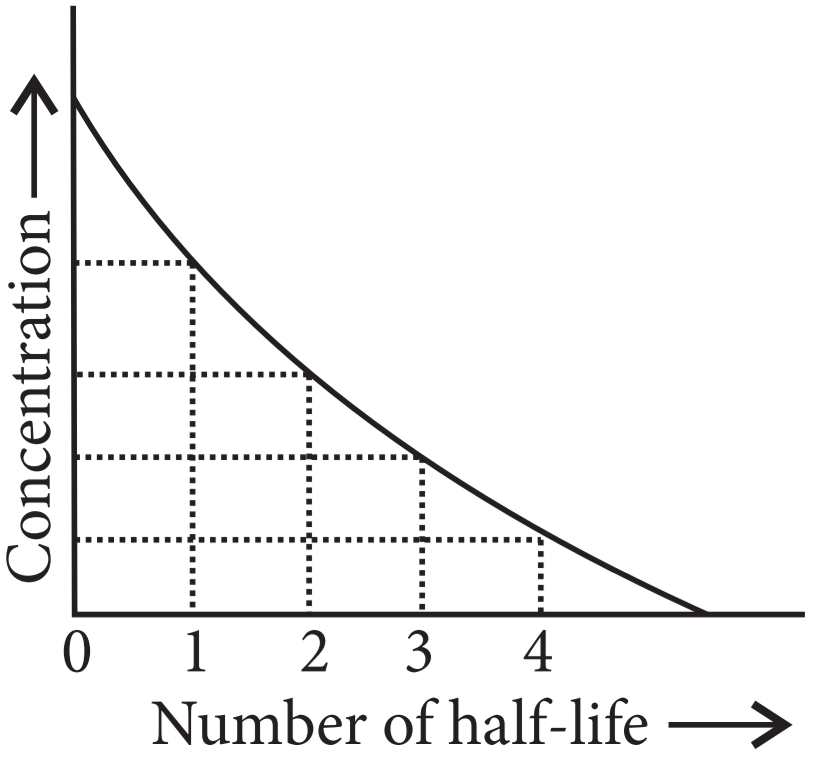
$[\text{A}]_\text{t}=\frac{1}{2}[\text{A}]$
For first order reaction,
$\text{t}_\frac{1}{2}=\frac{0.693}{\text{k}}$
this means $\text{t}\frac{1}{2}$ is independent of initial concentration. Figure shows that typical variation of concentration of reactant exhibiting first order kinetics. It may be noted that though the major portion of the first order kinetics may be over in a finite time, but the reaction will never cease as the concentration of reactant will be zero only at infinite time.
The following questions are multiple choice questions. Choose the most appropriate answer:
- A first order reaction has a rate constant k = 3.01 × 10⁻³ /s. How long it will take to decompose half of the reactant?
- 2.303s
- 23.03s
- 230.3s
- 2303s
- The rate constant for a first order reaction is 7.0 × 10⁻⁴ s-1. If initial concentration ofreactant is 0.080 M, what is the half life of reaction?
- 990s
- 79.2s
- 12375s
- 10.10 × 10⁻⁴s
- For the half-life period of a first order reaction, which one of the following statements is generally false?
- It is independent of initial concentration.
- It is independent of temperature.
- It decreases with the introduction of a catalyst.
- None of these.
- The rate of a first order reaction is 0.04 mol L-1 s-1 at 10 minutes and 0.03 mol L-1 s-1 at 20 minutes after initiation. The half-life of the reaction is:
- 4.408 min
- 44.086 min
- 24.086 min
- 2.408 min
The plot of $\text{t}_\frac{1}{2}$ vs initial concentration [A]0 for a first order reaction is given by:

Read the passage given below and answer the following questions: Amines are produced when an alcoholic solution of ammonia and an alkyl or a benzyl halide is heated in a sealed tube at 373K. This reaction is called ammonolysis and usually gives a mixture of primary, secondary and tertiary amines along with some quarternary ammonium salts. This reaction is an example of nucleophilic substitution reaction in which ammonia acts as a nucleophile due to the presence of a lone pair of electrons on the nitrogen atom. However this method cannot be used for the preparation of aryl amines. One of the most convenient methods for the preparation of aryl amines is reduction of nitro compounds. Aryl amines can also be prepared by reduction of nitrites or Gabriel phthalimide synthesis. A statement of assertion followed by a statement of reason is given. Choose the correct answer out of the following choices.
- Assertion and reason both are correct statements and reason is correct explanation for assertion.
- Assertion and reason both are correct statements but reason is not correct explanation for assertion.
- Assertion is correct statement but reason is wrong statement.
- Assertion is wrong statement but reason is correct statement.
- Assertion: Ammonolysis of alkyl halides only produces 2° amines.
Reason: Ammonolysis of alkyl halides involves the reaction between alkyl halides and alcoholic ammonia.
- Assertion: Gabriel-phthalimide reaction can be used to prepare both aryl and alkyl primary amines.
Reason: Aryl halides are more reactive alkyl halides towards nucleophilic substitution reactions.
- Assertion: Anunonolysis method cannot be used for the preparation of aryl amines.
Reason: Aryl halides are much less reactive than alkyl halides towards nucleophilic substitution reaction.
- Assertion: Ammonolysis can be used to prepare pure primary amines.
Reason: Ammonolysis of haloalkanes lead to multiple ammonium salts.
- Assertion: Aromatic 1º amines can not be prepared by Gabriel phthalimide synthesis.
Reason: Aryl halides do not undergo nucleophilic substitution with anion formed by phthalimide.
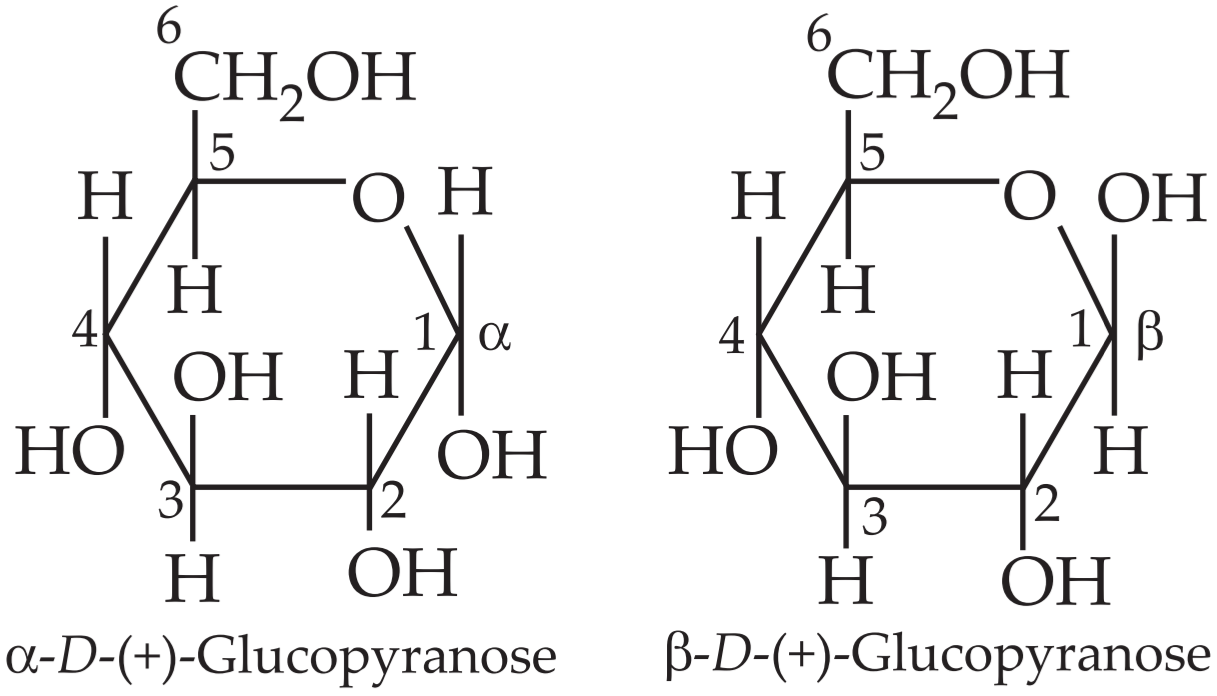
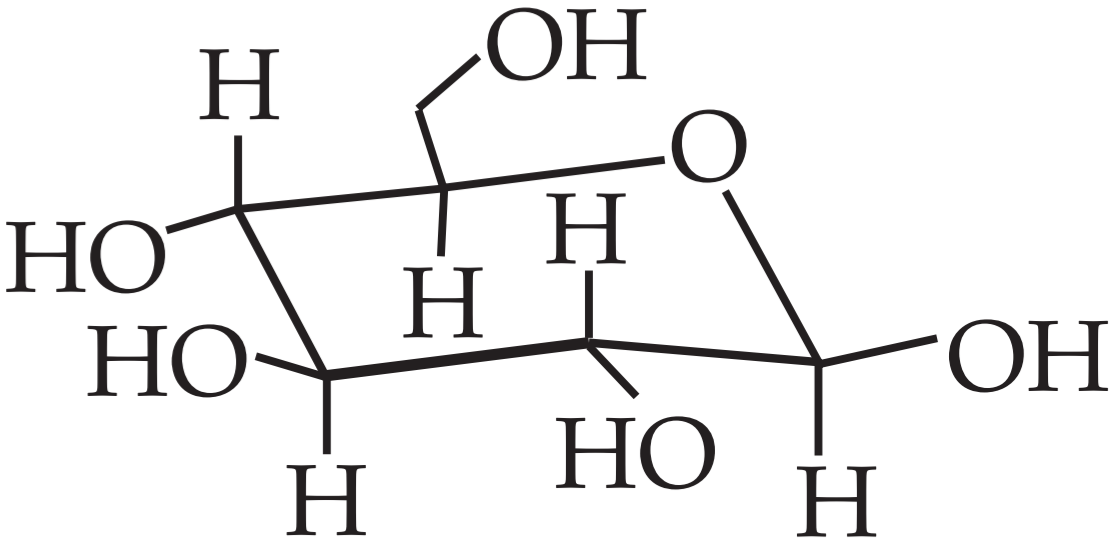
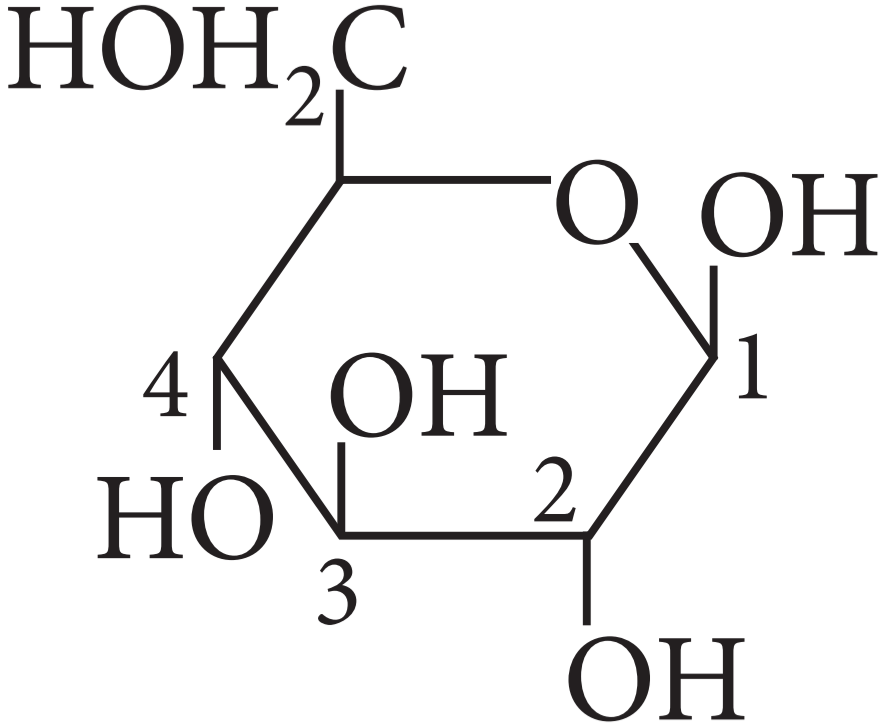
Describe detailed information on classification of carbohydrates.
Read the passage given below and answer the following questions: Proteins are high molecular mass complex biomolecules of amino acids. The important proteins required for our body are enzymes, hormones, antibodies, transport proteins, structural proteins, contractile proteins etc. Except for glycine, all $\alpha$-amino acids have chiral carbon atom and most of them have L-configuration. The amino acids exists as dipolar ion called zwitter ion, in which a proton goes from the carboxyl group to the amino group. A large number of $\alpha$-amino acids are joined by peptide bonds forming polypeptides. The peptides having very large molecular mass (more than 10,000) are called proteins. The structure of proteins is described as primary structure giving sequence of linking of amino acids; secondary structure giving manner in which polypeptide chains are arranged and folded; tertiary structure giving folding, coiling or bonding polypeptide chains producing three dimensional structures and quaternary structure giving arrangement of sub-units in an aggregate protein molecule. A statement of assertion followed by a statement of reason is given. Choose the correct answer out of the following choices.
→→- Assertion and reason both are correct statements and reason is correct explanation for assertion.
- Assertion and reason both are correct statements but reason is not correct explanation for assertion.
- Assertion is correct statement but reason is wrong statement.
- Assertion is wrong statement but reason is correct statement.
- Assertion: Except glycine, all naturally occurring CL-amino acids are optically active.
Reason: All naturally occurring CL-amino acids, except glycine, has at least one asymmetric carbon.
- Assertion: All amino acids are optically active.
Reason: Amino acids contain asymmetric carbon atoms.
- Assertion: In $\alpha$-helix structure, intramolecular H-bonding takes place whereas in $\beta$-pleated structure, intermolecular H-bonding takes place.
Reason: An egg contains a soluble globular protein called albumin which is present in the white part.
- Assertion: Secondary structure of protein refers to regular folding patterns of continuos portions of the polypeptide chain.
Reason: Out of 20 amino acids, only 12 amino acids can be synthesised by human body.
- Assertion: The helical structure of protein is stabilised by intramolecular hydrogen bond between -NH and carbonyl oxygen.
Reason: Sanger's reagent is used for the identification of N-tenninal amino acid of peptide chain.
Read the passage given below and answer the following questions: The phenomenon of the flow of solvent through a semipermeable membrane from pure solvent to the solution is called osmosis. Sometimes a pressure is applied to stop the process of osmosis, this is known as osmotic pressure. It is denoted by $\pi.$ Osmotic pressure is expressed as : $\pi=\text{CRT}$ Since, osmotic pressure depends upon the molar concentration of solution, therefore it is a colligative property. A statement of assertion followed by a statement of reason is given. Choose the correct answer out of the following choices.
→→- Assertion and reason both are correct statements and reason is correct explanation for assertion.
- Assertion and reason both are correct statements but reason is not correct explanation for assertion.
- Assertion is correct statement but reason is wrong statement.
- Assertion is wrong statement but reason is correct statement.
- Assertion: If red blood cells were removed from the body and placed in pure water, pressure inside the cells increases.
Reason: The concentration of salt content in the cells increases.
- Assertion: The osmotic pressure of a solution obtained by mixing 100mL of 3.4% solution of urea and 100mL of 1.6% solution of cane sugar at 293K is 7.46 bar.
Reason: The total osmotic pressure will be equal to the sum of partial osmotic pressures.
- Assertion: When a solution is separated from the pure solvent by a semipermeable membrane, the solvent molecules pass through it from pure solvent side to the solution side.
Reason: Diffusion of solvent occurs from a region of high concentration to a region of low concentration solution.
- Assertion: Two solutions having same osmotic pressure at a given temperature are called isotonic solutions.
Reason: Osmotic pressure is not a colligative property.
- Assertion: The preservation of meat by salting and fruits by adding sugar protects against bacterial action.
Reason: A bacterium on salted meat or candid fruit loses water due to osmosis shrivels and ultimately dies.
Read the passage given below and answer the following questions: Carboxylic acids having an $\alpha$-hydrogen atom when treated with chlorine or bromine in the presence of small amount of red phosphorus gives $\alpha$-halocarboxytic acids. The reaction is known as Hell-Volhard-Zelinsky reaction. $\text{R}-\text{CH}_2-\text{COOH}+\text{X}_2\xrightarrow{\text{red p}}\text{R}-\text{CH}-\text{COOH}\\ \ \ \ \ \ \ \ \ \ \ \ \ \ \ \ \ \ \ \ \ \ \ \ \ \ \ \ \ \ \ \ \ \ \ \ \ \ \ \ \ \ \ \ \ \ \ \ \ \ \ \ \ \ \ \ \ \ \ \ \ \ |\\ \ \ \ \ \ \ \ \ \ \ \ \ \ \ \ \ \ \ \ \ \ \ \ \ \ \ \ \ \ \ \ \ \ \ \ \ \ \ \ \ \ \ \ \ \ \ \ \ \ \ \ \ \ \ \ \ \ \ \ \ \text{X}\\ \ \ \ \ \ \ \ \ \ \ \ \ \ \ \ \ \ \ \ \ \ \ \ \ \ \ \ \ \ \ \ \ \ \ \ \ \ \ \ \ \ \ \ \ \ \ \ \ \ \ \ \ \ \ (\text{X = Cl, Br)}$ When sodium salt of carboxylic acid is heated with soda lime it loses carbon dioxide and gives hydrocarbon with less number of C-atoms. $\text{R}-\text{COOH}\xrightarrow{\text{NaOH}}\text{R}-\text{COONa}\xrightarrow[\Delta]{\text{NaOH}+\text{CaO}}\text{R}-\text{H}+\text{Na}_2\text{CO}_3\\\text{Carboxylic}\ \ \ \ \ \ \ \ \ \ \ \ \ \ \ \ \ \ \ \ \ \text{Sod.}\ \ \ \ \ \ \ \ \ \ \ \ \ \ \ \ \ \ \ \ \ \ \ \ \ \ \ \ \ \text{Alkane}\\\ \ \ \ \ \text{acid}\ \ \ \ \ \ \ \ \ \ \ \ \ \ \ \ \ \ \ \ \ \ \text{carboxylate}$ In these questions (Q. No. l-iv), a statement of assertion followed by a statement ofreason is given. Choose the correct answer out of the following choices.
→- Assertion and reason both are correct statements and reason is correct explanation for assertion.
- Assertion and reason both are correct statements but reason is not correct explanation for assertion.
- Assertion is correct statement but reason is wrong statement.
- Assertion is wrong statement but reason is correct statement.
- Assertion: (CH3)3CCOOH does not give H.V.Z reaction.
Reason: (CH3)3CCOOH does not have $\alpha$-hydrogen atom.
- Assertion: H.V.Z. reaction involves the treatment of carboxylic acids having $\alpha$-hydrogens with Cl2 or Br2 in presence of small amount of red phosphorus.
Reason: Phosphorus reacts with halogens to form phosphorus trihalides.
- Assertion: Propionic acid with $\frac{\text{Br}_2}{\text{P}}$ yields CH2Br - CHBr - COOH.
Reason: Propionic acid has two $\alpha$-hydrogen atoms.
- Assertion: C6H5COCH2COOH undergoes decarboxylation easily than C6H5COCH2COOH.
Reason: C6H5COCH2COOH is $\beta$-keto acid.
- Assertion: On heating 3-methylbutanoic acid with soda lime, isobutane is obtained.
Reason: Soda lime is a mixture of NaOH + CaO in the ratio 3 : 1.