Question
Read the passage given below and answer the following questions from $1$ to $5$.
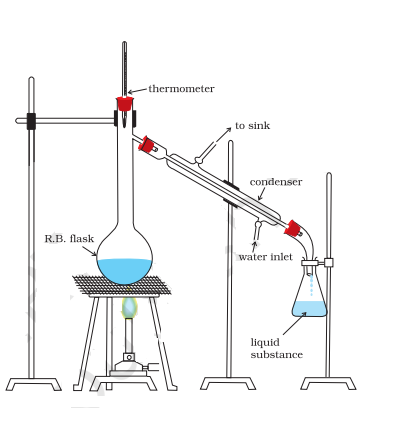
The term ‘hydrocarbon’ is self-explanatory which means compounds of carbon and hydrogen only. Hydrocarbons play a key role in our daily life. You must be familiar with the terms ‘LPG’ and ‘CNG’ used as fuels. LPG is the abbreviated form of liquified petroleum gas whereas CNG stands for compressed natural gas. Another term ‘LNG’ (liquified natural gas) is also in news these days. This is also a fuel and is obtained by liquifaction of natural gas. Petrol, diesel and kerosene oil are obtained by the fractional distillation of petroleum found under the earth’s crust. Coal gas is obtained by the destructive distillation of coal. Natural gas is found in upper strata during drilling of oil wells. The gas after compression is known as compressed natural gas. LPG is used as a domestic fuel with the least pollution. Kerosene oil is also used as a domestic fuel but it causes some pollution. Automobiles need fuels like petrol, diesel and CNG. Petrol and CNG operated automobiles cause less pollution. All these fuels contain mixture of hydrocarbons, which are sources of energy. Hydrocarbons are also used for the manufacture of polymers like polythene, polypropene, polystyrene etc. Higher hydrocarbons are used as solvents for paints. They are also used as the starting materials for manufacture of many dyes and drugs. Thus, you can well understand the importance of hydrocarbons in your daily life. In this unit, you will learn more about hydrocarbons.
Classification Hydrocarbons are of different types. Depending upon the types of carbon-carbon bonds present, they can be classified into three main categories – (i) saturated
(ii) unsaturated and
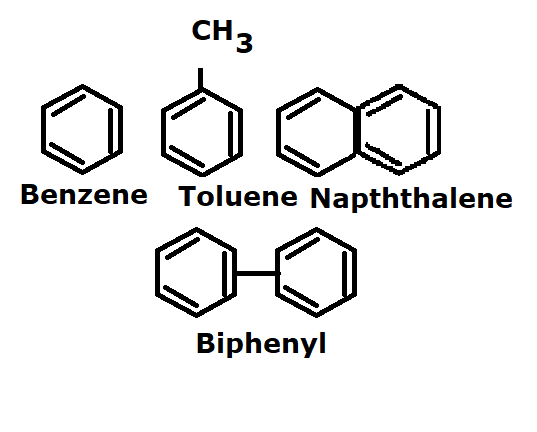
(iii) aromatic hydrocarbons. Saturated hydrocarbons contain carbon-carbon and carbon-hydrogen single bonds. If different carbon atoms are joined together to form open chain of carbon atoms with single bonds, they are termed as alkanes. On the other hand, if carbon atoms form a closed chain or a ring, they are termed as cycloalkanes. Unsaturated hydrocarbons contain carbon-carbon multiple bonds – double bonds, triple bonds or both. Aromatic hydrocarbons are a special type of cyclic compounds. You can construct a large number of models of such molecules of both types (open chain and close chain) keeping in mind that carbon is tetravalent and hydrogen is monovalent. For making models of alkanes, you can use toothpicks for bonds and plasticine balls for atoms. For alkenes, alkynes and aromatic hydrocarbons, spring models can be constructed.
Alkanes As already mentioned, alkanes are saturated open chain hydrocarbons containing carbon – carbon single bonds. Methane $(CH_4)$ is the first member of this family. Methane is a gas found in coal mines and marshy places. If replace one hydrogen atom of methane by carbon and join the required number of hydrogens to satisfy the tetravalence of the other carbon atom,it get $C_2H_6$. This hydrocarbon with molecular formula $C_2H_6$ is known as ethane. Thus it can consider $C_2H_6$ as derived from $CH_4$ by replacing one hydrogen atom by $-CH_3$ group. Go on constructing alkanes by doing this theoretical exercise i.e., replacing hydrogen atom by $–CH_3$ group. The next molecules will be $C_3H_8, C_4H_{10} …$
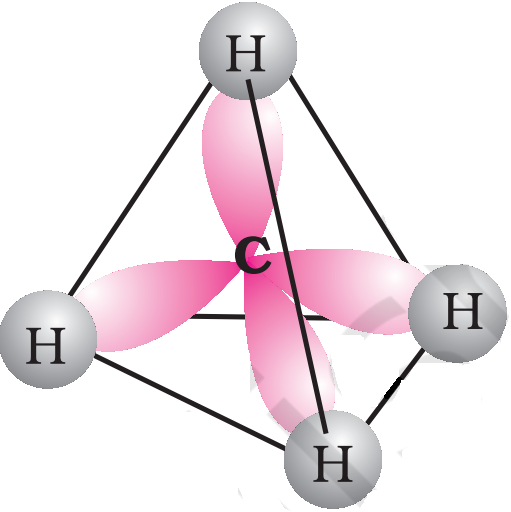
These hydrocarbons are inert under normal conditions as they do not react with acids, bases and other reagents. Hence, they were earlier known as paraffins (latin: parum, little; affinis, affinity). the general formula for alkanes is $C_nH_2n + 2$. It represents any particular homologue when n is given appropriate value. methane has a tetrahedral structure, in which carbon atom lies at the centre and the four hydrogen atoms lie at the four corners of a regular tetrahedron. All H-C-H bond angles are of $109.5^\circ$ .
In alkanes, tetrahedra are joined together in which C-C and C-H bond lengths are 154 pm and 112 pm respectively. We have already read that C–C and C–H $\sigma$ bonds are formed by head-on overlapping of sp 3 hybrid orbitals of carbon and 1s orbitals of hydrogen atoms.
Difference in properties is due to difference in their structures, they are known as structural isomers. structural isomers which differ in chain of carbon atoms are known as chain isomers.
Preparation- Petroleum and natural gas are the main sources of alkanes. However, alkanes can be prepared by following methods:
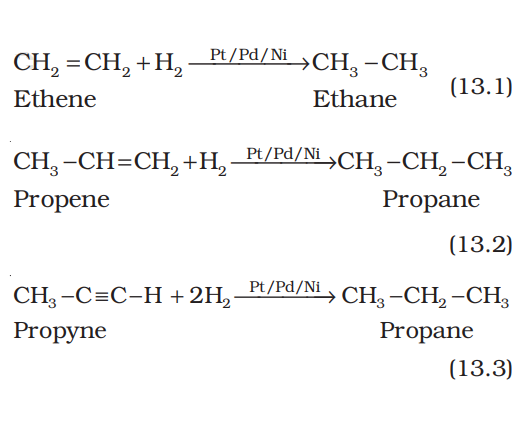
1) From unsaturated hydrocarbons Dihydrogen gas adds to alkenes and alkynes in the presence of finely divided catalysts like platinum, palladium or nickel to form alkanes. This process is called hydrogenation. These metals adsorb dihydrogen gas on their surfaces and activate the hydrogen – hydrogen bond. Platinum and palladium catalyse the reaction at room temperature but relatively higher temperature and pressure are required with nickel catalysts.
2) From alkyl halides
i) Alkyl halides (except fluorides) on reduction with zinc and dilute hydrochloric acid give alkanes.
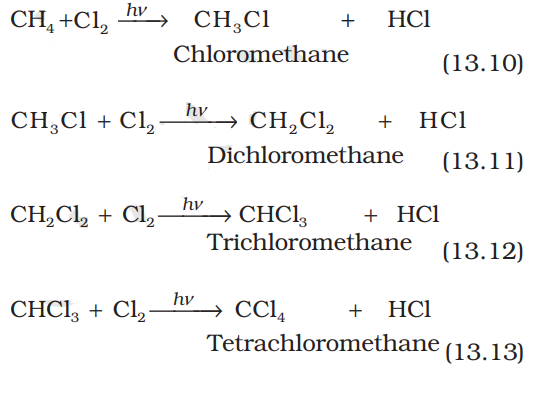
ii) Alkyl halides on treatment with sodium metal in dry ethereal (free from moisture) solution give higher alkanes. This reaction is known as Wurtz reaction and is used for the preparation of higher alkanes containing even number of carbon atoms.
The term ‘hydrocarbon’ is self-explanatory which means compounds of carbon and hydrogen only. Hydrocarbons play a key role in our daily life. You must be familiar with the terms ‘LPG’ and ‘CNG’ used as fuels. LPG is the abbreviated form of liquified petroleum gas whereas CNG stands for compressed natural gas. Another term ‘LNG’ (liquified natural gas) is also in news these days. This is also a fuel and is obtained by liquifaction of natural gas. Petrol, diesel and kerosene oil are obtained by the fractional distillation of petroleum found under the earth’s crust. Coal gas is obtained by the destructive distillation of coal. Natural gas is found in upper strata during drilling of oil wells. The gas after compression is known as compressed natural gas. LPG is used as a domestic fuel with the least pollution. Kerosene oil is also used as a domestic fuel but it causes some pollution. Automobiles need fuels like petrol, diesel and CNG. Petrol and CNG operated automobiles cause less pollution. All these fuels contain mixture of hydrocarbons, which are sources of energy. Hydrocarbons are also used for the manufacture of polymers like polythene, polypropene, polystyrene etc. Higher hydrocarbons are used as solvents for paints. They are also used as the starting materials for manufacture of many dyes and drugs. Thus, you can well understand the importance of hydrocarbons in your daily life. In this unit, you will learn more about hydrocarbons.
Classification Hydrocarbons are of different types. Depending upon the types of carbon-carbon bonds present, they can be classified into three main categories – (i) saturated
(ii) unsaturated and
(iii) aromatic hydrocarbons. Saturated hydrocarbons contain carbon-carbon and carbon-hydrogen single bonds. If different carbon atoms are joined together to form open chain of carbon atoms with single bonds, they are termed as alkanes. On the other hand, if carbon atoms form a closed chain or a ring, they are termed as cycloalkanes. Unsaturated hydrocarbons contain carbon-carbon multiple bonds – double bonds, triple bonds or both. Aromatic hydrocarbons are a special type of cyclic compounds. You can construct a large number of models of such molecules of both types (open chain and close chain) keeping in mind that carbon is tetravalent and hydrogen is monovalent. For making models of alkanes, you can use toothpicks for bonds and plasticine balls for atoms. For alkenes, alkynes and aromatic hydrocarbons, spring models can be constructed.
Alkanes As already mentioned, alkanes are saturated open chain hydrocarbons containing carbon – carbon single bonds. Methane $(CH_4)$ is the first member of this family. Methane is a gas found in coal mines and marshy places. If replace one hydrogen atom of methane by carbon and join the required number of hydrogens to satisfy the tetravalence of the other carbon atom,it get $C_2H_6$. This hydrocarbon with molecular formula $C_2H_6$ is known as ethane. Thus it can consider $C_2H_6$ as derived from $CH_4$ by replacing one hydrogen atom by $-CH_3$ group. Go on constructing alkanes by doing this theoretical exercise i.e., replacing hydrogen atom by $–CH_3$ group. The next molecules will be $C_3H_8, C_4H_{10} …$
These hydrocarbons are inert under normal conditions as they do not react with acids, bases and other reagents. Hence, they were earlier known as paraffins (latin: parum, little; affinis, affinity). the general formula for alkanes is $C_nH_2n + 2$. It represents any particular homologue when n is given appropriate value. methane has a tetrahedral structure, in which carbon atom lies at the centre and the four hydrogen atoms lie at the four corners of a regular tetrahedron. All H-C-H bond angles are of $109.5^\circ$ .
In alkanes, tetrahedra are joined together in which C-C and C-H bond lengths are 154 pm and 112 pm respectively. We have already read that C–C and C–H $\sigma$ bonds are formed by head-on overlapping of sp 3 hybrid orbitals of carbon and 1s orbitals of hydrogen atoms.
Difference in properties is due to difference in their structures, they are known as structural isomers. structural isomers which differ in chain of carbon atoms are known as chain isomers.
Preparation- Petroleum and natural gas are the main sources of alkanes. However, alkanes can be prepared by following methods:
1) From unsaturated hydrocarbons Dihydrogen gas adds to alkenes and alkynes in the presence of finely divided catalysts like platinum, palladium or nickel to form alkanes. This process is called hydrogenation. These metals adsorb dihydrogen gas on their surfaces and activate the hydrogen – hydrogen bond. Platinum and palladium catalyse the reaction at room temperature but relatively higher temperature and pressure are required with nickel catalysts.
2) From alkyl halides
i) Alkyl halides (except fluorides) on reduction with zinc and dilute hydrochloric acid give alkanes.
ii) Alkyl halides on treatment with sodium metal in dry ethereal (free from moisture) solution give higher alkanes. This reaction is known as Wurtz reaction and is used for the preparation of higher alkanes containing even number of carbon atoms.
- Which of the following catalyst is used for hydrogenation…
- platinum
- palladium
- nickel
- All the above
- LPG stands for ….
- Liquid Pressure Gas
- Liquefied Petroleum Gas
- Liquid Platinum Gas
- Liquid Processed Gas
- Difference in properties is due to difference in their structures, they are known as …. isomers.
- Functional
- Positional
- Structural
- Chain
- Structural isomers which differ in chain of carbon atoms are known as… isomers.
- Functional
- Positional
- Structural
- Chain
- CNG Stands for ..
- Compressed Natural Gas
- Condensed Natural Gas
- Compressed Neutral Gas
- Compressed Neutral Gallium