Question
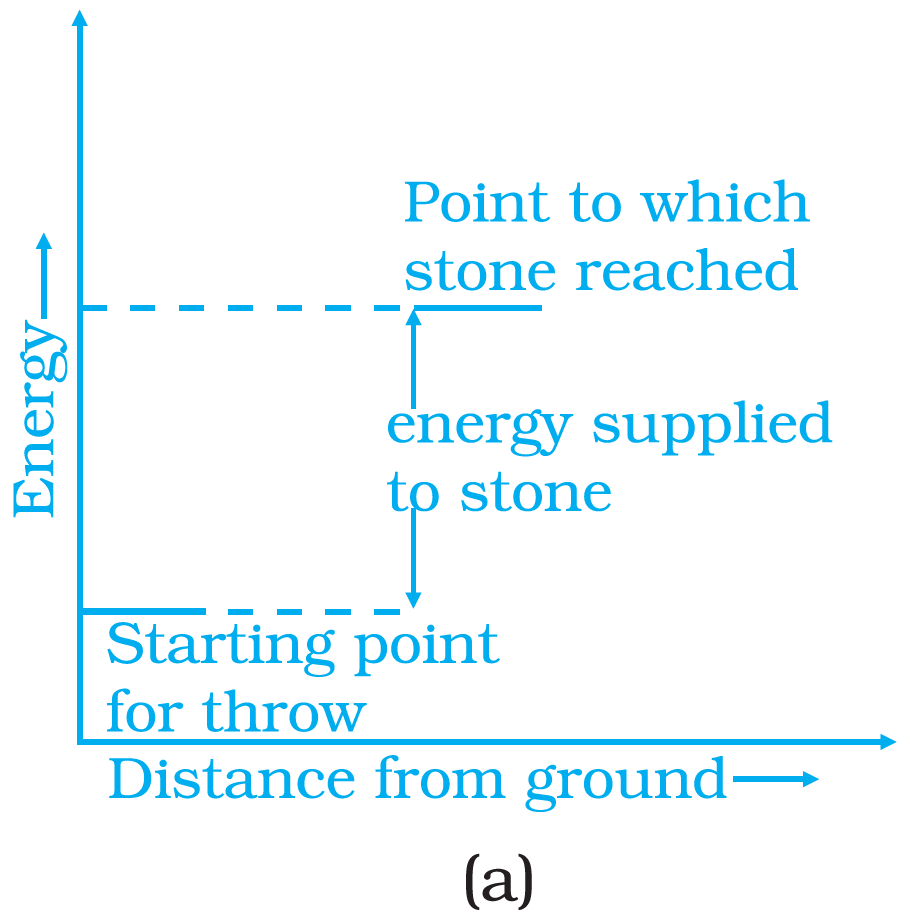
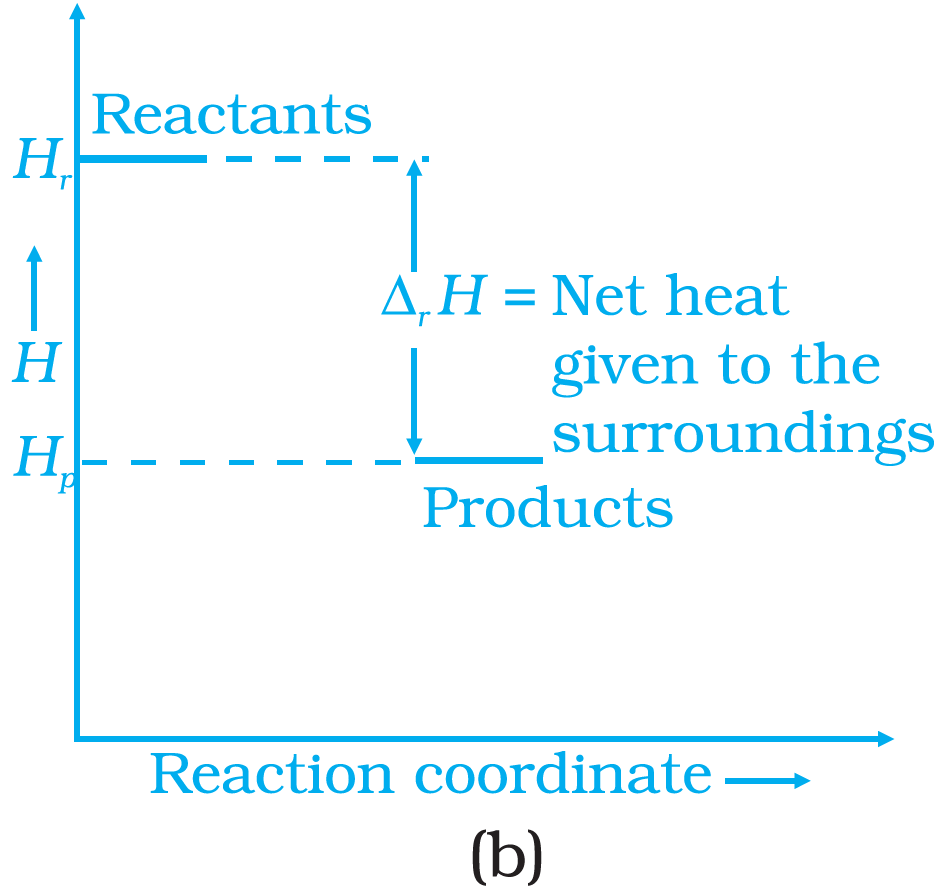
Represent the potential energy/enthalpy change in the following processes graphically.
  1.  Throwing a stone from the ground to roof.
  2.  $\frac{1}{2}\text{H}_2(\text{g})+\frac{1}{2}\text{Cl}_2(\text{g})\rightleftharpoons\text{HCl}(\text{g})$ $\Delta_\text{r}\text{H}^\ominus=-92.32\text{kJ}\ \text{mol}^{-1}$​​​​​​
In which of the processes potential energy/enthalpy change is contributing factor to the spontaneity?

Need a full question paper?

Generate a complete, print-ready paper with questions like this in minutes — across 16+ boards, with answer keys.

Start Generating Free

Similar questions

On the basis of VSEPR theory, compare the geometries of molecules of types $AB _2 E , AB _3 E$, $AB _2 E _2, AB _4 E , AB _3 E _2, AB _5 E$ and $AB _4 E _2$ with various examples. (Here $E =$ lone electron pair)
The first ionization constant of H2S is 9.1 × 10⁻⁸. Calculate the concentration of HS ion in its 0.1M solution. How will this concentration be affected if the solution is 0.1M in HCl also ? If the second dissociation constant of H2S is 1.2 × 10⁻¹³, calculate the concentration of S2– under both conditions.
Pressure is determined as force per unit area of the surface. The SI unit of pressure, Pascal is as shown below:
1Pa = 1N m–2
If mass of air at sea level is 1034g cm–2, calculate the pressure in Pascal.
Which out of NH3 and NF3 has higher dipole moment and why?
Write Lewis structure of the following compounds and show formal charge on each atom.
HNO3, NO2, H2SO4.
Balance the following equations in basic medium by ion-electron method and oxidation number methods and identify the oxidising agent and the reducing agent.

N2H4(l) + ClO3-(aq) → NO(g) + Cl-(g)

Derive the Rydberg formula.
Why is benzene extra ordinarily stable though it contains three double bonds?
The diameter of zinc atom is 2.6 $\mathring{\text{A}}$.Calculate,
  1. Radius of zinc atom in pm
  2. Number of atoms present in a length of 1.6cm if the zinc atoms are arranged side by side lengthwise.
Enthalpies of formation of CO(g), CO2(g), N2O(g) and N2O4(g) are –110, – 393, 81 and 9.7kJ mol–1 respectively. Find the value of $\Delta\text{rH}$ for the reaction:

$\text{N}_2\text{O}_4(\text{g}) +3\text{CO} (\text{g})\xrightarrow{ \ \ \ \ \ \ } \text{N}_2\text{O}(\text{g}) + 3\text{CO}_2(\text{g})$