MCQ
Rydberg’s constant is:
- ASame for all elements.
- BDifferent for different elements.
- CA universal constants.
- DIs different for lighter elements but same for heavier elements.
Generate a complete, print-ready paper with questions like this in minutes — across 16+ boards, with answer keys.
An electron and a proton enter a magnetic field perpendicularly. Both have same kinetic energy. Which of the following is true
|
(a) Trajectory of electron is less curved |
(b) Trajectory of proton is less curved |
|
(c) Both trajectories are equally curved |
(d) Both move on straight-line path |
If radius of the  nucleus is estimated to be 3.6 Fermi then the radius of
  nucleus be nearly
| (a) 4 Fermi | (b) 5 Fermi | (c) 6 Fermi | (d) 8 Fermi |
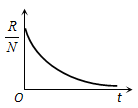
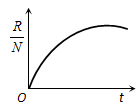
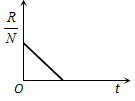
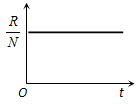
A radioactive sample has  active atoms at t = 0. If the rate of disintegration at any time is R and the number of atoms is N, then the ratio R/N varies with time as
|
(a)
|
(b)
|
(c)
|
(d)
|
The bending of beam of light around corners of obstacles is called
|
(a) Reflection |
(b) Diffraction |
(c) Refraction |
(d) Interference |
Energy generation in stars is mainly due to
|
(a) Chemical reactions |
(b) Fission of heavy nuclei |
|
(c) Fusion of light nuclei |
(d) Fusion of heavy nuclei |