MCQ
Schiff's reagent gives pink colour with
  • Aldehydes
  • B
    Ethers
  • C
    Ketones
  • D
    Carboxylic acid

Answer

Correct option: A.
Aldehydes
a
(a) ${\rm{Aldehyde}} + \mathop {{\rm{Schiff's reagent}}}\limits_{{\rm{(Colourless)}}} \to {\rm{Pink colour}}$
Ketone do not give this test.

Need a full question paper?

Generate a complete, print-ready paper with questions like this in minutes — across 16+ boards, with answer keys.
Start Generating Free

Similar questions

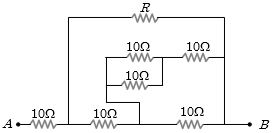
For what value of $R$ the net resistance of the circuit will be $18\, ohms$ ............... $\Omega$
The active ion in Tollen's reagent is
Two resistors having equal resistances are joined in series and a current is passed through the combination. Neglect any variation in resistance as the temperature changes. In a given time interval
In the given nuclear reaction $A, B, C, D, E$ represents

$_{92}{U^{238}}{\xrightarrow{\alpha }_B}T{h^A}{\xrightarrow{\beta }_D}P{a^C}{\xrightarrow{E}_{92}}{U^{234}}$

One kg of a diatomic gas is at a pressure of $8 \times 10^4$  $N/m^2$ The density of the gas is $4$ $kg/m^3$ What is the energy (in $\times 10^4\; J$) of the gas due to its thermal motion?
$P$ is the probability of finding the $1 s$ electron of hydrogen atom in a spherical shell of infinitesimal thickness, $d r$, at a distance $r$ from the nucleus. The volurne of this shell is $4 \pi r^2 d r$. The qualitative sketch of the dependence of $P$ on $r$ is
In the relation $n = \frac{{PV}}{{RT}},n = $
A short bar magnet is placed in the magnetic meridian of the earth with north pole pointing north . Neutral points are found at a distance of $30\, cm$ from the magnet on the East - West line, drawn through the middle point of the magnet. The magnetic moment of the magnet in $Am^2$ is close to: (Given $\frac{{{\mu _0}}}{{4\pi }}\, = 10^{- 7}$ in $SI\,units$ and $B_H\, =$ Horizontal component field $= 3.6\times10^{-5}\, tesla$)
A bakelite beaker has volume capacity of $500\, cc$ at $30^{\circ} C$. When it is partially filled with $V _{ m }$ volume (at $30^{\circ}$ ) of mercury, it is found that the unfilled volume of the beaker remains constant as temperature is varied. If $\gamma_{\text {(beaker) }}=6 \times 10^{-6}{ }^{\circ} C ^{-1}$ and $\gamma_{(\text {mercury })}=1.5 \times 10^{-4}{ }^{\circ} C ^{-1},$ where $\gamma$ is the coefficient of volume expansion, then $V _{ m }($in $cc )$ is close to
The potential energy of a particle in a force field is $U(x)= \frac{A}{{{r^2}}} - \frac{B}{r}$  where $A$ and $B$ are positive constants and $r$ is the distance of particle from the centre of the field. For stable equilibrium, the  distance of the particle is