Question
Short note on: Glycogen

Answer

"The carbohydrates are stored in animal body as glycogen."
It is also known as animal starch because its structure is similar to amylopectin and is rather more highly branched.
It is present in liver, muscles and brain.
When the body needs glucose, enzymes break down glycogen into glucose.

Need a full question paper?

Generate a complete, print-ready paper with questions like this in minutes — across 16+ boards, with answer keys.
Start Generating Free

Similar questions

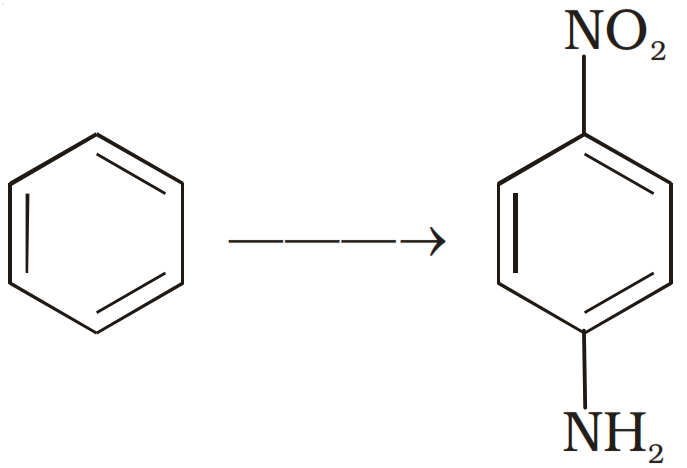
How will you carry out the following conversion?

Write note on enthalpy of atomization of trasition metals.
What is the effect on the $H _2 SO _4$ present in a lead storage cell if it is used continously?
A first order gas reaction A2B2(g) → 2A(g) + 2B(g) at the temperature 400°C has the rate constant K = 2.0 × 10⁻⁴ s-1 . What percentage of A2B2 is decomposed on heating for 900 seconds.
How will you distinguish 1° and 2° hydroxyl groups present in glucose? Explain with reactions.
What are nucleic acids? Mention their two important functions.
Explain what is meant by:
  1. A peptide linkage.
  2. A glycosidic linkage.
For the first order thermal decomposition reaction, following data were obtained:
C2H5Cl(g) $\xrightarrow{\text{ }\text{ }\text{ }\text{ }\text{ }\text{ }\text{ }\text{ }\text{ }}$  C2H4(g) + HCl(g)
Time/sec   Total pressure/atm
0   0.30
300   0.50
Calculate the rate constant.
(Given : log 2 = 0.301, log 3 = 0.4771, log 4 = 0.6021)
Explain the following items:
Avitaminosis.
Consider the decomposition of hydrogen peroxide in alkaline medium which is catalysed by iodide ions.
$\text{2H}_2\text{O}_2\xrightarrow{\text{OH}^-}2\text{H}_2\text{O}+\text{O}_2$
This reaction takes place in two step as given below:
Step-I $\text{H}_2\text{O}_2+\text{I}^-\rightarrow\text{H}_2\text{O}_2+\text{IO}^-\text{ (slow)}$
Step-II $\text{H}_2\text{O}_2+\text{IO}^-\rightarrow\text{H}_2\text{O}_2+\text{I}+\text{O}_2\text{ (fast})$
  1. Write the rate law expression and determine the order of reaction w.r.t. H2O2.
  2. What is the molecularity of each individual step?