Question
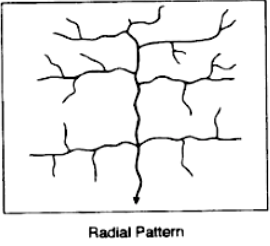
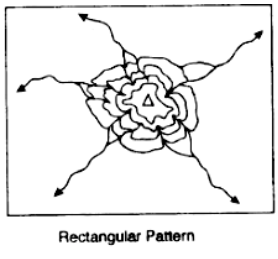
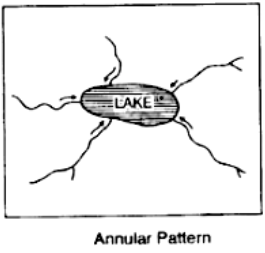
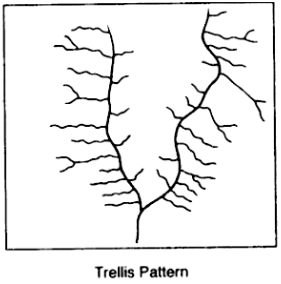
Show the different drainage patterns.

Need a full question paper?

Generate a complete, print-ready paper with questions like this in minutes — across 16+ boards, with answer keys.
Start Generating Free

Similar questions

Name the various types of settlement patterns found on toposheet.
Answer the following questions on the Survey Sheet Number 45 D/7.
(a) Give six figure grid references of the following:
(i) ∆ 364 (ii) The temple at Rampura
(b) Mention any two features seen in the map extract which show that the region has seasonal rainfall
(c) Calculate the distance in kilometres along the cart-track linking Juvol (923826) and Amiwada (944817).
(d) Which is the chief form of irrigation shown in the map extract? Give an evidence to justify your answer.
(e) Give one reason to explain why the streams in grid square 9478 do not join a river. Identify another grid square in the map extract that has similar streams.
(f) What do the following represent:
(i) Black broken lines in 9575 (ii) Black curved lines in 9879.
(g) Identity two landforms shown by the contours in grid square 9876.
(h) (i) What is the general direction of the Balram Nadi?
(ii) Which bank of the main river does the Balram Nadi join?
(i) What is the main occupation of the people living in the area shown in the map extract? Give one reason to support your answer.
|(j) What is meant by scale of a map? What is the scale of the map extract provided to you?
On the outline map of India provided:
(a) Draw, name and number the Standard Meridian.
(b) Label the river Yamuna.
(c) Shade and name the Gulf of Khambhat.
(d) Mark and name the Nathu-La Pass.
(e) Mark and name the Karakoram Range.
(f) Shade and name a sparsely populated State in Northeast India.
(g) Shade a region with laterite soil in Eastern India.
(h) Mark with a dot and name Vishakhapatnam.
(i) Mark and name the winds that bring rain to West Bengal in summer.
(j) Print S on the iron mines in Singhbhum.
(a) Mark and name Chennai
Study the extract of the Survey of India Map sheet No. 45D/10 and answer the following questions:
(a) Name and give the four figure grid reference of a settlement where the people of the region meet at least once a year.
(b) What does the conventional symbol at grid reference 145132 mean?
(c) 
If a man were to walk from Gulabganj (1820) to Harmatiya (1916):
(i) In which direction would he be walking?
(ii) Which are the two different kinds of roads that he would be using?
(d) 
What do the following numbers in grid square 1718 and 1818 mean?
(i) 280 (ii) 281
(e) What are the two differences between the settlement Bamba in 1914 and those in 1813?
(f) Name four facilities that Anadra has which makes it an important settlement
(g) What is the quickest means of communication for the people of Dabani (1313)?
(h) What do the following mean:
(i) Brackish in 1915 (ii) Causeway in 1715 (iii) 6r in 1218?(i) Mention two factors which support the following:
(i) The Sipu river is in its middle course
(ii) The rainfall in the region shown in the map extract is seasonal.(j) What is the distance in kilometres between the distance stone 20 in 1818 and the causeway in 1715 along the metalled road?
 The area is measured by grid square method?
Describe the climatic conditions which prevail over India during different Seasons.
What are the demerits of canals? How to overcome these defects?
On the map of India, mark with a dot and name the cities,
(a) The National Capital (Delhi).
(b) The Capital of Maharashtra Or the Commercial Capital of India (Mumbai).
(c) The Capital of West Bengal (Kolkata).
(d) The Capital of Tamil Nadu (Chennai).
(e) The Capital of Karnataka (Bangalore).
(f) The Capital of Andhra Pradesh (Hyderabad).
(g) The city whose Local Time is taken as the Standard Time of India (Allahabad).
(h) Vishakhapatnam.
(i) Kochi.
(j) Capital of Jammu-Kashmir (Srinagar).
Study the extract of the Survey of India Map sheet No. 45D/10 and answer the following questions:
(a) Give the six figure grid reference of:
(i) The temple in village Dhavli
(ii) ∆ 480
(b) What do the following indicate?
(i) 6r in grid square 1903
(ii) The word Brackish in grid square 1403.
(c) 
(i) In grid square 1909, several contours merge at one point. What does this represent?
(ii) State the significance of the red dotted lines in the map extract.
(d) Name the type of rainfall experienced in the region shown in the map extract. Give a reason to support your answer.
(e) How does the drainage pattern in grid square 1606 differ from the drainage pattern in grid square 1708?
(f) 
(i) What is the pattern of settlement in grid square 1904?
(ii) Name the settlement that has a post office.
(g) Name two landforms represented by the pattern of contours in grid square 1608.
(h) Calculate the ground distance in kilometres along the metalled road between the causeway in 1502 and the distance stone marked ’14’ in grid square 1203.
(i) State two reasons for the absence of human habitation in the north eastern region of the map extract.
(j) 
(i) Mention the difference in height between the highest spot height in the map extract and the contour height in grid square 1006.
(ii) What is the compass direction of Patlawa ka Goliya (590.) from Kacholi Dunga (443.)?
Name the states producing sugar and name the chief centres in each state.
###
Name four sugar milling centres in the northern plains.