Question
Sodium is always kept in kerosene.

Answer

(i) Sodium is a highly reactive metal.
(ii) It reacts with the water vapour present in air to form sodium hydroxide and hydrogen.
(iii) Hydrogen released catches fire in presence of oxygen due to liberation of heat during this reaction.
(iv) Sodium does not react with Kerosene and it sinks in it.
(v) Thus to prevent sodium from coming in contact with air it is immersed in kerosene.

Need a full question paper?

Generate a complete, print-ready paper with questions like this in minutes — across 16+ boards, with answer keys.

Start Generating Free

Similar questions

Write down structural formulae of the first four members of the various homologous series formed by making use of the functional groups.
Sketch, labell and classify: Shark
Explain the difference between each of the following pairs of terms:
  1. Receptor and effector.
  2. Cerebrum and cerebellum.
An X element with atomic number 11 and Y element with atomic number 13 belongs to the third period in the modern periodic table. With this information, give the answers of the below questions.
  1. Which element has more metallic character from these two elements?
  2. What is the valency of each X and Y elements?
  3. Atom size of Y element is smaller than atom size of X element. Explain.
State the following factors on which the strength of the magnetic field of a circular loop depends?
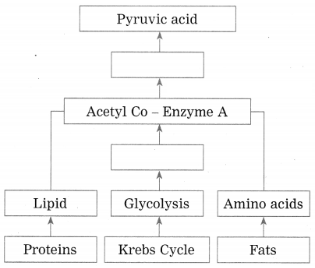
How energy is formed from oxidation of carbohydrates, fats and proteins?
Correct the dagram below.
Image

 
Green corridor refers to a special road route that enables harvested organs meant for transplants to reach the destined hospital. A 45-year-old woman, a victim of a railway accident, was declared brain dead, her husband and children agreed to donate her kidneys, liver and heart. One of her kidneys was transplanted to a patient in MGM Hospital and the second kidney helped a patient in Jaslok hospital. Her liver helped the transplant of a patient in Wockhardt Hospital. And her heart was sent to Fortis to the patient on a super urgent priority list, transported via a green corridor covering 18km in less than 16 minutes. This was possible due to Green corridor.
1.What is Green corridor?
2.Which organs of brain-dead lady were transplanted?
3.Four patients lives were saved due to organ donation of one lady.
4.How was distance of 18km covered in 16 minutes? Why?
5.Who takes the decision to donate the organs?
Explain the term power of accommoda¬tion of the eye.
(OR)
Write a short note on the power of accommodation of the eye.
An element A which is a part of common salt and kept under kerosene reacts with another element B of atomic number 17 to give a product C. When an aqueous solution of product C is electrolysed then a compound D is formed and two gases are liberated.
  1. What are A and B?
  2. Identify C and D.
  3. What will be the action of C on litmus solution? Why?
  4. State whether element B is a solid, liquid or gas at room temperature.
  5. Write formula of the compound formed when element B reacts with an element E having atomic number 5.
Explain the functions of the following parts of the eye:
  1. Iris.
  2. Pupil.
  3. Ciliary.
  4. Muscles.
  5. Eye-lens.
  6. Retina.
  7. Optic nerve.