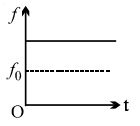
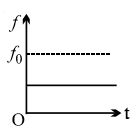
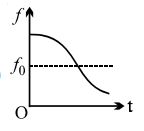
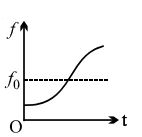
MCQ
Source and observer both start moving simultaneously from origin, one along $x-$axis and the other along $y-$axis with speed of source = twice the speed of observer. The graph between the apparent frequency observed by observer $f$ and time $t$ would approximately be :
  • A


  • C

  • D

Answer

Correct option: B.

b

Need a full question paper?

Generate a complete, print-ready paper with questions like this in minutes — across 16+ boards, with answer keys.

Start Generating Free

Similar questions

Consider a thin uniform square sheet made of a rigid material. If its side is $‘a’$ mass $m$ and moment of inertia $I$ about one of its diagonals, then
$Assertion :$ Strain causes the stress in an elastic body.
$Reason :$ An elastic rubber is more plastic in nature.
A faulty thermometer has its lower fixed point marked as $ - \,10^\circ C$ and upper fixed point marked as $110^o $ and upper fixed point marked as $110^o $. If the temperature of the body shown in this scale is $62^o $, the temperature shown on the Celsius scale is ........ $^oC$
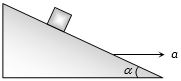
A block is kept on a frictionless inclined surface with angle of inclination '$\alpha$'. The incline is given an acceleration $ 'a'$ to keep the block stationary. Then a is equal to
Dimensional Formula of Universal Gas Constant is
An engine is supposed to operate between two reservoirs at temperature $727°C$ and $227°C.$ The maximum possible efficiency of such an engine is
Gravitational acceleration on the surface of a planet is $\frac{\sqrt{6}}{11} \mathrm{~g}$, where $\mathrm{g}$ is the gravitational acceleration on the surface of the earth. The average mass density of the planet is $\frac{2}{3}$ times that of the earth. If the escape speed on the surface of the earth is taken to be $11 \ \mathrm{kms}^{-1}$, the escape speed on the surface of the planet in $\mathrm{kms}^{-1}$ will be
Two bodies of masses m and 4m are moving with equal kinetic energy. The ratio of their linear momenta is:
Let np and ne be the number of holes and conduction electrons in an intrinsic semiconductor.

  1. $\text{n}_\text{p} > \text{n}_\text{e}$

  2. $\text{n}_\text{p} = \text{n}_\text{e}$

  3. $\text{n}_\text{p} < \text{n}_\text{e}$

  4. $\text{n}_\text{p}\neq\text{n}_\text{e}$

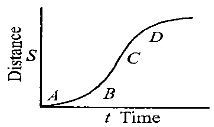
A  particle shows distance - time curve as given in this figure. The maximum instantaneous velocity of the particle is around the point