MCQ
Spot the wrong statement :The acceleration due to gravity $‘g’$ decreases if
  • A
    We go down from the surface of the earth towards its centre
  • B
    We go up from the surface of the earth
  • We go from the equator towards the poles on the surface of the earth
  • D
    The rotational velocity of the earth is increased
Answer

Correct option: C.
We go from the equator towards the poles on the surface of the earth
c
(c) Value of $g$ decreases when we go from poles to equator.

Need a full question paper?

Generate a complete, print-ready paper with questions like this in minutes — across 16+ boards, with answer keys.

Start Generating Free

Similar questions

A ball of mass $0.5 \; kg$ is dropped from the height of $10 \; m$. The height, at which the magnitude of velocity becomes equal to the magnitude of acceleration due to gravity, is $\dots \; m$. (Use $g =10 \; m / s ^{2}$).
An ideal gas equation can be written as $P=\frac{\rho R T}{M_{0}}$ where $\rho$ and $M_{0}$ are respectively,
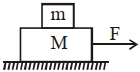
Two blocks $( m =0.5\, kg$ and $M =4.5\, kg$ ) are arranged on a horizontal frictionless table as shown in figure. The coefficient of static friction between the two blocks is $\frac{3}{7} .$ Then the maximum horizontal force that can be applied on the larger block so that the blocks move together is ......... $N.$ (Round off to the Nearest Integer) [Take g as $9.8\, ms ^{-2}$ ]
A vehicle with a horn of frequency n is moving with a velocity of 30m/s in a direction perpendicular to the straight line joining the observer and the vehicle. The observer precedes the sound to have a frequency (n + n1). If velocity of sound in air is 300m/s, n, would be:
A horizontal bridge is built across a river. A student standing on the bridge throws a small ball vertically upwards with a velocity $4\,m s ^{-1}$. The ball strikes the water surface after $4\,s$. The height of bridge above water surface is $......\,m$ $\left(\right.$ Take $\left.g=10\,m s ^{-2}\right)$
Two rigid boxes containing different ideal gases are placed on a table. Box A contains one mole of nitrogen at temperature $T_0$, while Box contains one mole of helium at temperature $(7/3)$ $T_0$ The boxes are then put into thermal contact with each other, and heat flows between them until the gases reach a common final temperature (ignore the heat capacity of boxes). Then, the final temperature of the gases,$T_f$  in terms of $T_0$ is
A cannon ball is fired with a velocity $200\, m/sec$ at an angle of $60^o$ with the horizontal. At the highest point of its flight it explodes into $3$ equal fragments, one going vertically upwards with a velocity $100\, m/sec$, the second one falling vertically downwards with a velocity $100\, m/sec$. The third fragment will be moving with a velocity
A body starts with an initial velocity of $10\,ms ^{-1}$ and is moving along a straight line with constant acceleration. When the velocity of the particle is $50\,ms ^{-1}$, the acceleration is reversed in direction. The velocity of the particle when it again reaches the starting point is $............\,m/s^{-1}$
A boat moves with a speed of $5 \,km/h $ relative to water in a river flowing with a speed of $3 \,km/h$ and having a width of $1 \,km$. The minimum time taken around a round trip is.........$min$
A shell is fired from a cannon with a velocity V at an angle $\theta$ with the horizontal direction. At the highest point in its path, it explodes into two pieces of equal masses. One of the pieces retraces its path to the cannon. The speed of the other piece immediately after the explosion is:

  1. $\text{3V}\cos\theta$

  2. $2\text{V}\cos\theta$

  3. $\frac{3}{2}\text{V}\cos\theta$

  4. $\text{V}\cos\theta$