Question
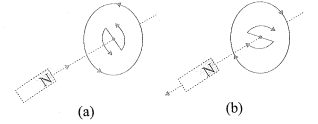
State and explain Lenz's law

Need a full question paper?

Generate a complete, print-ready paper with questions like this in minutes — across 16+ boards, with answer keys.

Start Generating Free

Similar questions

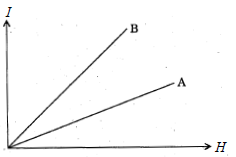
The following figure shows the variation of intensity of magnetisation versus the applied magnetic field intensity, H, for two magnetic materials A and B:

  1. Identify the materials A and B.
  2. Why does the material B, have a larger susceptibility than A, for a given field at constant temperature?
Metallic (nonferromagnetic) and nonmetallic particles in a solid waste may be separated as follows. The waste is allowed to slide down an incline over permanent magnets. The metallic particles slow down as compared to the norunetallic ones and hence are separated. Discuss the role of eddy currents in the process.
If a particle of charge q is moving with velocity v along X-axis and the magnetic field B is acting along Y-axis, use the expression $\vec{\text{F}}=\text{q}(\vec{\upsilon}\times\vec{\text{B}})$ to find the direction of force $\vec{\text{F}}$ acting on it.
Explain the lateral shift for a ray refracted from a glass slab with parallel sides.
Draw a labelled diagram of an astronomical telescope.
A steel rod is clamped at its two ends and rests on a fixed horizontal base. The rod is unstrained at 20°C. Find the longitudinal strain developed in the rod if the temperature rises to 50°C. Coefficient of linear expansion of steel = 1.2 × 10-5 °C-1
Draw a graph between photoelectric current and anode potential for two light beams of different intensity and same wavelength.
An electron, an alpha particle and a proton have the same kinetic energy. Which one of these particles has (i) the shortest and (ii) the largest, de Broglie wavelength?
Why do we prefer a potentiometer to measure the emf of a cell rather than a voltmeter?
Write down the phenomena seen or observed during the generation of static electricity.