Question
State the four basic requirements of a database applications.

Answer

The use of computers in any database oriented application has four basic requirements as mentioned below;
  1. Front-end Interface: It is an interactive link or a dialog between the user and database-oriented software through which the user communicates to the back-end database. For example, a transaction relating to purchase of goods may be dealt with the accounting system through a purchase voucher, which appears on the computer’s monitor of data entry operator and when entered into the system is stored in the database. The same data may be queried through reporting system say purchase analysis software programme.
  2. Back-end Database: It is the data storage system that is hidden from the user and responds to the requirement of the user to the extent the user is authorised to access.
  3. Data Processing: It is a sequence of actions that are taken to transform the data into decision useful information.
  4. Reporting System: It is an integrated set of objects that constitute the report.

Need a full question paper?

Generate a complete, print-ready paper with questions like this in minutes — across 16+ boards, with answer keys.

Start Generating Free

Similar questions

On 1st January, 2019 for goods sold, Ramesh drew a Bill of Exchange on Mahesh for ₹ 4,000, for a period of 3 months. Mahesh accepts it and returns to Ramesh. Ramesh then endorses it to Mukesh who in turn endorses it to Suresh on 1st February, 2019. The bill is then discounted by Suresh on the same date with his bank at 5% p.a. On the due date the bill is dishonoured.
Pass the necessary Journal entries in the books of all the four parties.
Correct the following errors in Hari’s Books:
  1. Credit sale of ₹ 132 to R. Krishan correctly entered in Sales Journal but posted to his account as ₹ 312.
  2. The total of the credit side of Ramesh’s Account was overcasted by ₹ 2,000.
  3. Total of the Purchases Journal of ₹ 5,250 has been posted to Purchases Account as ₹ 5,205.
  4. Printer purchased from R. Ltd. for ₹ 4,000 on credit was entered in the Purchases Book.
  5. An item of ₹ 2,000 entered in the Sales Return Book was posted to the debit of Pandey who had returned the goods.
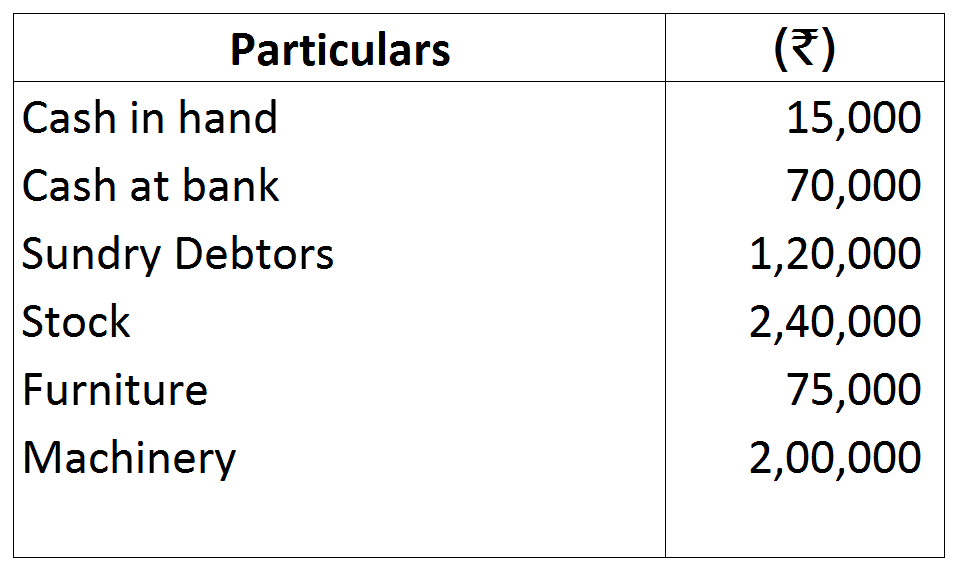
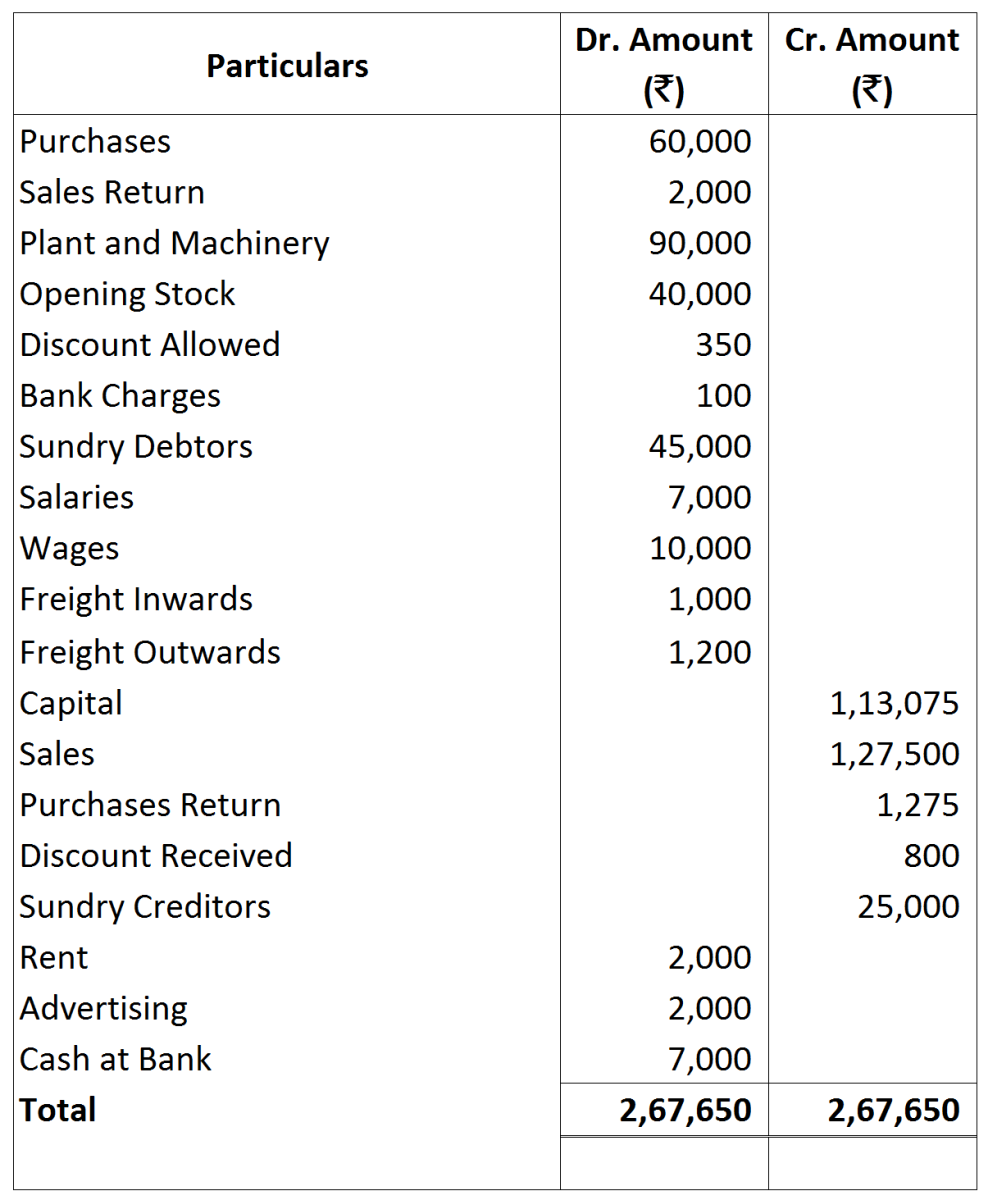
The Trial Balance shows the following balance as at $31^{st}$​​​​​​​ March,$ 2019:$​​​​​​​

Closing Stock was valued at ₹ 35,000.
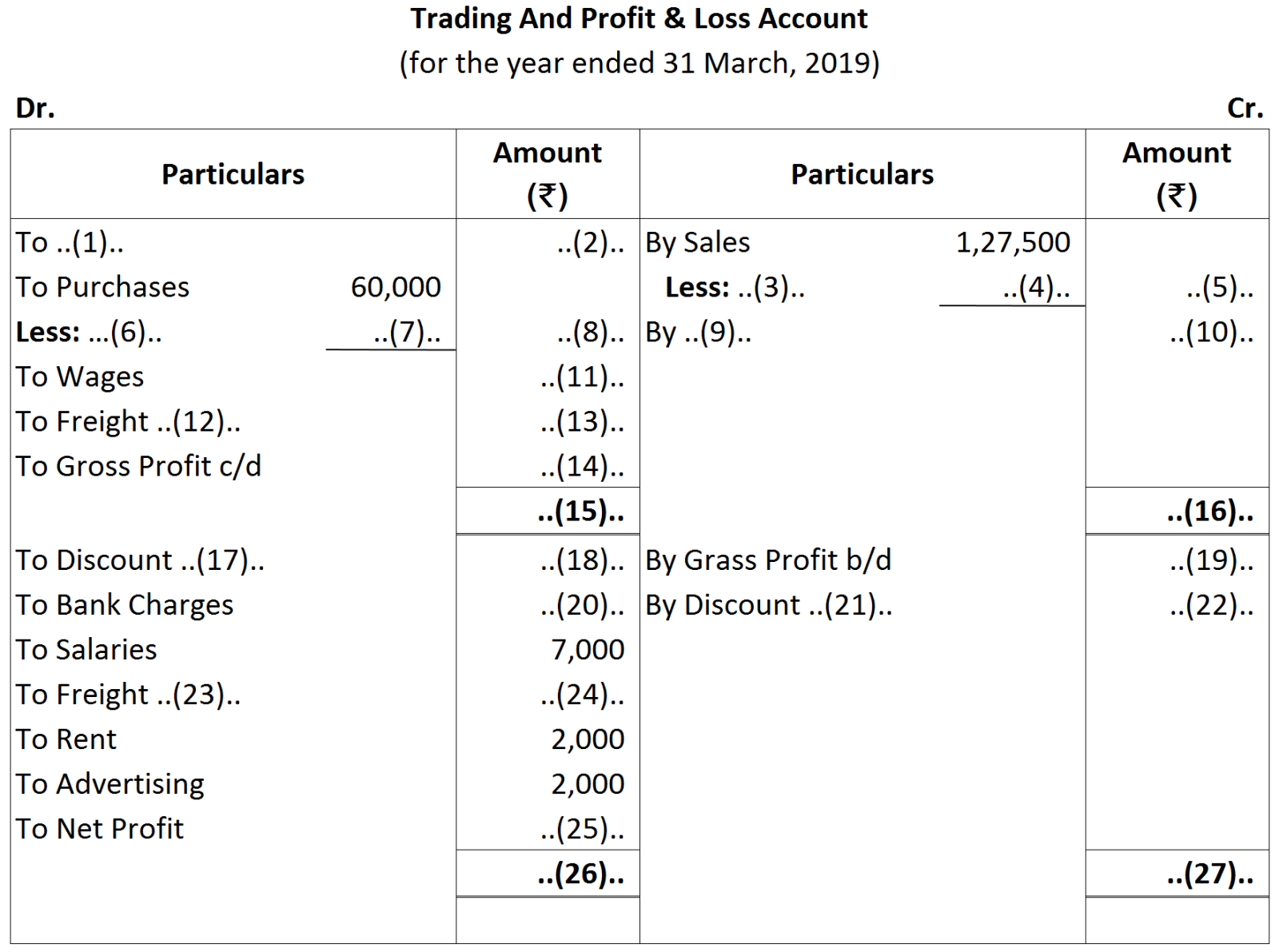
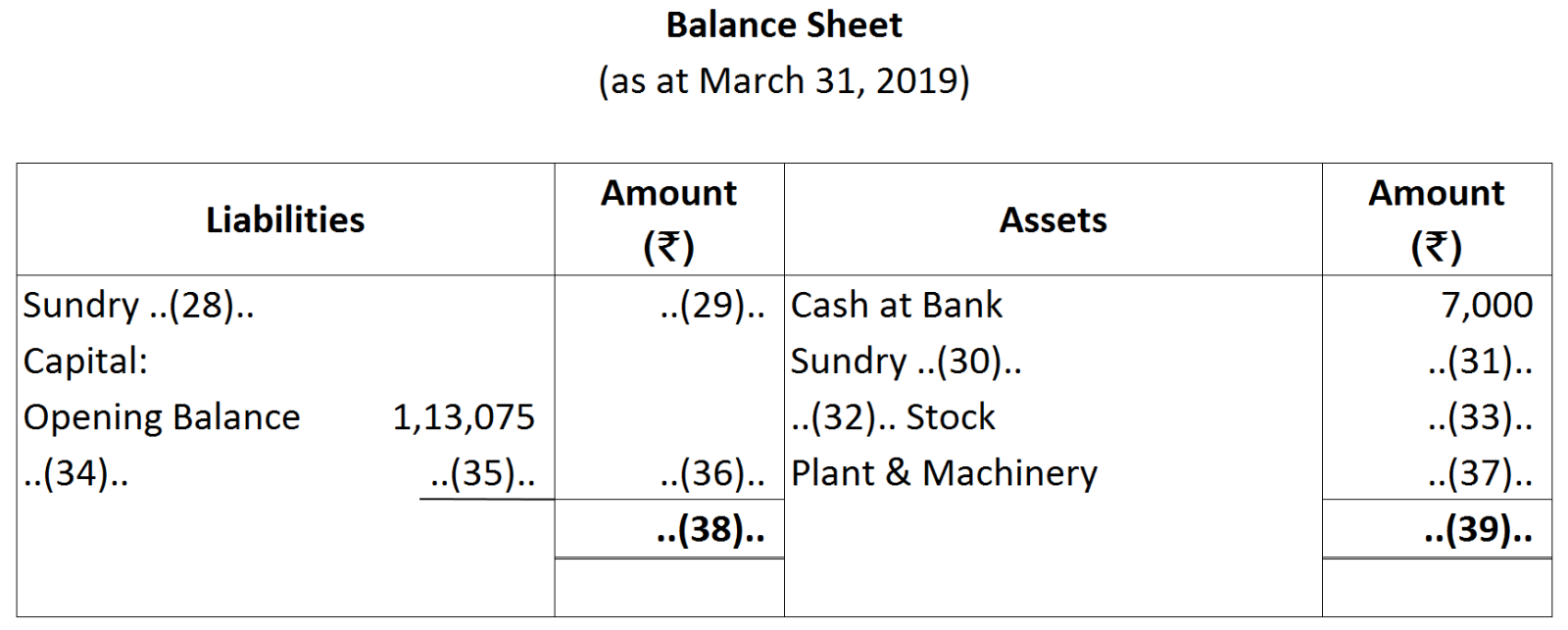
Required: Complete the missing values of Trading Account, Profit and Loss Account and Balance Sheet.

Draw Bank Reconciliation Statement showing adjustment between your Cash Book and Pass Book as on 31st March, 2011.
  1. On 31st March, 2011 your pass book showed a balance of ₹ 6,000 to your credit.
  2. Before that date, you had issued cheques amounting to ₹ 1,500 of which cheques of ₹ 900 have been presented for payment.
  3. A cheque of ₹ 800 paid by you into the bank on 29th March, 2011 is not yet credited in pass book.
  4. There was a credit of ₹ 85 for interest on Current Account in the pass book.
  5. On 31st March, 2011 a cheque for ₹ 510 received by you and was paid into bank but the same was omitted to be entered in cash book.
What is a Cash Book? What are the types of Cash Book? How is it balanced?
Mr. Joshi started a business with a capital of ₹ 5,00,000. At the end of the year his position was:

Sundry creditors at this date totalled ₹ 80,000. During the year he introduced a further capital of ₹ 1,50,000 and withdrew for household expenses ₹ 90,000.
You are required to calculate profit or loss during the year.
Distinguish between Hardware and Software.
On examining the Bank Statement of Green Ltd., it is found that the balance shown on 31st March, 2019, differs from the bank balance of ₹ 23,650 shown by the Cash Book on that date. From a detailed comparison of the entries it is found that:
  1. ₹ 2,860 is entered in the Cash Book as paid into the bank on 31st March, 2019 but not credited by the bank until the following day.
  2. Bank charges of ₹ 70 on 31st March, 2019 are not entered in the Cash Book.
  3. A bill for ₹ 5,500 discounted with the bank is entered in the Cash Book without recording the discount charges of ₹ 270.
  4. Cheques totalling ₹ 16,720 were issued by the company and duly recorded in the Cash Book before 31st March, 2019 but had not been presented at the Bank for payment until after that date.
  5. On 25th March, 2019, a debtor paid ₹ 1,000 into the Company's Bank in settlement of his account but no entry was made in the Cash Book of the company in respect of this.
  6. No entry has been made in the Cash Book to record the dishonour on 15th March, 2019, of a cheque for ₹ 550 received from Ram Babu. Prepare a Bank Reconciliation Statement as on 31st March, 2019.
Following balances are taken from the books of Niranjan. Prepare Trading and Profit and Loss Account and Balance Sheet for the year ended 31st March, 2019:
(iamge)
Adjustments:
  1. Closing Stock ₹ 7,50,000.
  2. Depreciate Machinery by 10% and Furniture by 20%.
  3. Wages ₹ 50,000 and salaries ₹ 20,000 are outstanding.
  4. Write off ₹ 50,000 as further Bad Debts and create 5% Provision for Doubtful Debts. Also, create a reserve for discount on Debtors @ 2%.
  5. Investments were made on 1st July, 2018 and no interest has been received so far.
What is the use of Data Base Management?