Question
State three precautions you would take while measuring the volume of an irregular solid lighter than water, using a measuring cylinder.

Answer

Precautions to be taken while measuring the volume of a solid lighter than water using the displacement method
(a). The sinker should be insoluble in water
(b). The sinker should have a high density than water.
(c). Lower meniscus should be read to note down the readings and errors due to parallax should be avoided.

Need a full question paper?

Generate a complete, print-ready paper with questions like this in minutes — across 16+ boards, with answer keys.
Start Generating Free

Similar questions

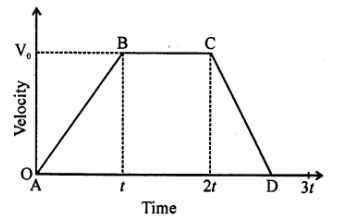
Diagram shows a velocity - time graph for a car starting from rest. The graph has three section AB, BC and CD.
Image
1. From a study of this graph, state how the distance travelled in any section is determined.
2. Compare the distance travelled in section BC with the distance travelled in section AB.
3. In which section, car has a zero acceleration?
4. Is the magnitude of acceleration higher or lower than that of retardation ? Give a reason.
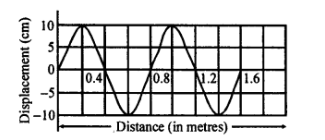
The diagram given below shows a displacement distance graph of a wave. If the velocity of wave is $160 ms-1$, calculate
1. wavelength
2. frequency
3. amplitude.
Image
An alloy is made by mixing $540 g$ of copper of density $9 g cm ^{-3}$ with 240 g of iron of density $8 g cm ^{-3}$. Find the density of the alloy assuming that the volume of each metal does not change during mixing.
A ball is thrown vertically upwards. It goes to a height 20 m and then returns to the ground. Taking acceleration due to gravity g to be $10 ms^{-2}$​​​​​​​ , find :
the final velocity of the ball on reaching the ground .
A car traveling at $60 \ km/h$, stops on applying brakes in $10$ seconds. What is its acceleration?
(a) Define mass.
(b) State the units in which mass is measured in (1) C.GS. system (2) S.I. system.
(c) Name the most convenient unit of mass you will use to measure :
1. Mass of small amount of a medicine.
2. The grain output of a state
3. The bag of sugar
4. Mass of a cricket ball.
How are the (i) Mass, (ii) Volume and (iii) Density of a metallic piece affected, if at all, with an increase in temperature?
 A body of mass 3.5 kg displaces $1000 cm^3$ of water when fully immersed inside it. Calculate: (i) the volume of body, (ii) the upthrust on body and (iii) the apparent weight of body in water.
A boy drops a stone from a cliff, reaches the ground in 8 seconds. Calculate
1. final velocity of stone
2. height of cliff. (Take $g=9.8 ms^{\prime} 2$ )
The area of base of a cylindrical vessel is $300 cm^2$. Water (density= $1000 kg m ^{-3}$ ) is poured into it up to a depth of 6 cm . Calculate : (a) the pressure and (b) the thrust of water on the base. $\left( g =10 m s ^{-2}\right.$.