Question
State with reason whether the following transactions will increase, decrease or not change the 'Return on Investment' Ratio:
  1. Purchase of machinery worth ₹ 10,00,000 by issue of equity shares.
  2. Charging depreciation of ₹ 25,000 on machinery.
  3. Redemption of debentures by cheque ₹ 2,00,000.
  4. Conversion of 9% Debentures of ₹ 1,00,000 into equity shares.
Answer

 
Transaction
Impact
(i)
Purchase of machinery worth ₹ 10,00,000 by issue of equity shares.
Issue of shares will lead to an increase in the capital employed by ₹ 10,00,000.But profit remains intact and so there will be a decline in the return on investment ratio.
(ii)
Charging depreciation of ₹ 25,000 on machinery.
Simultaneous decrease in profits and capital employed by ₹ 25,000 will lead to a decline in return on investment ratio.
(iii)
Redemption of debentures by cheque ₹ 2,00,000.
Redemption of debentures will lead to a decrease in the capital employed by ₹ 2,00,000. But profit remains intact and so there will be an increase in the return on investment ratio.
(iv)
Conversion of 9% Debentures of ₹ 1,00,000 into equity shares.
Decrease in debentures and increase in share capital causing a simultaneous increase and decrease in capital employed will leave the return on investment ratio unchanged.

Need a full question paper?

Generate a complete, print-ready paper with questions like this in minutes — across 16+ boards, with answer keys.

Start Generating Free

Similar questions

Following was the Balance Sheet of Sreshtha Ltd. as at 31st March, 2014:

Notes to Accounts:

Prepare a Cash Flow Statement after taking into account the following adjustment:
During the year, a piece of machinery costing ₹ 30,000 on which accumulated depreciation was ₹ 6,000, was sold for ₹ 20,000.
How is ‘Discount on Issue of Debentures’ treated in the books of accounts? How will you deal with the ‘discount in issue of debentures’ when the debentures are to be redeemed in instalments?
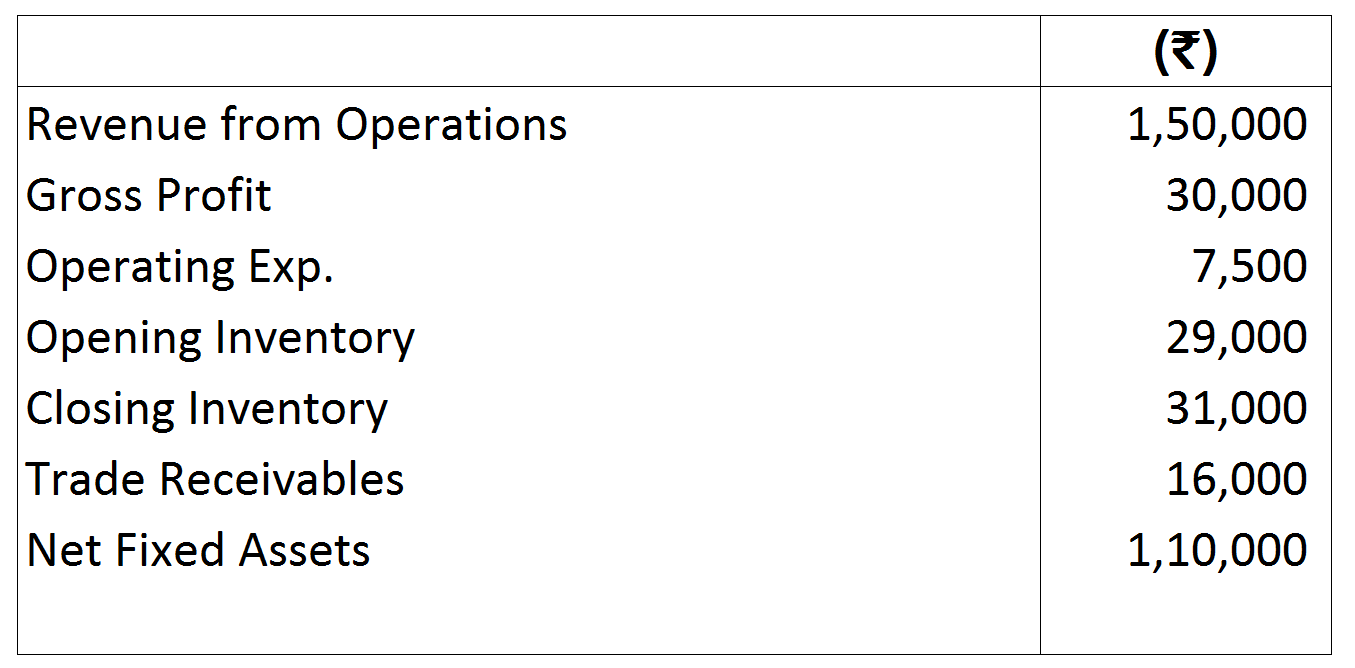
The following information is given about a company-

From the above information, calculate the following ratios:
  1. Gross Profit Ratio.
  2. Operating Ratio.
  3. Inventory Turnover Ratio.
  4. Trade Receivables Turnover Ratio.
Midee Ltd. invited applications for issuing 27,000 shares of ₹ 100 each payable as follows:
₹ 50 - per share on application;
₹ 10 - per share on allotment; and
Balance - on First and Final call.
Applications were received for 40,000 shares. Full allotment was made to the applicants of 7,000 shares. The remaining applicants were allotted 20,000 shares on pro rata basis. Excess money received on applications was adjusted towards allotment and call.
Asha, holding 600 shares was belonged to the category of applicants to whom full allotment was made, paid the call money at the time of allotment. Ankur, who belonged to the category of applicants to whom shares were allotted on pro rata basis did not pay anything after application on his 200 shares. Ankur's shares were forfeited after the First and Final call. These shares were later reissued at ₹ 105 per share as fully paid up.
Pass necessary journal entries in the books of Midee Ltd. for the above transactions, by opening Calls-in-Arrears and Calls-in-Advance Accounts wherever necessary.
Assuming that the Debt to Equity Ratio is 2 : 1, state giving reasons, which of the following transactions would (i) Increase; (ii) Decrease; (iii) Not alter Debt to Equity Ratio:
  1. Issue of new shares for cash.
  2. Conversion of debentures into equity shares.
  3. Sale of a fixed asset at profit.
  4. Purchase of a fixed asset on long-term deferred payment basis.
  5. Payment to creditors.
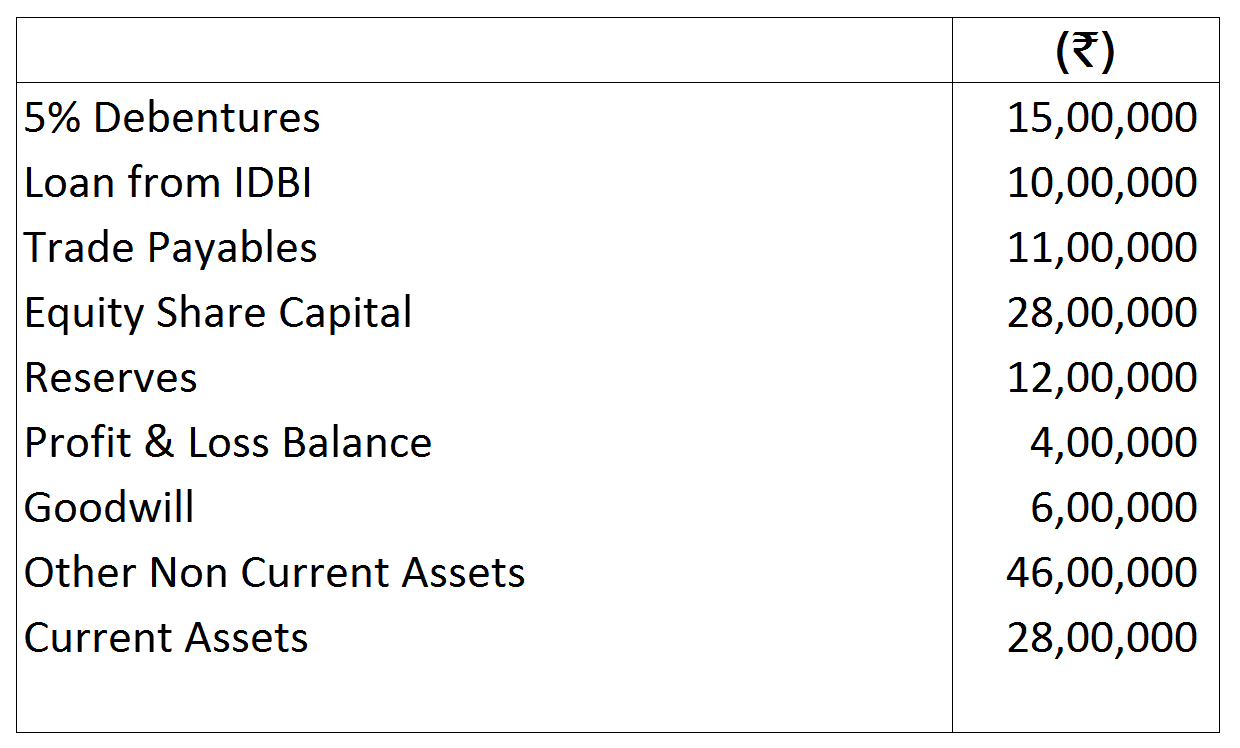
Calculate (i) Debt Equity Ratio, (ii) Proprietary Ratio and (iii) Total Assets to Debt Ratio from the following information:
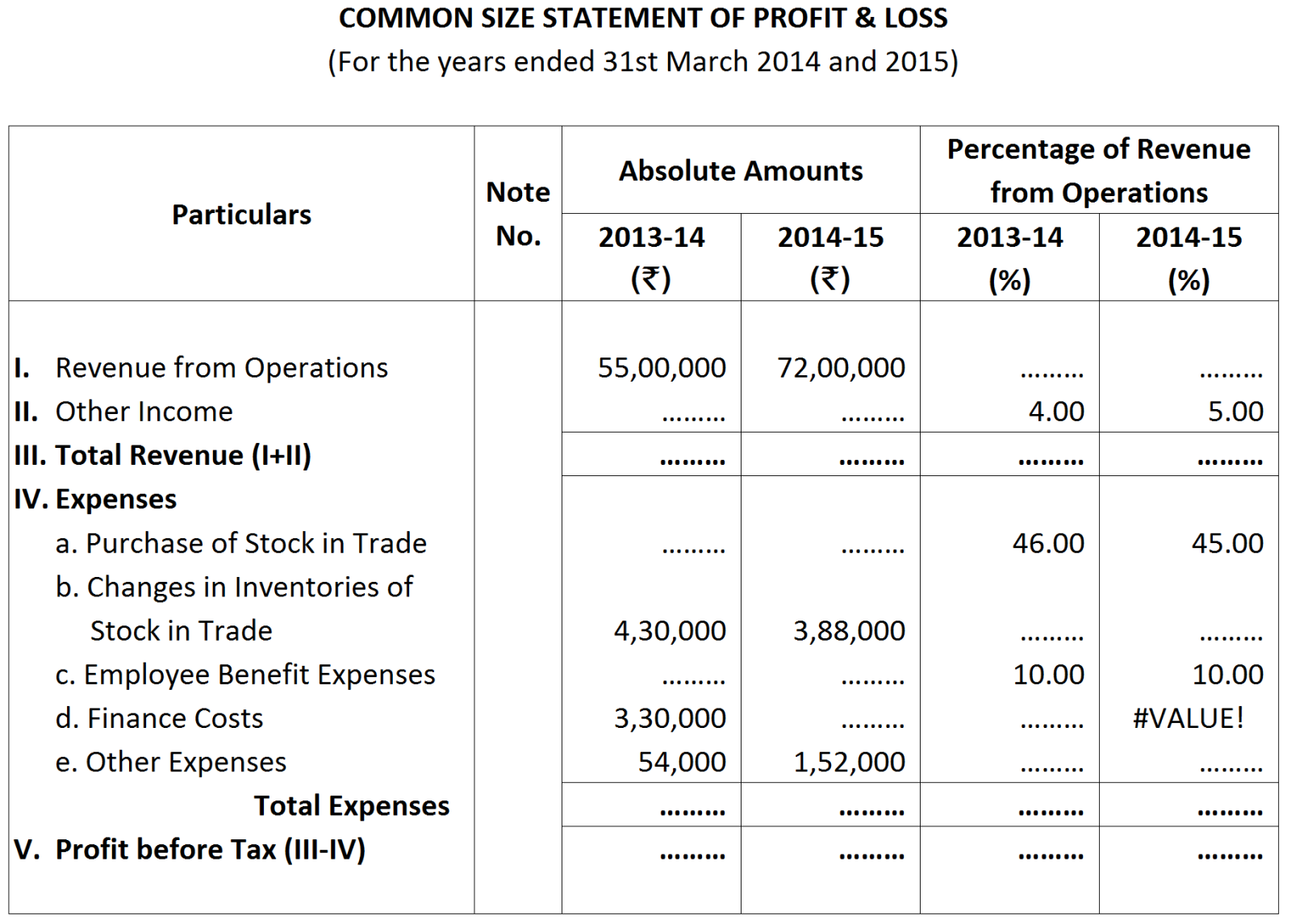
Following is the Common-Size Statement of Profit and Loss:

You are required to:
  1. Fill in the missing figures.
  2. Compute the following ratios:
  1. Operating Ratio.
  2. Operating Profit Ratio.
XYZ Ltd. invited applications for 10,000 shares of ₹ 100 each payable as follows: ₹ 20 on application, ₹ 30 on allotment, ₹ 20 on first call and the balance on final call.
All the shares were applied and allotted. All the money was duly received. You are required to journalise these transactions.
Arushi Computers Ltd issued 10,000 equity shares of ₹ 100 each at 10% discount. The net amount payable as follows:
On application
₹ 20
On allotment
₹ 30 ( ₹ 40 – discount ₹ 10)
On first call
₹ 30
On final call
₹ 10
A shareholder holding 200 shares did not pay final call. His shares Were forfeited. Out of these 150 shares were reissued to Ms.Sonia at ₹ 75 per shares. Give journal entries in the books of the company.
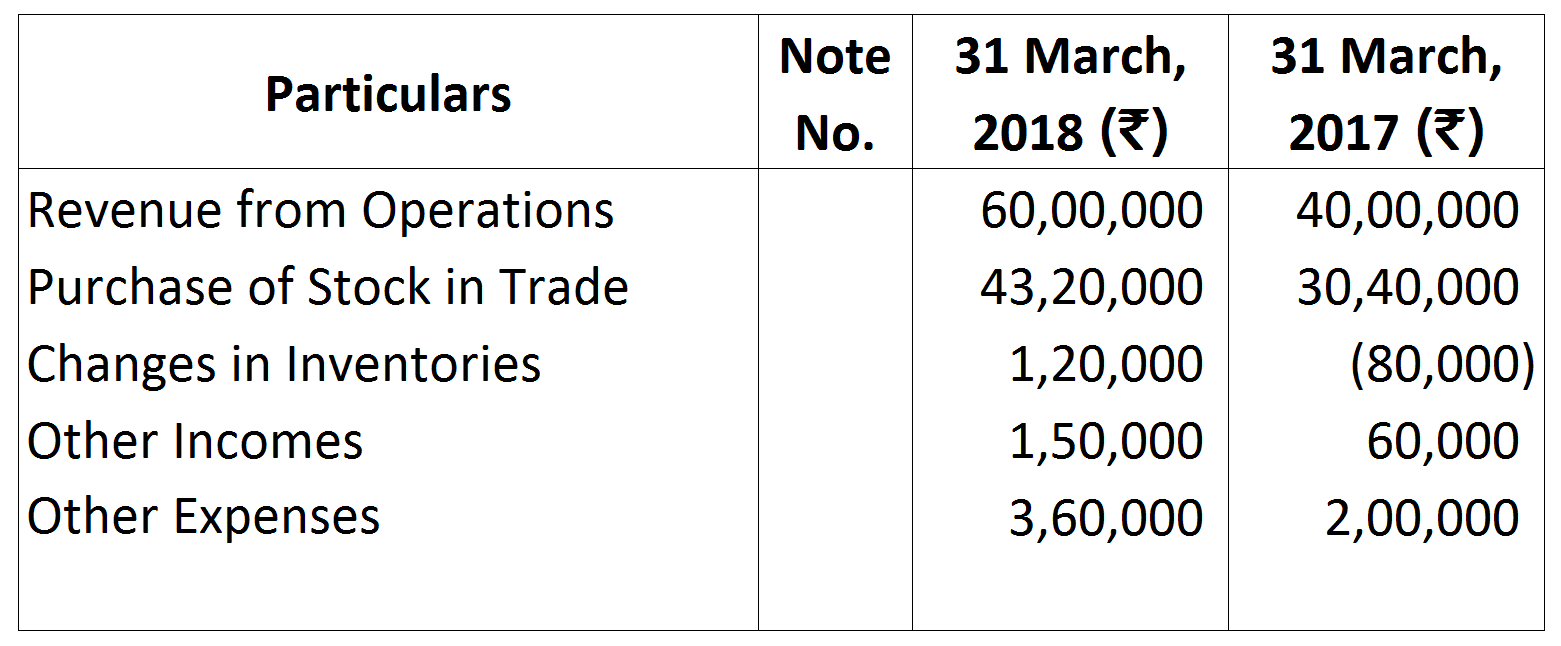
X Ltd. is engaged in construction business. It decided to allocate 5% of its profits every year for providing drinking water to the people in scarcity affected areas by digging wells. Following particulars are obtained from the Company's books:

You are required to:
  1. Prepare a Common Size Statement of Profit & Loss, and
  2. Identify the value involved.