Question
State with reason, whether the Proprietary Ratio will improve, decline or will not change because of the following transactions if Proprietary Ratio is 0.8 : 1:
  1. Obtained a loan of ₹ 5,00,000 from State Bank of India payable after five years.
  2. Purchased machinery of ₹ 2,00,000 by cheque.
  3. Redeemed 7% Redeemable Preference Shares ₹ 3,00,000.
  4. Issued equity shares to the vendor of building purchased for ₹ 7,00,000.
  5. Redeemed 10% redeemable debentures of ₹ 6,00,000.
Answer

 
Transaction
Impact
(i)
Obtained a loan of ₹ 5,00,000 from State Bank of India payable after five years.
Total assets increase by 5,00,000 (as cash is coming in). However, since shareholders' funds remain unchanged, therefore proprietary ratio will decrease.
(ii)
Purchased machinery of ₹ 2,00,000 by cheque.
Total assets are increasing and decreasing by 2,00,000 simultaneously (as cash is going out and machinery is coming in). Thus, both numerator and denominator remain unchanged and so proprietary ratio will not change.
(iii)
Redeemed 7% Redeemable Preference Shares ₹ 3,00,000.
Both shareholders' funds and total assets decrease by 3,00,000 simultaneously and so proprietary ratio will decrease.
(iv)
Issued equity shares to the vendor of building purchased for ₹ 7,00,000.
Both shareholders' funds and total assets increase by 7,00,000 simultaneously and so proprietary ratio will improve.
(v)
Redeemed 10% redeemable debentures of ₹ 6,00,000
Total assets decrease by 6,00,000 (as cash is going out). However, since shareholders' funds remain unchanged, therefore proprietary ratio will improve.

Need a full question paper?

Generate a complete, print-ready paper with questions like this in minutes — across 16+ boards, with answer keys.

Start Generating Free

Similar questions

X company issued ₹ 10,00,000 shares for subscription of ₹ 100 each at a premium of ₹ 20 per share payable as:
₹ 10 per share on application,
₹ 40 per share and ₹ 10 premium on allotment, and
₹ 50 per share and ₹ 10 premium on final payment.
Over-payments on application were to be applied towards amount due on allotment and over-payments on application exceeding amount due on allotment was to be returned. Issue was oversubscribed to the extent of 13,000 shares. Applicants for 12,000 shares were allotted only 1,000 shares and applicants for 2,000 shares were sent letters of regret. All the money due on allotment and final call was duly received.
Pass necessary entries in the company's books to record the above transactions. Also, prepare company's Balance Sheet on completion of the above transactions.
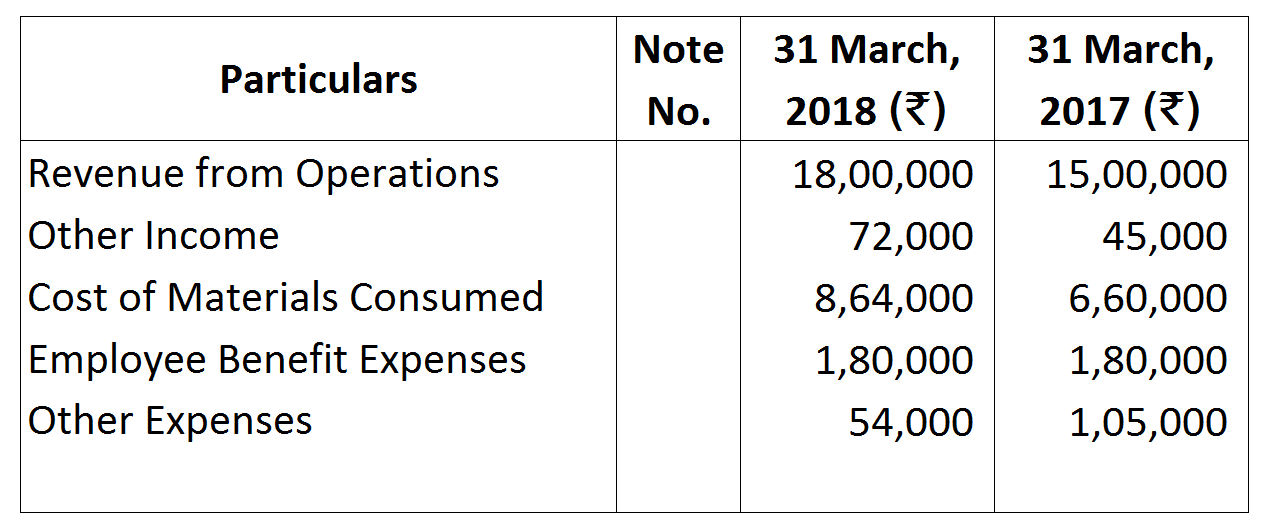
Convert the following particulars into Common Size Statement of Profit & Loss and interpret the changes in 2018:
Jeevan Dhara Ltd. invited applications for issuing 1,20,000 equity shares of ₹ 10 each at a premium of ₹ 2 per share. The amount was payable as follows:
On Application
₹ 2 per share
On Allotment
₹ 5 per share (including premium)
On first and final call
balance
Applications for 1,50,000 shares were received, Shares were allotted to. all the applicants on pro-rata basis. Excess money received on applications was adjusted towards sums due on allotment. All calls were made. Manu who had applied for 3,000 shares failed to pay the amount due on allotment and first and final call. Madhur who was allotted 2,400 shares failed to pay the first and final call. Shares of both Manu and Madhur were forfeited The forfeited shares were reissued at ₹ 9 per share as fully paid up.
Pass necessary journal entries for the above transactions in the books of Jeevan Dhara Ltd.
Briefly explain the meaning and significance of any two of the following ratios:
  1. Gross Profit Ratio.
  2. Quick Ratio.
  3. Inventory Turnover Ratio
Show by means of journal entries how would you record the following issues.
A Ltd. issues ₹ 5,00,000, 13% Debentures at a discount of 8% redeemable at par.
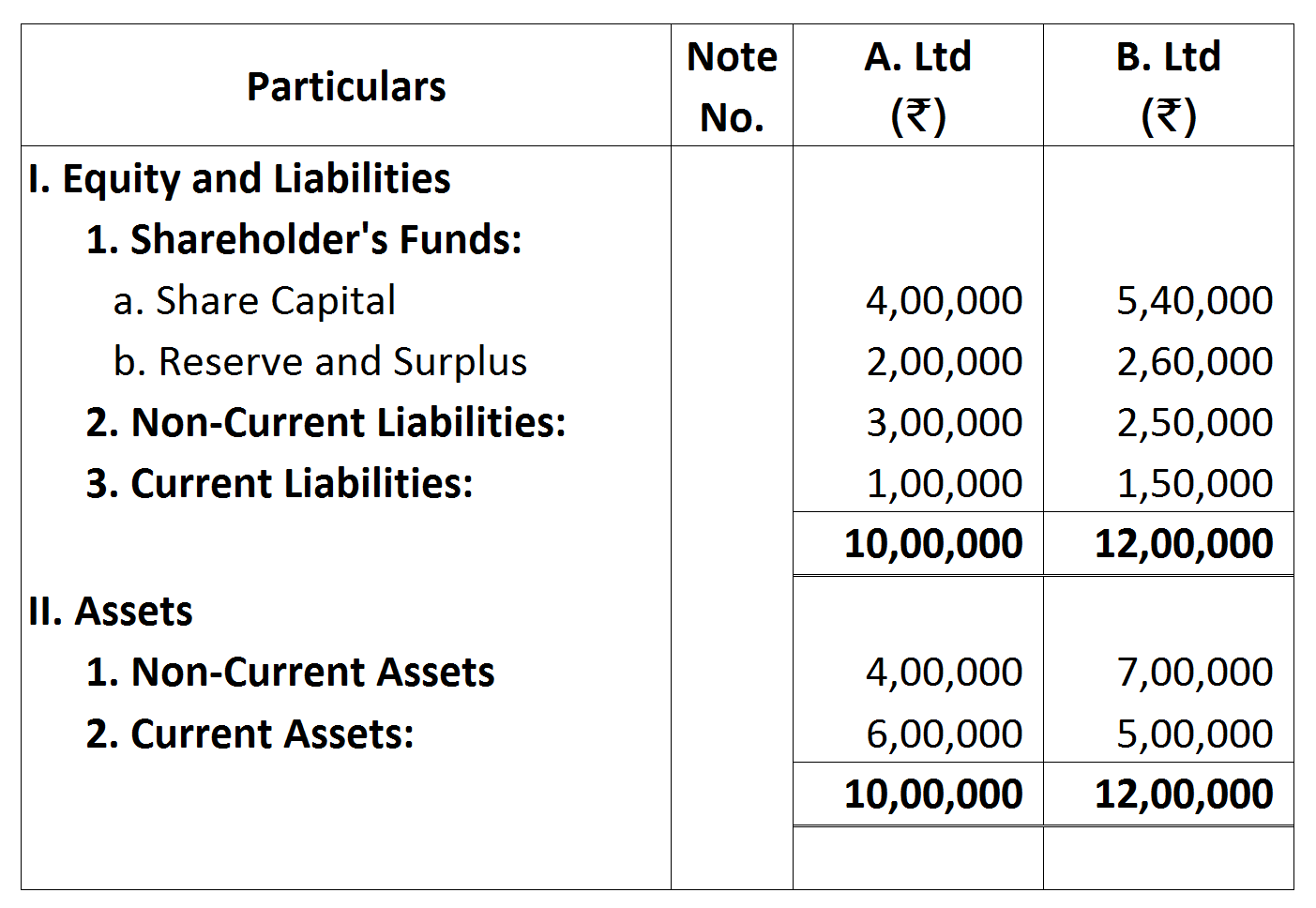
Prepare a common size Balance Sheet and comment on the financial position of A Ltd. and B Ltd. The Balance Sheets of A Ltd. and B Ltd. as at 31.3.2018 are given below:
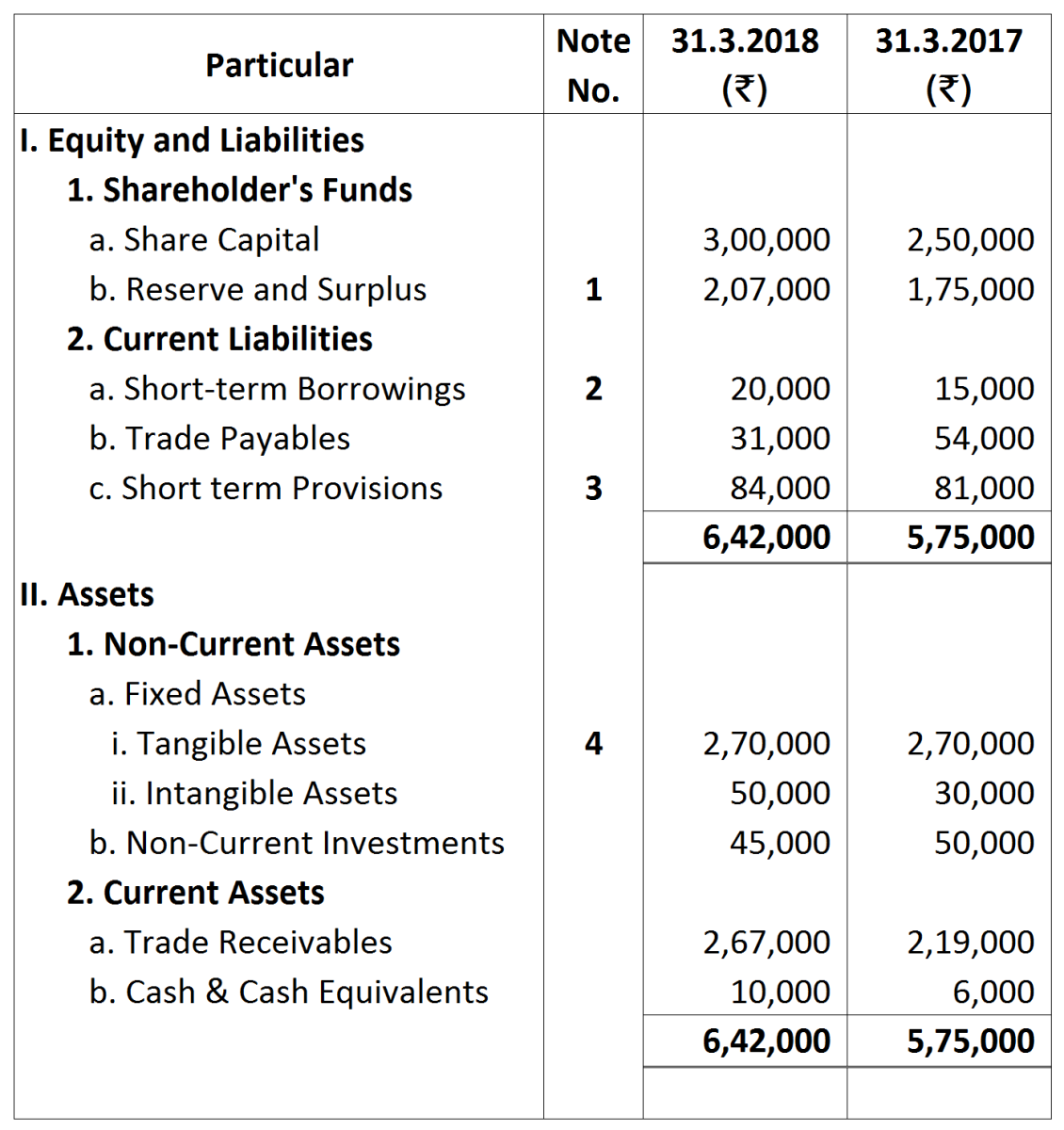
Following are the Balance Sheets of Pawan Ltd.

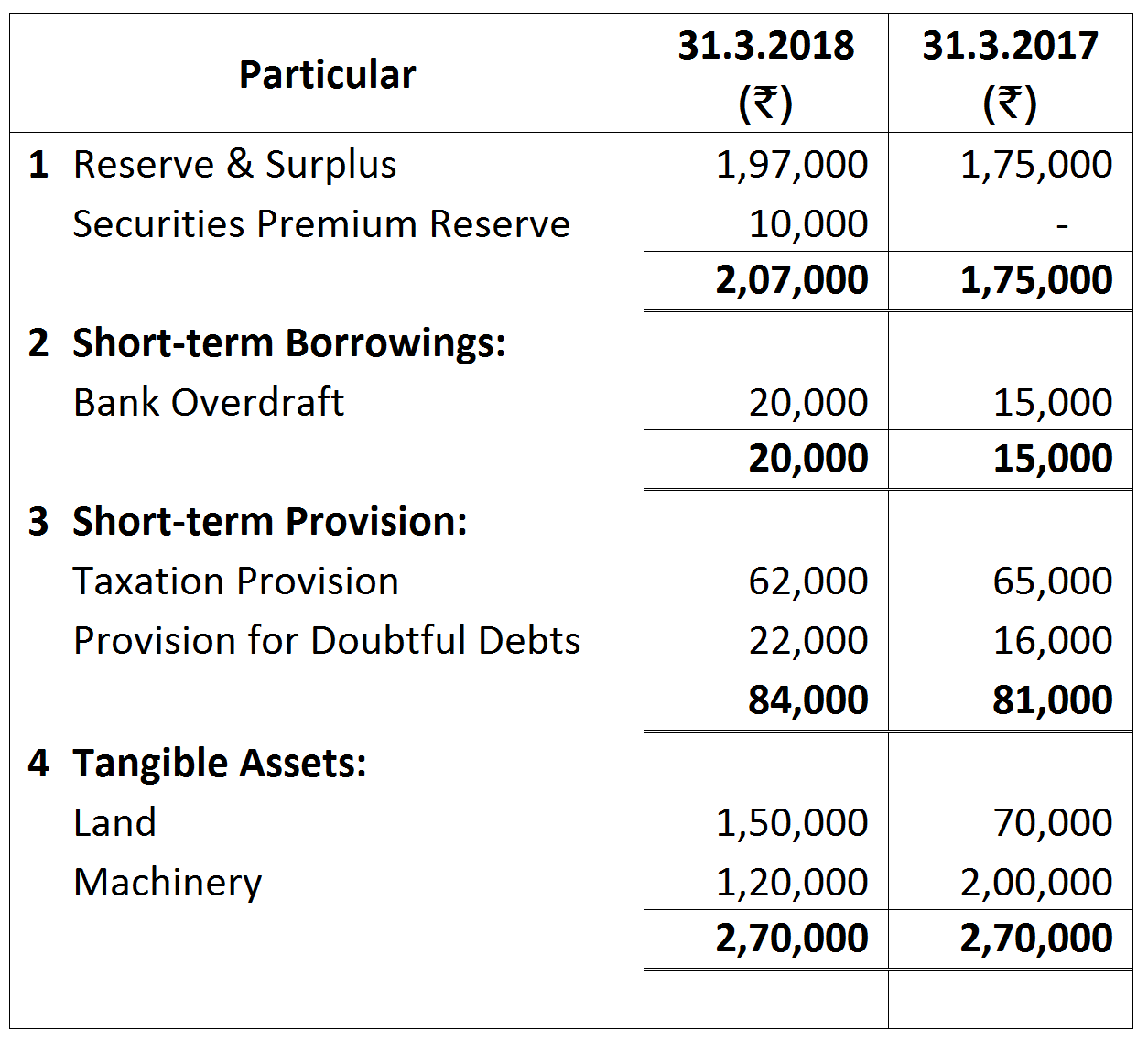
Notes:

Additional Information:
  1. Machinery Costing ₹ 60,000 was sold for ₹ 18,000 during the year.
  2. Interim Dividend paid during the year ₹ 25,000.
  3. During the year Company sold 40% of its original non-current investments at a loss of 20%.
You are required to prepare Cash-Flow Statement.
Record the journal entries for forfeiture and reissue of shares in the following cases:
  1. X Ltd. forfeited 20 shares of ₹ 10 each, ₹ 7 called up on which the shareholder had paid application and allotment money of ₹ 5 per share. Out of these, 15 shares were re-issued to Naresh as ₹ 7 per share paid up for ₹ 8 per share.
  2. Y Ltd. forfeited 90 shares off ₹ 10 each, ₹ 8 called up issued at a premium of ₹ 2 per share to 'R' for non-payment of allotment money of ₹ 5 per share (including premium). Out of these, 80 shares were re-issued to Sanjay as ₹ 8 called up for ₹ 10 per share.
  3. Z Ltd. forfeited 300 shares of ₹ 10 each issued at a discount of ₹ 1 per share for non-payment of first and final call of ₹ 3 per share. Out of these 200 shares were reissued at ₹ 3 per share fully paid up.
From the following information, calculate any two of the following ratios:
  1. Debt-Equity Ratio.
  2. Working Capital Turnover Ratio.
  3. Return on Investment.
Information: Equity Share Capital ₹ 9,00,000, General Reserve ₹ 1,00,000; Statement of Profit and Loss Balance after Tax and Interest ₹ 3,00,000; 12% ₹ 4,00,000; Trade Payables ₹ 3,00,000; Land and ₹ 13,00,000; Furniture ₹ 3,00,000; Trade Receivables ₹ 2,90,000; Cash ₹ 1,10,000.
Revenue from Operations for the year ended 31.3.2011 was ₹ 30,00,000 and Tax paid 50%.
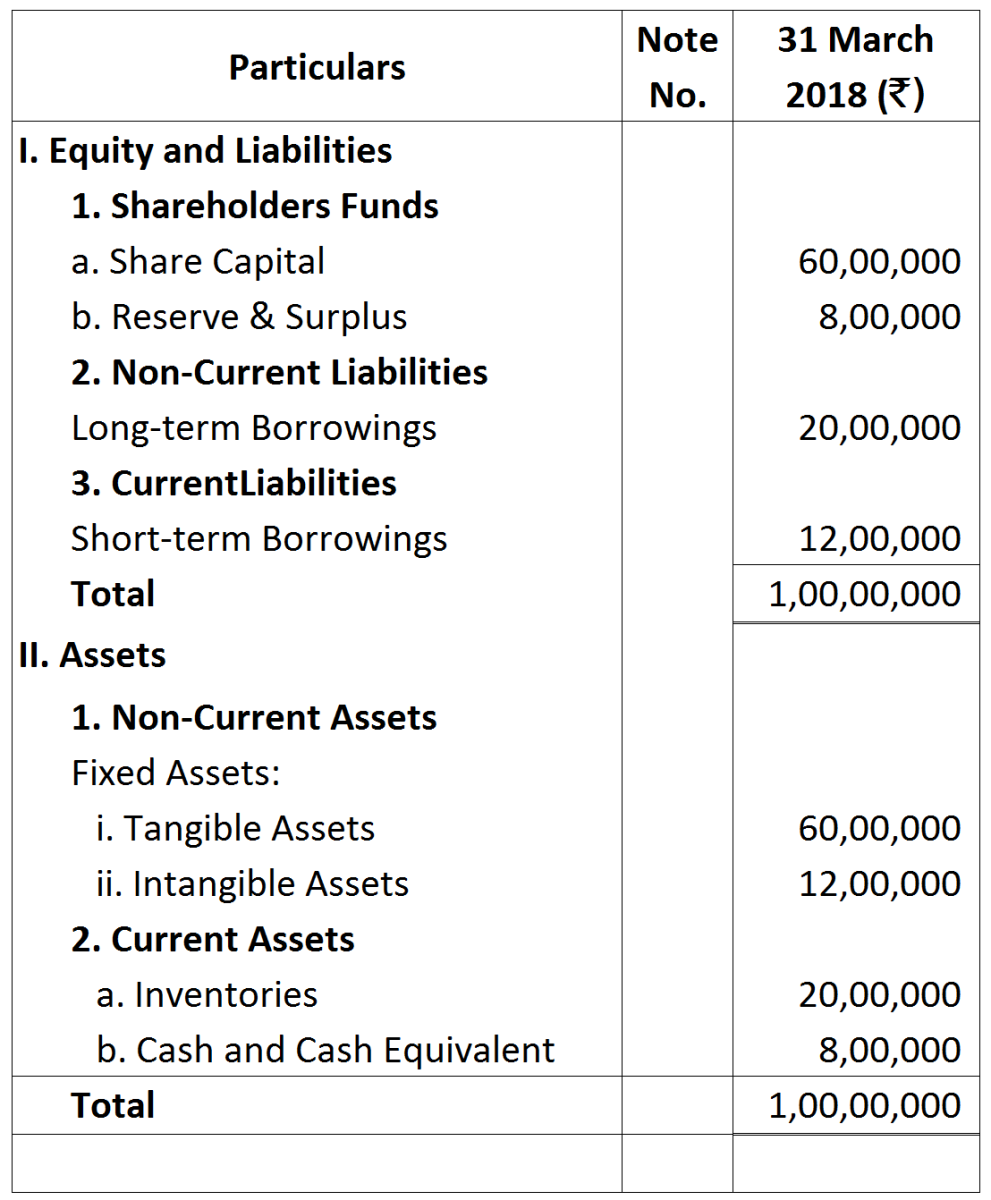
From the Following Balance Sheet of Moon Ltd. as at 31st March, 2018, prepare a Common-size Balence Sheet and compute Proprietary Ratio: