Question
Statistical methods are no substitute for common sense. Comment with examples from your daily life.

Answer

Yes, it is true that statistical methods are no substitute for common sense. This is because common sense should be used before making any interpretation from statistical data. Data should not be used blindly as there may be errors in it.
This statement can be better understood with the following examples:
  1. If the school authority finds that the average shoe size of 150 students of Class XII is 6 and it places an order for 150 shoes of size 6, then it will be using statistical data without common sense resulting in many shoes not fitting students.
  2. If statistical data reveals that there is a direct relation between education and poverty, then such data is misleading and should not be believed blindly.

Need a full question paper?

Generate a complete, print-ready paper with questions like this in minutes — across 16+ boards, with answer keys.

Start Generating Free

Similar questions

Construct a frequency polygon without using histogram for the following data.
Wages (in ₹)
Number of Workers (f)
0-10
10
10-20
18
20-30
35
30-40
30
40-50
20
50-60
12
60-70
8
70-80
3
What are the main objectives of tabulation? Do all tables fulfill these objectives?
What are the essentials of a good statistical table? Using an imaginary example, indicate different parts of a table.
What guidelines will you keep in mind while constructing a diagram?
Construct a pie-diagram from the following table:
Items
Agriculture
Industry
Transport
Administration
Banking
Percentage
40
21
19
13
07
In a poem recitation competition, ten participants were recorded following marks by two different judges X and Y.
X
15
17
14
13
11
12
16
18
10
9
Y
15
12
4
6
7
9
3
10
2
5
Calculate the coefficient of rank correlation.
Explain important terms related to a frequency distribution.
Convert the following inclusive series into exclusive series:
C.I.
1-5
6-10
11-15
16-20
21-25
No.of Workers
10
15
20
25
30
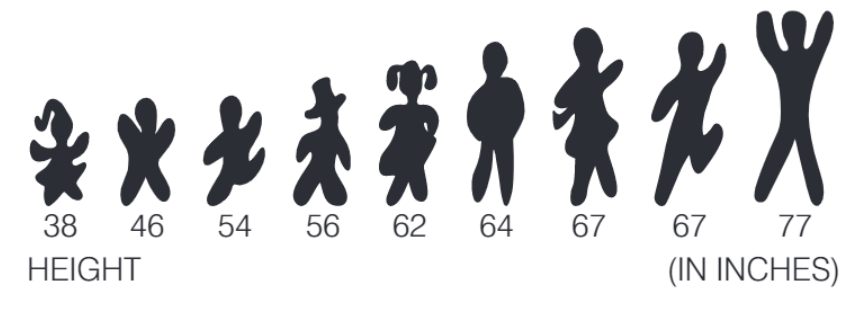
Direction Analyse the following case study graph and answer questions (i) to (v) on the basis of the same.
  1. What is the mean height of the above students?
  1. 54
  2. 59
  3. 62
  4. 67
  1. Median of a given series divides the data into ......... parts.
  1. Two
  2. Three
  3. Four
  4. None of these
  1. What will be the median value of the above figure?
  1. 52
  2. 56
  3. 62
  4. 65
  1. If we reverse the data in decreasing order, value of median will be:
  1. 52
  2. 55
  3. 64
  4. None of the above
  1. What will be the mode value in the above series?
  1. 54
  2. 59
  3. 67
  4. Can't be determined
Read the following case study carefully and answer the questions 1-2 on the basis of the same:
Firms must weigh the opportunity costs of producing one good versus another. As the production possibilities frontier showed, productive resources are limited and choices among outputs must be made. Such choices depend on relative prices. A farmer with farmland suited for both corn and soybeans must decide how much of each crop to plant. As the price of soybean falls, more land will be planted in corn. Oil refiners will be guided by the relative prices of fuel oil, gasoline, and kerosene in deciding how much of each to refine. Higher price of fuel oil tends to lower the supply of other refined oil products. Firms must also compare today's prices with those expected in the future.
$\quad$$\quad$$\quad$$\quad$$\quad$$\quad$-Paul R. Gregory, Essentials of Economics, 4th Edition, University of Houston

1. How does the rise in the price of fuel oil affect the supply of other refined oil products?
2. How is withdrawal of subsidy on the inputs used (like fuel oil prices, gasoline, and kerosene in the above case) in the production of refined oil products likely to affect the supply and demand for refined oil products in India? Also, explain its implications in the Indian economy.