Question
Suggest an activity to prepare a magnetic compass by using an iron needle and a bar magnet.

Answer

Steps involved in preparing a magnetic compass are:
  1. Take an iron needle which is to be magnetised.
  2. Magnetise it using a bar magnet.
  3. Insert the magnetised needle through a small piece of cork.
  4. Let the cork float in a water in a bowl. Make sure that the needle does not touch the water.
  5. Your magnetic compass is now ready to work. Note the direction in which the needle points when the cork is floating.
  6. Rotate the cork, with the needle fixed in it, in different directions. Note the direction in which the needle points when the cork begins to float again without rotating. You will observe that the needle indicates the North-South direction when it comes to rest.

Need a full question paper?

Generate a complete, print-ready paper with questions like this in minutes — across 16+ boards, with answer keys.

Start Generating Free

Similar questions

Match the mixtures in Column $I$ with their method of separation in Column $II$.
 
$COLUMN\ I$
 
$COLUMN\ II$
$a$
Oil mixed in water
$i$
Sieving
$b$
Iron powder mixed with flour
$ii$
Hand picking
$c$
Salt mixed with water
$iii$
Decantation
$d$
Lady's finger mixed with french beans
$iii$
Magnet
$e$
Rice flour mixed with kidney beans
$iv$
Evaporation
Activity.
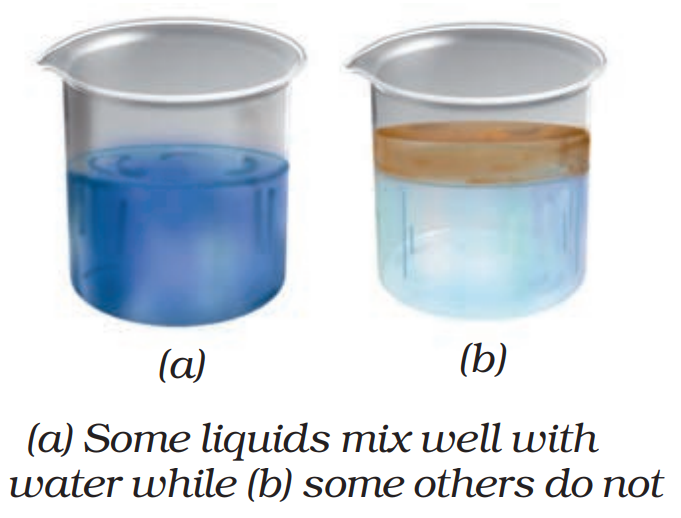
Collect samples of vinegar, lemon juice, mustard oil or coconut oil, kerosene or any other liquid. Take a glass tumbler. Fill it up to half with water. Add a few spoonfuls of one liquid to this and stir it well. Let it stand for five minutes. Observe whether the liquid mixes with water (see figure). Repeat the same with other liquids, as many different liquids as are available to you. Write your observations in Table.
What are the uses of air?
Explain various paths by which water that falls on land as rain goes back to oceans.
Comment on the mode of locomotion in following animals:
  1. Snake.
  2. Cockroach.
  3. Snail.
  4. Earthworm.
State the procedures for the measurement of length using a metre scale.
Draw the ray diagram for solar eclipse and lunar eclipse.
Design an experiment to check if temperature has an effect on seed germination
Select leaves showing reticulate venation and those showing parallel venation from the list given below and write them in the tabular form:
Peepal, neem, grass, mustard, methi, dhania (coriander), rose, tulsi, mango, sugarcane, maize, mint, wheat, rice.
List all items known to you that float on water. Check and see if they will float on an oil or kerosene.