Question
Suggest some methods to assist infertile couples to have children.

Answer

→ A discussion on reproductive health is incomplete without the mention of infertility.
→ A large number of couples all over the world including India are infertile, i.e., they are unable to produce children inspite of unprotected sexual co-habitations to come
→ The reasons for this could be many-physical, congenital, diseases, drugs, immunological or even psychological.
→ In India, often the female is blamed for the couple being childless, but more often than not, the problem lies in the male partner.
→ Specialised health care units (infertility clinics, etc.) could help in diagnosis and corrective treatment of some of these disorders and enable these couples to have children,
→ However, where such corrections are not possible, the couples could be assisted to have children through certain special techniques commonly known as assisted reproductive techniques.
(i) In vitro fertilisation :
→ In vitro fertilisation IVF fertilisation outside the body in almost similar conditions as that in the body) followed by embryo transfer (ET) is one of such methods.
→ In this method popularly known as test tube baby programme, ova from the wife/donor (female) and sperm from the husband/donor (male) are collected and are induced to form zygote under simulated conditions in the laboratory.
(a) ZIFT Zygote intra fallopian transfer :
→ The zygote or early embryos (with upto 8 blastomeres) could then be transferred into the fallopian tube (ZIFT-zygote intra fallopian transfer)
(b) IUT Intra Uterine Transfer :
→ Embryos with more than 8 blastomeres, into the uterus (IUT-intra uterine transfer), to complete its further development.
(c) Intra cytoplasmic sperm injection (ICSI):
→ Intra cytoplasmic sperm injection (ICSI) is another specialised procedure to form an embryo in the laboratory in which a sperm is directly injected into the ovum.
(ii) In vitro fertilisation :
→ In vitro fertilization (IVF) is a complex series of procedures used to help with fertility or prevent genetic problems and assist with the conception of a child. During IVF, mature eggs are collected (retrieved) from ovaries and fertilized by sperm in a lab.
(a) GIFT - gamete intra fallopian transfer :
→ Transfer of an ovum collected from a donor into the fallopian tube (GIFT - gamete intra fallopian transfer) of another female who cannot produce one, but can provide suitable environment for fertilisation and further development is another attempted method.
(b) IUI intra-uterine insemination :
→ Infertility cases either due to inability of the male partner to inseminate the female or due to very low sperm counts in the ejaculates, could be corrected by artificial insemination (Al) technique.
→ In this technique, the semen collected either from the husband or a healthy donor is artificially introduced either into the vagina or into the uterus (IUI intra-uterine insemination) of the female.
→ Though options are many, all these techniques require extremely high precision handling by specialised professionals and expensive instrumentation.
→ Therefore, these facilities are presently available only in very few centres in the country.
→ Obviously their benefits are affordable to only a limited number of people.
→ Emotional, religious and social factors are also deterrents in the adoption of these methods.
→ Since the ultimate aim of all these procedures is to have children, in India we have so many orphaned and destitute children, who would probably not survive till maturity, unless taken care of.
→ Our laws permit legal adoption and it is as yet, one of the best methods for couples looking for parenthood.
Need a full question paper?

Generate a complete, print-ready paper with questions like this in minutes — across 16+ boards, with answer keys.

Start Generating Free

Similar questions

Read the following and answer any four questions from (i) to (v) given below:
Discovery of penicillin by Alexander Fleming in 1928 marked the beginning of the remarkable era in medical field. Penicillin was the first antibiotic extracted from Penicillium notatum. Antibiotics are used to treat bacterial diseases. These can be broad spectrum which can kill diverse group of disease causing bacteria and narrow spectrum which is effective only against one group of pathogenic strain. Antibiotics can act as bactericides or bacteriostatic. Bactericidal antibiotics kill bacteria by - disruption of cell wall synthesis (e.g., penicillin, cephalosporin, etc.), inhibition of SOS ribosome function (e.g.; erythromycin), inhibition of 30S ribosome function (e.g., streptomycin, neomycin), inhibition of amino acid-tRNA binding to ribosome (e.g., tetracyline). etc. Bacteriostatic antibiotics do not kill the bacteria rather they restrict the growth of bacteria. Penicillin belongs to $\beta$-lactum group of antibiotics and it inhibits bacterial cell wall synthesis by binding and inactivating protein. It inhibits transpeptidation of reaction and blocks cross-linking of the cell wall. It is used to treat tonsilitis, sore throat, gonorrhoea, rheumatic fever and some pneumonia types.
  1. The first antibiotic was extracted from a:
  1. Lichen.
  2. Fungus.
  3. Eubacteria.
  4. Acti-nomycetes.
  1. Which of the following kills bacteria by interfering SOS ribosome function?
  1. Cephalosporin.
  2. Erythromycin.
  3. Streptomycin.
  4. Neomycin.
  1. $\beta$-lactum group of antibiotics kill the bacterial pathogen by:
  1. Disruption of plasma membrane.
  2. Inhibition of translation of mRNA.
  3. Inhibition of translation of mRNA
  4. Inhibition of transcription of mRNA.
  1. Penicillin is not used to treat.
  1. Pneumonia.
  2. Tonsilitis.
  3. Rheumatic fever.
  4. Candidiasis.
  1. Assertion: Cephalosporins act by disruption of bacterial cell wall synthesis mechanism.
Reason: Cephalosporins are bacteriostatic antibiotics.
  1. Both assertion and reason are true and reason is the correct explanation of assertion.
  2. Both assertion and reason are true but reason is not the correct explanation of assertion.
  3. Assertion is true but reason is false.
  4. Both assertion and reason are false.
Read the following and answer any four questions from (i) to (v) given below:
Rajesh, Ravi, and Rohit are roommates. 'They are doing their graduation. Few months back Ravi fell ill. it took him around 3 weeks to recover. Both his friends were absolutely healthy at that time. After sometime, Rajesh also fell ill from some other disease. This time Ravi and Rohit both contracted the same illness. Based on the above information, answer the following questions.
  1. Which of the following holds true for Ravi's illness?
  1. Ravi was suffering from a communicable disease that is transmitted through vector.
  2. Ravi was suffering from a communicable disease that is transmitted through faecal oral route.
  3. Ravi was suffering from a non-communicable disease like anaemia.
  4. Ravi was suffering from a non-communicable disease like Down's syndrome.
  1. Select the correct statement.
  1. Ravi contracted a disease caused by air borne microbes.
  2. Ravi could have suffered a nutritional disorder.
  3. Ravi suffered a non-contagious disease.
  4. Both (b) and (c)
  1. Which could be correctly said for Rajesh's illness?
  1. Rajesh's illness was due to a microbial infection.
  2. Rajesh's illness could be contagious or non-contagious.
  3. Rajesh's illness could be cured by antibiotics.
  4. All of these
  1. Which of the following may depicts Ravi's and Rajesh's illness?
S.no
Ravi
Rajesh
(a)
Which of the following may depicts Ravi's and Rajesh's illness?
Myocardial infection
(b)
Whooping cough
Tetanus
(c)
Gastritis
Rhinitis
(d)
Hypertensio
Thyroid
  1. Assertion: Diabetes mellitus is a non-communicable disease which can be completely cured.
Reason: Diabetes mellitus is caused by deficiency of aldosterone hormone.
  1. Both assertion and reason are true, and reason is the correct explanation of assertion.
  2. Both assertion and reason are true, but reason is not the correct explanation of assertion.
  3. Assertion is true, but reason is false.
  4. Both assertion and reason are false.
Describe: Genetic engineered insulin
Read the following text carefully and answer the questions that follow:
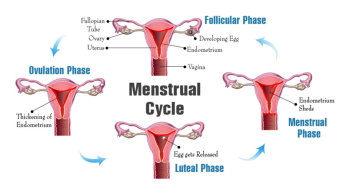
The image below shows the menstrual cycle of a human female. On the basis of this cycle:
Image
i. Explain the menstrual phase in a human female. State the level of ovarian and pituitary hormones during this phase. (1)
ii. Why is follicular phase in the menstrual cycle also referred as proliferative phase? Explain. (1)
iii. Explain the events that occur in a Graafian follicle at the time of ovulation and thereafter. (2)
OR
Draw a Graafian follicle and label antrum and secondary oocyte. (2)
Read the following and answer any four questions from (i) to (v) given below:
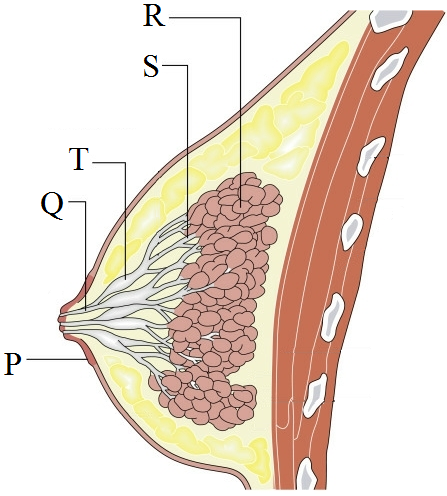
A functional mammary gland is characteristic of all female mammals. Mammary glands are paired structures that contain glandular tissue and variable amount of fat. Refer to the given figure of a mammary gland and answer the following questions.
  1. Mammary glands are modified:
  1. Sweat glands.
  2. Sebaceous glands.
  3. Sudoriferous glands.
  4. Lacrimal glands.
  1. Identify the incorrectly matched pair.
  1. P - Areola.
  2. Q - Lactiferous duct.
  3. S - Mammary duct.
  4. T - Mammary alveoli.
  1. Mammary ducts expand to form:
  1. Mammary alveoli.
  2. Mammary ampullae.
  3. Lactiferous ducts.
  4. Mammary tubules.
  1. What is areola?
  1. Grape-like clusters of milk secreting structures.
  2. Fatty tissue between the mammary lobes.
  3. Circular pigmented area of skin around nipple.
  4. Connective tissue that supports the alveoli and ducts.
  1. Assertion: The size of breast depends on the amount of adipose tissue.
Reason: The adipose tissue supports the alveoli and the ducts.
  1. Both assertion and reason are true, and reason is the correct explanation of assertion.
  2. Both assertion and reason are true, but reason is not the correct explanation of assertion.
  3. Assertion is true, but reason is false.
  4. Both assertion and reason are false.
Read the following and answer any four questions from (i) to (v) given below:
A group of teenagers was involved in drug abuse. 'They used syringes and needles to inject drugs. 'They indulged in this habit when they became adults. Administration of drug through needles became a piece of cake for them. Raj was the most active drug abuser amongst them and used to take drugs in high profile parties. In a span of time he started losing weight and suffered persistent diarrhoea. He developed constant low grade fever and used to catch opportunistic infection. When he consulted a doctor, he got himself tested for HIV in his blood and finally diagnosed with AIDS.
Based on the above information, answer the following questions.
  1. Select the incorrect statement.
  1. AIDS is a disorder of cell mediated immune system of the body.
  2. AIDS is caused by Human Immunodeficiency virus.
  3. AIDS infections were detected in India for the first time in prostitutes of Chennai, Tamil Nadu in 1986.
  4. December 10 is recalled as World AIDS Day.
  1. How do you think Raj got AIDS infection?
  1. Through transfusion of HIV infected blood
  2. Sexual intercourse with an infected partner
  3. Sharing towel with infected friend
  4. Use of contaminated needles and syringes to inject drugs
  1. How AIDS can be diagnosed?
  1. ELISA test
  2. Ames test
  3. Pap's test
  4. Wida! test
  1. How can AIDS be prevented?
  1. Blood tests of blood donor before transfusion to check for the presence of AIDS virus.
  2. Use of disposable needles and syringes for injecting medicines and vaccination
  3. Having protected sex by use of condoms
  4. All of these
  1. Select the correct statement for AIDS virus.
  1. It is rhomboid in shape with a diameter of 10-15 cm.
  2. Its genome consists of ds DNA.
  3. It consists of reverse transcriptase enzyme.
  4. Its envelope consists of lipid bilayer and three protein coats.
Read the following text carefully and answer the questions that follow:
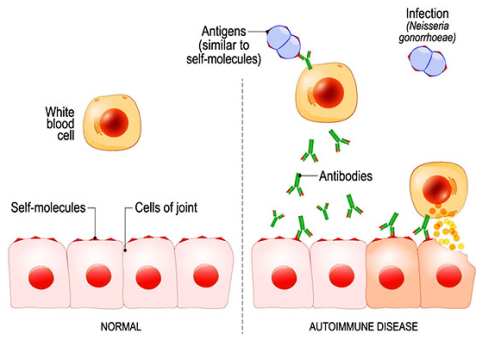
A healthy immune system defends the body against disease and infection. But if the immune system malfunctions, it mistakenly attacks healthy cells, tissues, and organs. Called autoimmune disease, these attacks can affect any part of the body, weakening bodily function and even turning life-threatening.
Image
i. Why are autoimmune diseases called degenerative diseases? (1)
ii. Name the autoimmune disease of body muscles. (1)
iii. Which types of immunity is provided by T-lymphocytes? (2)
OR
Which immune cells form humoral immune system? (2)
Explain population attributes.
Read the following and answer any four questions from (i) to (v) given below:
The process of translation requires transfer of genetic information from a polymer of nucleotides to synthesise a polymer of amino acids. The relationship between the sequence of amino acids in a polypeptide and nucleotide sequence of DNA or mRNA is called genetic code. George Gamow suggested that in order to code for all the 20 amino acids, code should be made up of three nucleotides.
  1. What is a codon?
  1. A length of DNA which codes for a particular protein.
  2. A part of the tRNA molecule to which a specific amino acid is attached.
  3. A part of the tRNA molecule which recognises the triplet code on the messenger RNA.
  4. A part of the messenger RNA molecule that has a sequence of bases coding for an amino acid.
  1. Three consecutive bases in the DNA molecule provide the code for each amino acid in a protein molecule. What is the maximum number of different triplets that could occurs?
  1. 16
  2. 20
  3. 24
  4. 64
  1. Listed below are some amino acids and their corresponding mRNA triplets.
Amino acid
mRNA triplet
Phenylalanine
UUU
Lysine
AAG
Arginine
CGA
Alanine
GCA
Which DNA sequence would be needed to produce the following polypeptide sequence? Alanine-Arginine-Lysine-Phenylalanine
  1. $\text{CGT}\ \ \ \text{GCT}\ \ \ \text{TTC}\ \ \ \text{AAA}$
  2. $\text{CGT}\ \ \ \text{GCT}\ \ \ \text{TTC}\ \ \ \text{TTT}$
  3. $\text{CGU}\ \ \ \text{GCU}\ \ \ \text{UUC}\ \ \ \text{AAA}$
  4. $\text{CGU}\ \ \ \text{GCU}\ \ \ \text{UUC}\ \ \ \text{TTT}$
  1. Identify the non-sense codons among the following.
  1. AUG
  2. GUG
  3. UAA
  4. UGG
  1. A polypeptide is made using synthetic mRNA molecules as shown.
Synthetic mRNA used
Polypeptide produced
UUUAAAUUUAAA
Phenylalanine-Iysine-phenylalanine-Iysine
What are the DNA codes for the amino acids phenylalanine and lysine?
S.no
Phenylalanine
Lysine
(a)
AAA
TTT
(b)
AAA
UUU
(c)
GGG
CCC
(d)
TTT
GGG
Write a note on Mechanism of $ \text{(DNA)}$ replication