MCQ
Sun maintains its shining because of:
- AThe fission of helium
- BChemical reactoin
- CFusion of hydrogen nuclei
- DBurning of carbon
Explanation:
The Sun produces energy by the nuclear fusion of hydrogen into helium in its core.
Generate a complete, print-ready paper with questions like this in minutes — across 16+ boards, with answer keys.
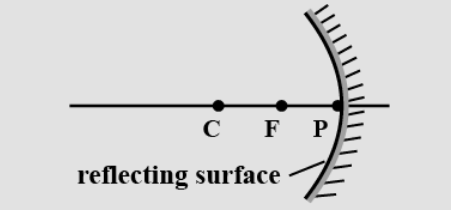
The distance CP is the:
Assertion : A person touching a high power line gets stuck with the line.
Reason : The current carrying wires attract the man towards it.
|
(a) If both assertion and reason are true and the reason is the correct explanation of the assertion. |
|
(b) If both assertion and reason are true but reason is not the correct explanation of the assertion. |
|
(c) If assertion is true but reason is false. |
|
(d) If the assertion and reason both are false. |
Electric field intensity at a point in between two parallel sheets with like charges of same surface charge densities (σ) is
|
(a) |
(b) |
(c) Zero |
(d) |
At a place the value of horizontal component of the earth's magnetic field H is 3 . A metallic rod AB of length 2 m placed in east-west direction, having the end A towards east, falls vertically downward with a constant velocity of 50 m/s. Which end of the rod becomes positively charged and what is the value of induced potential difference between the two ends
|
(a) End A, 3 |
(b) End A, 3 mV |
|
(c) End B, 3 |
(d) End B, 3 mV |
For an isotropic medium B, m, H and M are related as (where B,  and M have their usual meaning in the context of magnetic material
|
(a) (B – M) = |
(b) |
(c) |
(d) |


