MCQ
The complex that violates the Sidgwicks's rule of $EAN$ is
  • A
    Potassium ferrocyanide
  • B
    Hexamine cobalt $(III)$ Chloride
  • Tetramine copper $(II)$ sulphate
  • D
    Potassium dichlorodioxalato cobaltate $(III)$

Answer

Correct option: C.
Tetramine copper $(II)$ sulphate
c
$Co ( CO )_{x}$ will be $Co _{2}( CO )_{8}$ sice, it has 36 EAN per $Co$ atom.

Need a full question paper?

Generate a complete, print-ready paper with questions like this in minutes — across 16+ boards, with answer keys.
Start Generating Free

Similar questions

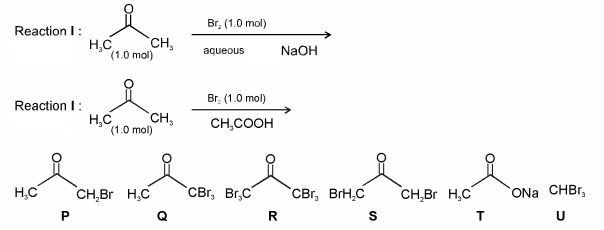
After completion of the reactions ($I$ and $II$ ), the organic compound$(s)$ in the reaction mixtures is (are)
Coloration of $B{r_2}/CC{l_4}$ will be discharged by
Among the following ions which one has the highest paramagnetism
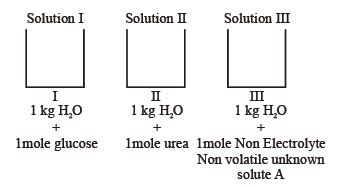
Order of $B.P$ of the solution formed is
The amount of anhydrous $N{a_2}C{O_3}$ present in $250\,ml$ of $0.25\,M$  solution is ........ $g$
What are polymers?
Which substance is not present in nucleic acid
Malonic acid from acetic acid can be prepared by use of which combination of chemicals, in proper sequence
In presence of $AlC{l_3},$ benzene and  $ n-$ propyl bromide react in Friedal-Craft's reaction to form
$\begin{gathered}
  \begin{array}{*{20}{c}}
  {O\,\,\,\,\,\,\,\,\,\,\,\,\,\,\,\,\,\,\,\,\,\,\,\,\,\,\,\,\,\,\,\,\,\,\,\,\,\,\,\,\,\,\,\,\,\,\,\,\,\,\,\,\,\,\,\,\,\,\,\,\,\,\,\,\,\,\,\,\,\,\,\,\,\,} \\ 
  {||\,\,\,\,\,\,\,\,\,\,\,\,\,\,\,\,\,\,\,\,\,\,\,\,\,\,\,\,\,\,\,\,\,\,\,\,\,\,\,\,\,\,\,\,\,\,\,\,\,\,\,\,\,\,\,\,\,\,\,\,\,\,\,\,\,\,\,\,\,\,\,\,\,\,} \\ 
  {C{H_3} - {\text{  }}C - {\text{ }}O - H\xrightarrow{{NaH{{\mathop {CO}\limits^{14} }_3}}}\mathop {(A)}\limits_{(gas)} \xrightarrow[{(ii){H_3}{O^ \oplus }}]{{(i)PhMgBr}}(B)} 
\end{array} \hfill \\
  \begin{array}{*{20}{c}}
  {O\,\,\,\,\,\,\,\,\,\,\,\,\,\,\,\,\,\,\,\,\,\,\,\,\,\,\,\,\,\,\,\,\,\,\,\,\,\,\,\,\,\,\,\,\,\,\,\,\,\,\,\,\,\,\,\,\,\,\,\,\,\,\,\,\,\,\,\,\,\,\,\,\,\,} \\ 
  {||\,\,\,\,\,\,\,\,\,\,\,\,\,\,\,\,\,\,\,\,\,\,\,\,\,\,\,\,\,\,\,\,\,\,\,\,\,\,\,\,\,\,\,\,\,\,\,\,\,\,\,\,\,\,\,\,\,\,\,\,\,\,\,\,\,\,\,\,\,\,\,\,\,\,} \\ 
  {C{H_3} - S - O - H\xrightarrow{{NaH\mathop {C{O_3}}\limits^{14} }}\mathop {(C)}\limits_{(gas)} \xrightarrow[{(ii){H_3}{O^ \oplus }}]{{(i)PhMgBr}}(D)} \\ 
  {||\,\,\,\,\,\,\,\,\,\,\,\,\,\,\,\,\,\,\,\,\,\,\,\,\,\,\,\,\,\,\,\,\,\,\,\,\,\,\,\,\,\,\,\,\,\,\,\,\,\,\,\,\,\,\,\,\,\,\,\,\,\,\,\,\,\,\,\,\,\,\,\,\,\,\,} \\ 
  {O\,\,\,\,\,\,\,\,\,\,\,\,\,\,\,\,\,\,\,\,\,\,\,\,\,\,\,\,\,\,\,\,\,\,\,\,\,\,\,\,\,\,\,\,\,\,\,\,\,\,\,\,\,\,\,\,\,\,\,\,\,\,\,\,\,\,\,\,\,\,\,\,\,\,\,\,} 
\end{array} \hfill \\ 
\end{gathered}$

Product $(B)$ and $(D) $ in the above reaction are