MCQ
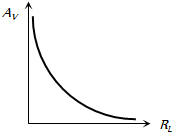
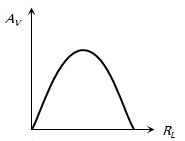
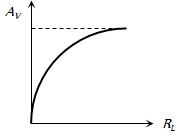
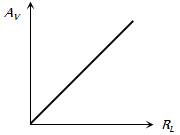
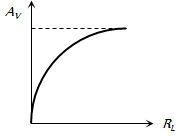
The correct curve between voltage gain $(A_L)$and load resistance $(R_L) $ is
  • A
  • B
  • D

Answer

Correct option: C.
(c)

Need a full question paper?

Generate a complete, print-ready paper with questions like this in minutes — across 16+ boards, with answer keys.

Start Generating Free

Similar questions

A student in a town in India, where the price per unit ( $1$ unit $=1 \,kWh$ ) of electricity is $₹ 5.00$, purchases a $1 \,kVA$ $UPS$ (uninterrupted power supply) battery. A day before the exam, $10$ friends arrive to the student's home with their laptops and all connect their laptops to the $UPS$. Assume that each laptop has a constant power requirement of $90 \,W$. Consider the following statements.

$I.$ All the $10$ laptops can be powered by the $UPS$, if connected directly.

$II.$ All the $10$ laptops can be powered, if connected using an extension box with a $3 \,A$ fuse.

$III.$ If all the $10$ friends use the laptop for $5 \,h$, then the cost of the consumed electricity is about $₹ 22.50.$

Select the correct option with the true statements.

The power factor of a good choke coil is
Assertion : An electric bulb becomes dim, when the electric heater in parallel circuit is switched on.

Reason : Dimness decreases after sometime.

An electron and a proton are in a uniform electric field, the ratio of their accelerations will be
A condenser having a capacity of $6\,\mu F$ is charged to $100\, V$ and is then joined to an uncharged condenser of $14\,\mu F$ and then removed. The ratio of the charges on $6\,\mu F$ and $14\,\mu F$ and the potential of $6\,\mu F$ will be
When a particle is restricted to move along $x$-axis between $x=0$ and $x=a$, where $a$ is of nanometer dimension, its energy can take only certain specific values. The allowed energies of the particle moving in such a restricted region, correspond to the formation of standing waves with nodes at its ends $x=0$ and $x=a$. The wavelength of this standing wave is related to the linear momentum $p$ of the particle according to the de Broglie relation. The energy of the particle of mass $m$ is related to its linear momentum as $E=\frac{p^2}{2 m}$. Thus, the energy of the particle can be denoted by a quantum number ' $n$ ' taking values $1,2,3, \ldots \quad(n=1$, called the ground state) corresponding to the number of loops in the standing wave.

Use the model described above to answer the following three questions for a particle moving in the line $x=0$ to $x=a$. Take $h=6.6 \times 10^{-34} \mathrm{~J} \mathrm{~s}$ and $e=1.6 \times 10^{-19} \mathrm{C}$.

$1.$ The allowed energy for the particle for a particular value of $n$ is proportional to

$(A)$ $a^{-2}$ $(B)$ $a^{-3 / 2}$ $(C)$ $a^{-1}$ $(D)$ $a^2$

$2.$ If the mass of the particle is $m=1.0 \times 10^{-30} \mathrm{~kg}$ and $a=6.6 \mathrm{~nm}$, the energy of the particle in its ground state is closest to

$(A)$ $0.8 \ \mathrm{meV}$ $(B)$ $8 \ \mathrm{meV}$ $(C)$ $80 \ \mathrm{meV}$ $(D)$ $800 \ \mathrm{meV}$

$3.$ The speed of the particle, that can take discrete values, is proportional to

$(A)$ $n^{-3 / 2}$ $(B)$ $n^{-1}$ $(C)$ $n^{1 / 2}$ $(D)$ $n$

Give the answer question $1, 2$ and $3.$

A person can see clearly only upto a distance of $25 \,cm$. He wants to read a book placed at a distance of $50 \,cm$. What kind of lens does he require for his spectacles and what must be its power
An electromagnet:
In producing a pure spectrum, the incident light is passed through a narrow slit placed in the focal plane of an achromatic lens because a narrow slit:
According to Einstein's photoelectric equation, the graph of $K.E.$ of the photoelectron emitted from the metal versus the frequency of the incident radiation gives a straight line graph, whose slope: