MCQ
The correct name of ‘sucrose' is
  • $\alpha - D - {\rm{glucopyranosyl}} - \beta - D - {\rm{fructofuranoside}}$
  • B
    $\beta - D - {\rm{glucopyranosyl}} - \beta - D - {\rm{fructofuranoside}}$
  • C
    $\alpha - D - {\rm{glucopyranosyl}} - \alpha - D - {\rm{fructofuranoside}}$
  • D
    $\beta - D - {\rm{glucopyranosyl}} - \alpha - L - {\rm{fructofuranoside}}$

Answer

Correct option: A.
$\alpha - D - {\rm{glucopyranosyl}} - \beta - D - {\rm{fructofuranoside}}$
a
Sucrose (common name: table sugar, also called saccharose) is a disaccharide (glucose + fructose) with the molecular formula $C _{12} H _{22} O _{11}$.Its systematic name is $\alpha- D$ - glucopyranosyl $11-\beta- D$ - fructofuranoside

Need a full question paper?

Generate a complete, print-ready paper with questions like this in minutes — across 16+ boards, with answer keys.

Start Generating Free

Similar questions

In which of the following complex $C-O$ bond as maximum $IR$ stretching vibrational frequency :-
The correct option($s$) about entropy ($s$) is(are)

$[ R =$ gas constant, $F =$ Faraday constant, $T =$ Temperature $]$

$(A)$ For the reaction, $M (s)+2 H ^{+}(a q) \rightarrow H _2(g)+ M ^{2+}(a q)$, if $\frac{ dE _{c o l l}}{ dT }=\frac{ R }{ F }$, then the entropy change of the reaction is $R$ (assume that entropy and internal energy changes are temperature independent).

$(B)$ The cell reaction, $Pt (s) \mid H _2(g, 1$ bar $)\left| H ^{+}(a q, 0.01 M ) \| H ^{+}(a q, 0.1 M )\right| H _2(g, 1 bar ) \mid Pt (s)$, is an entropy driven process.

$(C)$ For racemization of an optically active compound, $\Delta S >0$.

$(D)$ $\Delta S >0$, for $\left[ Ni \left( H _2 O \right)_6\right]^{2+}+3$ en $\rightarrow\left[ Ni ( en )_3\right]^{2+}+6 H _2 O$ (where en $=$ ethylenediamine).
For the redox reaction $Zn(s) + C{u^{2 + }}(0.1\,M) \to Z{n^{2 + }}(1\,M) + Cu(s)$ taking place in a cell, $E_{cell}^o$ is $1.10\,volt$. ${E_{cell}}$ for the cell will be ............ $\mathrm{V}$ $\left( {2.303\frac{{RT}}{F} = 0.0591} \right)$
In acidic medium $Mn{{\overset{\Theta }{\mathop{O}}\,}_{4}}$ is an oxidising agent $Mn{{\overset{\Theta }{\mathop{O}}\,}_{4}}+8\overset{\oplus }{\mathop{H}}\,+5{{e}^{-}}\to M{{n}^{+2}}+4{{H}_{2}}O$ 

If $\mathop H\limits^ \oplus  $ ion concentration is doubled, electrode potential of the half cell will

The correct statements from following are:

$A$. The strength of anionic ligands can be explained by crystal field theory.

$B$. Valence bond theory does not give a quantitative interpretation of kinetic stability of coordination compounds.

$C$. The hybridization involved in formation of $\left[\mathrm{Ni}(\mathrm{CN})_4\right]^{2-}$ complex is $\mathrm{dsp}^2$.

$D$. The number of possible isomer$(s)$ of cis- $\left[\mathrm{PtCl}_2(\text { en })_2\right]^{2+}$ is one

Choose the correct answer from the options given below:

Out of five carbonyl aromatic isomers of molecular formula containing $C_8H_8O$. One of the isomer $X$ can give iodoform test while $Y$ can give Benedict's test. What are the structure of $X$ & $Y$ respectively
Two unknown compounds $X$ and $Y$, both having molecular formula $C_4 H_8O$ give following results with four chemical tests.

  Bromine $Na$ metal Chromic acid Lucas reagent
Compound $X$ decolourises bubbles Orange to Green No reaction
Compound $Y$ No reaction No reaction No reaction No reaction

Compound $X$ and $Y$ respectively are

The rate of a reaction quadruples when the temperature changes from $300$ to $310\, K$. The activation energy of this reaction is ........... $kJ\, mol^{-1}$ (Assume activation energy and pre-exponential factor are independent of temperature ; $ln\, 2\, = 0.693 ; R\, = 8.314\, J\, mol^{-1}\, K^{-1}$ )
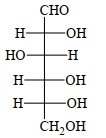
The structure of $D-(+)-$glucose is

$Image$

The structure of $L -(-)$-glucose is

Give the correct order of electrical conductivity of aqueous solution of following complexes
$(A) [Pt(NH_3)_6]Cl_4$                         $(B)\,\,[Cr(NH_3)_6]Cl_3$
$(C)\,\, [Co(NH_3)_4Cl_2]Cl$                 $(D)\,\,K_2[PtCl_6]$