Question
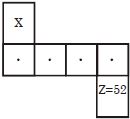
The correct statement regarding oxide of $'X'$
Generate a complete, print-ready paper with questions like this in minutes — across 16+ boards, with answer keys.
In the above reaction, the structural formula of $(A), "X"$ and $"Y"$ respectively are :
$(A)$ Dinitrogen is a diatomic gas which acts like an inert gas at room temperature.
$(B)$ The common oxidation states of these elements are $-3,+3$ and +5 .
$(C)$ Nitrogen has unique ability to form $\mathrm{p} \pi-\mathrm{p} \pi$ multiple bonds.
$(D)$ The stability of +$5$ oxidation states increases down the group.
$(E)$ Nitrogen shows a maximum covalency of $6$.
Choose the correct answer from the options given below.
$E^o_{Cl_2/Cl^-} = 1.36\,V,$ $E^o_{Cr^{3+}/Cr}= -0.74\,V,$
$E^o_{Cr_2/O_7^{2-}/Cr^{3+}}=1.33\,V,$ $E^o_{MnO^-_4/Mn^{2+}} = 1.51\,V$
Among the following, the strongest reducing agent is
$PhCHO + Ph \cdot CHO \xrightarrow[in\,\,{{D}_{2}}O]{NaOD} A + \begin{matrix} O \\ || \\ Ph-C-{{O}^{-}} \\ \end{matrix}$$\left( Ph\right.$ is $\left.- C _{6} H _{5}\right)$