Question
The de-Broglie wavelength associated with a hydrogen molecule moving with a thermal velocity of $3 km/s$ will be ............ $\mathop A\limits^o $

Answer

(b) $\lambda = \frac{h}{{m{v_{rms}}}}$

==>$\lambda = \frac{{6.6 \times {{10}^{ - 34}}}}{{2 \times 1.67 \times {{10}^{ - 27}} \times 3 \times {{10}^3}}} = 0.66\,{Å}$

Need a full question paper?

Generate a complete, print-ready paper with questions like this in minutes — across 16+ boards, with answer keys.

Start Generating Free

Similar questions

A calorimeter of water equivalent $20\, g$ contains $180\, g$ of water at $25^{\circ} C$. '$m$' grams of steam at $100^{\circ} C$ is mixed in it till the temperature of the mixure is $31^{\circ} C$. The value of $'m'$ is close to

(Latent heat of water $=540$ cal $g ^{-1}$, specific heat of water $=1$ cal $g^{-1}{ }^{\circ} C ^{-1}$ )
If $\vec{P}+\vec{Q}=\overrightarrow{0}$, then which of the following is necessarily true?
According to Bohr's theory the moment of momentum of an electron revolving in second orbit of hydrogen atom will be
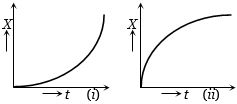
Figures $(i)$ and $(ii)$ below show the displacement-time graphs of two particles moving along the x-axis. We can say that
Electrons with de-Broglie wavelength $\lambda$ fall on the target in an $\mathrm{X}$-ray tube. The cut-off wavelength of the emitted $\mathrm{X}$ rays is
A sphere strikes a wall and rebounds with coefficient of restitution $1/3$. If it rebounds with a velocity of $0.1\, m/sec$ at an angle of $60^o$ to the normal to the wall, the loss of kinetic energy is
In which of reactions final product is $NOT$ a ketone
A current $i$ is flowing in a straight conductor of length $L.$ The magnetic induction at a point on its axis at a distance $\frac {L}{4}$ from its centre will be
One mole of an ideal gas at $300 \mathrm{~K}$ in thermal contact with surroundings expands isothermally from $1.0 \mathrm{~L}$ to $2.0 \mathrm{~L}$ against a constant pressure of $3.0 \mathrm{~atm}$. In this process, the change in entropy of surroundings $\left(\Delta S_{\text {surr }}\right)$ in $\mathrm{J} \mathrm{K}^{-1}$ is $(1 \mathrm{~L} \mathrm{~atm}=101.3 \mathrm{~J})$
The rotation period of an earth satellite close to the surface of the earth is $83$ minutes. The time period of another earth satellite in an orbit at a distance of three earth radii from its surface will be .......... $\min$