MCQ
The degree of the differntial equation $\Big(\frac{\text{d}^{2}\text{y}}{\text{dx}^{2}}\Big)^{2}=\Big(\frac{\text{dy}}{\text{dx}}\Big)=\text{y}^{3}$ is:
  • A
    $\frac{1}{2}$
  • $2$
  • C
    $3$
  • D
    $4$

Answer

Correct option: B.
$2$
We have,$\Big(\frac{\text{d}^{2}\text{y}}{\text{dx}^{2}}\Big)^{2}=\Big(\frac{\text{dy}}{\text{dx}}\Big)=\text{y}^{3}$
The highest order derivative is $\frac{\text{d}^{2}\text{y}}{\text{dx}^{2}}$ and its power is 2.
Hence, the degree is 2.

Need a full question paper?

Generate a complete, print-ready paper with questions like this in minutes — across 16+ boards, with answer keys.
Start Generating Free

Similar questions

Let $\text{A}=\begin{bmatrix}\text{a}&0&0\\0&\text{a}&0\\0&0&\text{a}\end{bmatrix},$ then $A^n$ is equal to :
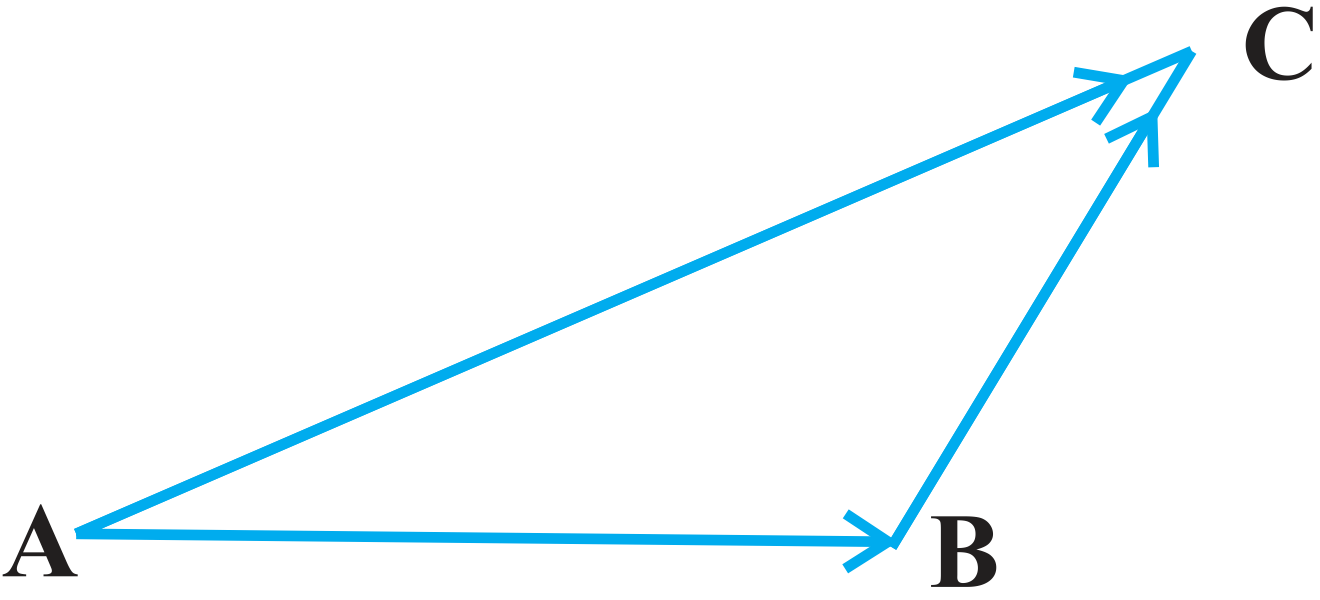
In triangle ABC (Fig 10.18), which of the following is not true:
If ${x^2} + {y^2} = t - {1 \over t},$ ${x^4} + {y^4} = {t^2} + {1 \over {{t^2}}}$, then ${x^3}y{{dy} \over {dx}} = $
The area of the region bounded by parabola $y^2=x$ and the straight line $2 y=x$ is
If $y=x^x$, then the value of $\frac{d y}{d x}$ will be
If a line has direction ratios $2, -1, -2,$ determine its direction cosines:
If $X$ is a random variable with probability distribution as given below:
$X = x_i$ $0$ $1$ $2$ $3$
$P(X = X_i)$ $k$ $3k$ $3k$ $k$
The value of $k$ and its variance are:
Consider the functions defined implicitly by the equation $y^3-3 y+x=0$ on various intervals in the real line. If $x \in(-\infty,-2) \cup(2, \infty)$, the equation implicitly defines a unique real valued differentiable function $y=f(x)$. If $x \in(-2,2)$, the equation implicitly defines a unique real valued differentiable function $y=g(x)$ satisfying $g(0)=0$.

$1.$  If $\mathrm{f}(-10 \sqrt{2})=2 \sqrt{2}$, then $\mathrm{f}^{\prime \prime}(-10 \sqrt{2})=$

$(A)$ $\frac{4 \sqrt{2}}{7^3 3^2}$ $(B)$ $-\frac{4 \sqrt{2}}{7^3 3^2}$ $(C)$ $\frac{4 \sqrt{2}}{7^3 3}$ $(D)$ $-\frac{4 \sqrt{2}}{7^3 3}$

$2.$ The area of the region bounded by the curves $y=f(x)$, the $x$-axis, and the lines $x=a$ and $x=b$, where $-\infty < \mathrm{a} < \mathrm{b} < -2$, is

$(A)$ $\int_a^b \frac{x}{3\left((f(x))^2-1\right)} d x+b f(b)-a f(a)$

$(B)$ $-\int_a^b \frac{x}{3\left((f(x))^2-1\right)} d x+b f(b)-a f(a)$

$(C)$ $\int_a^b \frac{x}{3\left((f(x))^2-1\right)} d x-b f(b)+a f(a)$

$(D)$ $-\int_a^b \frac{x}{3\left((f(x))^2-1\right)} d x-b f(b)+a f(a)$

$3.$ $\int_{-1}^1 g^{\prime}(x) d x=$

$(A)$ $2 g(-1)$ $(B)$ 0 $(C)$ $-2 g(1)$ $(D)$ $2 \mathrm{~g}(1)$

Give the answer question $1,2$ and $3.$

If $\text{f}(\text{x})=\text{e}^{\cos^{-1}\big\{\sin\big(\text{x}+\frac{\pi}{3}\big)\big\}}$ then $\text{f}\Big(\frac{8\pi}{9}\Big)=$
If the system of linear equations, $x+y+z =6$ ; $x+2 y+3 z =10$ ; $3 x+2 y+\lambda z =\mu$ has more two solutions, then $\mu-\lambda^{2}$ is equal to