Question

The diffraction effect can be observed in

(a) Only sound waves

(b) Only light waves

(c) Only ultrasonic waves 

(d) Sound as well as light waves

Answer

(d) Sound as well as light waves

Need a full question paper?

Generate a complete, print-ready paper with questions like this in minutes — across 16+ boards, with answer keys.

Start Generating Free

Similar questions

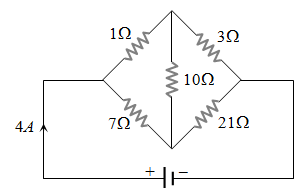
In the circuit shown in figure, the current drawn from the battery is 4A.  If 10 W resistor is replaced by 20 W resistor, then current drawn from the circuit will be

(a) 1 A

(b) 2 A

(c) 3 A

(d) 0 A

Two identical batteries, each of e.m.f. 2 volt and internal resistance 1.0 ohm are available to produce heat in an external resistance R = 0.5 ohm by passing a current through it. The maximum Joulean power that can be developed across R using these batteries is

(a) 1.28 watt

(b) 2.0 watt

(c)  watt

(d) 3.2 watt

Moment of inertia of a magnetic needle is 40 gm-cm2 has time period 3 seconds in earth's horizontal field = 3.6  weber/m2. Its magnetic moment will be

(a) 0.5  

(b) 5 

(c) 0.250 

(d) 5  

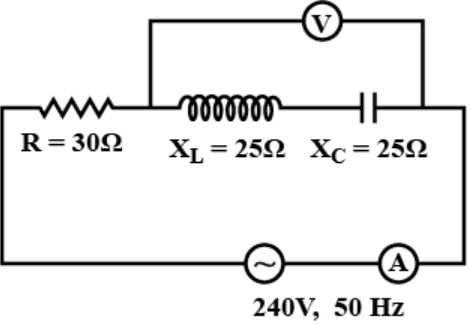
In the circuit shown in the figure, (neglecting source resistance) the voltmeter and ammeter readings will respectively be.
Image

The magnitude of saturation photoelectric current depends upon

(a) Frequency

(b) Intensity

(c) Work function

(d) Stopping potential

In the propagation of electromagnetic waves, the angle between the direction of propagation and plane of polarisation is

If an electron moves from rest from a point at which potential is 50 volt to another point at which potential is 70 volt, then its kinetic energy in the final state will be

(a) 3.2 × 10⁻¹⁰ J

(b) 3.2 ×  10–18 J

(c) 1 N     

(d) 1 dyne

The rise of a liquid in a capillary tube depends on
  1. The material.
  2. The length.
  3. The outer radius.
  4. The inner radius of the tube.

Characteristic X-rays are produced due to

(a) Transfer of momentum in collision of electrons with target atoms

(b) Transition of electrons from higher to lower electronic orbits in an atom

(c) Heating of the target

(d) Transfer of energy in collision of electrons with atoms in the target

The angle of incidence at which reflected light is totally polarized for reflection from air to glass (refraction index n) is

(a)

(b)

(c)

(d)