MCQ
The dimensions of dipole moment are:
- A[L T A].
- B[L T-1 A-1].
- C[L T A-1].
- DNone.
Generate a complete, print-ready paper with questions like this in minutes — across 16+ boards, with answer keys.
An optically active compound
|
(a) Rotates the plane polarised light |
|
(b) Changing the direction of polarised light |
|
(c) Do not allow plane polarised light to pass through |
|
(d) None of the above |
Two lenses are placed in contact with each other and the focal length of combination is 80 cm. If the focal length of one is 20 cm, then the power of the other will be
|
(a) 1.66 D |
(b) 4.00 D |
(c) –1.00 D |
(d) – 3.75 D |
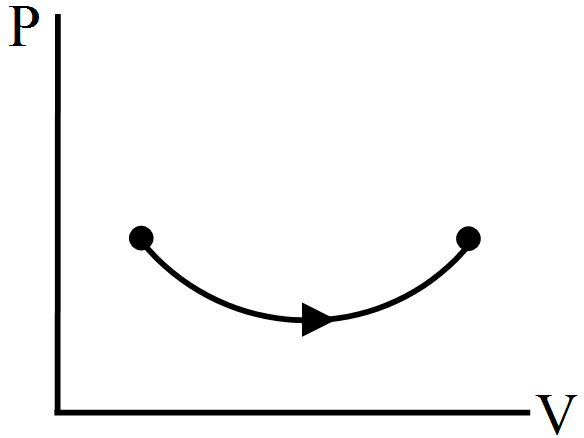
If the light moving in a straight line bends by a small but fixed angle, it may be a case of:
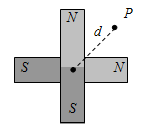
Two short magnets of equal dipole moments M are fastened perpendicularly at their centre (figure). The magnitude of the magnetic field at a distance d from the centre on the bisector of the right angle is
|
(a) |
(b) |
(c) |
(d) |
The electrochemical equivalent Z of any element can be obtained by multiplying the electrochemical equivalent of hydrogen with
|
(a) Atomic weight |
(b) Molecular weight |
(c) Chemical equivalent |
(d) A constant |
$\text{y}=(0.001\text{mm})\sin\Big[(50\text{s}^{-1})\text{t}+(2.0\text{m}^{-1})\text{x}\Big]$


