MCQ
The electric potential inside a conducting sphere:
- AIncreases from centre to surface.
- BDecreases from centre to surface.
- CRemains constant from centre to surface.
- DIs zero at every point inside.
Generate a complete, print-ready paper with questions like this in minutes — across 16+ boards, with answer keys.
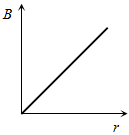
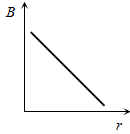
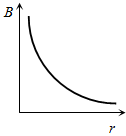
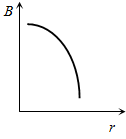
Which of the following graphs shows the variation of magnetic induction B with distance r from a long wire carrying current
|
(a)
|
(b)
|
(c)
|
(d)
|
What is shape of magnet in moving coil galvanometer to make the radial magnetic field
|
(a) Concave |
(b) Horse shoe magnet |
(c) Convex |
(d) None of these |
Before the saturation state of a diode at the plate voltages of 400 V and 200 V respectively the currents are i1 and i2 respectively. The ratio i1/i2 will be
(a) 
|
(b) 2
|
(c) 2 | (d) 1/2 |
A long straight wire carries a current of π amp. The magnetic field due to it will be 5  at what distance from the wire [
 permeability of air]
|
(a) |
(b) |
(c) |
(d) |
The refractive indices of glass and water w.r.t. air are 3/2 and 4/3 respectively. The refractive index of glass w.r.t. water will be
|
(a) 8/9 |
(b) 9/8 |
(c) 7/6 |
(d) None of these |