MCQ
The electron cannot exist inside the nucleus because:
  • A
    de-Broglie wavelength associated with electron in $\beta$ -decay is much less than the size of nucleus
  • B
    de-Broglie wavelength associated with electron in $\beta$ -decay is much greater than the size of nucleus
  • C
    de-Broglie wavelength associated with electron in $\beta$ -decay is equal to the size of nucleus
  • D
    de-Broglie negative charge cannot exist in the nucleus

Answer

  1. de-Broglie wavelength associated with electron in β -decay is much greater than the size of nucleus

Explanation:

$\beta$−decay:

$\beta$− radioactivity occurs when a nucleus emits a negative electron from an unstable radioactive nucleus whose deBroglie wavelength of  order MeV is much larger than nuclear dimensions.

Need a full question paper?

Generate a complete, print-ready paper with questions like this in minutes — across 16+ boards, with answer keys.

Start Generating Free

Similar questions

Quantam nature of light is explained by which of the following phenomenon

(a) Huygen wave theory

(b) Photoelectric effect

(c) Maxwell electromagnetic theory

(d) de-Broglie theory

If the speed of light were 2/3 of its present value, the energy released in a given atomic explosion will be decreased by a fraction

(a) 2/3

(b) 4/9

(c) 3/4

(d) 5/9

The plate current in a diode is zero. It is possible that:

A straight conductor carries a current of 5A. An electron travelling with a speed of 5  parallel to the wire at a distance of 0.1m from the conductor, experiences a force of

(a) 8  

(b) 3.2

(c) 8  

(d) 1.6  

The  electric charge in uniform motion produces

(a) An electric field only

(b) A magnetic field only

(c) Both electric and magnetic field

(d) Neither electric nor magnetic field

Cathode rays are similar to visible light rays in that

(a) They both can be deflected by electric and magnetic fields

(b) They both have a definite magnitude of wavelength

(b) They both have a definite magnitude of wavelength

(d) They both can expose a photographic plate

Heavy water is

(a) Water at 4

(b) Compound of deuterium and oxygen  

(c) Compound of heavy oxygen and heavy hydrogen

(d) Water, in which soap does not lather

When a lamp is connected in series with capacitor, then

(a) Lamp will not glow

(b) Lamp will burst out

(c) Lamp will glow normally

(d) None of these

Figure here shows P and Q as two equally intense coherent sources emitting radiations of wavelength 20 m. The separation PQ is 5.0 m and phase of P is ahead of the phase of Q by 90o. A, B and C are three distant points of observation equidistant from the mid-point of PQ. The intensity of radiations at A, B, C will bear the ratio

(a) 0 : 1 : 4

(b) 4 : 1 : 0

(c) 0 : 1 : 2

(d) 2 : 1 : 0

The possible quantum number for 3d electron are

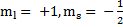
(a) n = 3, l = 1,  

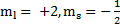
(b) n = 3, l = 2,  

(c) n = 3, l = 1,  

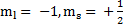
(d) n = 3, l =0,