MCQ
The electrostatic potential due to a point charge is inversely proportional to:
- A$\frac{1}{\text{r}}$
- B$\frac{1}{\text{r}^2}$
- C$\text{r}$
- D$\text{r}^2$
Generate a complete, print-ready paper with questions like this in minutes — across 16+ boards, with answer keys.
An electron enters a region where magnetic (B) and electric (E) fields are mutually perpendicular to one another, then
|
(a) It will always move in the direction of B |
|
(b) It will always move in the direction of E |
|
(c) It always possess circular motion |
|
(d) It can go undeflected also |
If in a nuclear fusion process the masses of the fusing nuclei be  and
and  and the mass of the resultant nucleus be
  , then
(a) 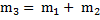
|
(b) 
|
(c) 
|
(d) 
|