MCQ
The element gold has?
- A16 Isotopes.
- B32 Isotopes.
- C96 Isotopes.
- D173 Isotopes.
Generate a complete, print-ready paper with questions like this in minutes — across 16+ boards, with answer keys.
Armature current in dc motor will be maximum when
|
(a) Motor has acquired maximum speed |
(b) Motor has acquired intermediate speed |
|
(c) Motor has just started moving |
(d) Motor is switched off |
The curve between charge density and distance near P-N junction will be
(a)
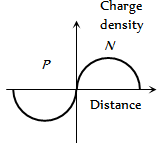
|
(b)
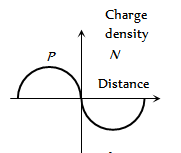
|
(c)
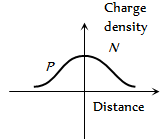
|
(d)
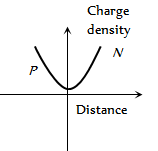
|
Which of the following statements is incorrect about hysteresis
|
(a) This effect is common to all ferromagnetic substances |
|
(b) The hysteresis loop area is proportional to the thermal energy developed per unit volume of the material |
|
(c) The hysteresis loop area is independent of the thermal energy developed per unit volume of the material |
|
(d) The shape of the hysteresis loop is characteristic of the material |
Half life of a radioactive element is 10 days. The time during which quantity remains 1/10 of initial mass will be
|
(a) 100 days |
(b) 50 days |
(c) 33 days |
(d) 16 days |
A charge q is located at the centre of a cube. The electric flux through any face is
|
(a) |
(b) |
(c) |
(d) |
The maximum magnification that can be obtained with a convex lens of focal length 2.5 cm is (the least distance of distinct vision is 25 cm)
|
(a) 10 |
(b) 0.1 |
(c) 62.5 |
(d) 11 |
Two parallel wires in free space are 10 cm apart and each carries a current of 10 A in the same direction. The force one wire exerts on the other per metre of length is
|
(a) 2 |
(b) 2 |
|
(c) 2 |
(d) 2 |
Magnetic permeability is maximum for
|
(a) Diamagnetic substance |
(b) Paramagnetic substance |
|
(c) Ferromagnetic substance |
(d) All of these |


